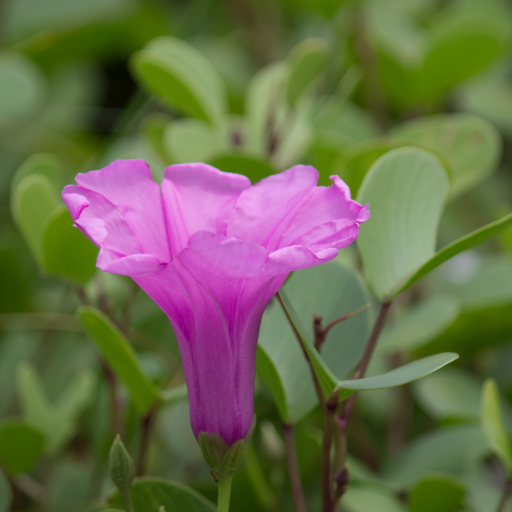
Plant Overview
Known as the "Railroad Vine" for its incredible ability to grow in long, straight lines across sandy shores, this resilient traveler is a beach lover's best friend. It serves as nature's anchor, holding sand dunes together against relentless ocean winds and salt spray. Its Latin name, pes-caprae, literally translates to "goat's foot," a charming reference to the unique shape of its split leaves.
🔍 How to Identify
- 🍃 The Leaf: Fleshy, leathery, and bright green. The tips are deeply notched, creating a shape that looks exactly like a cloven hoof or a goat’s footprint.
- 🌸 The Bloom: Large, funnel-shaped flowers that range from pink to deep lavender, usually featuring a darker "star" or throat in the center.
- 🛤️ Growth Habit: It produces exceptionally long, thick runners that crawl horizontally along the ground rather than climbing upwards.
🏡 In Your Garden
- 🌊 Coastal Specialist: This is the ultimate "set it and forget it" plant for coastal homes. It thrives in poor, sandy soil and is one of the most salt-tolerant species on the planet.
- 🛡️ Erosion Control: If you have a slope or a sandy patch prone to washing away, this vine acts as a living net. However, give it space—it can grow up to 100 feet long and may quickly overtake smaller garden beds.
⚠️ Safety & Toxicity
- 🐾 Mild Concern: While not considered high-risk, the seeds of most Morning Glory relatives can cause digestive upset if eaten by curious pets or children.
- 🧪 Sap Sensitivity: The stems contain a milky latex sap that might cause minor skin irritation for people with sensitive skin during pruning.
✨ Fun Fact
In many tropical cultures, the Railroad Vine is known as a "beach pharmacy." Its leaves are traditionally crushed and applied as a poultice to help soothe the pain of jellyfish stings!

Detailed Care Instructions
To grow Ipomoea pes-caprae, also known as beach morning glory or goat's foot, you can follow the steps below:
- Choose the right location: Ipomoea pes-caprae thrives in sandy coastal areas with full sun exposure. Ensure the location is well-drained and free from excessive shade.
- Collect or purchase seeds: You can either collect seeds from mature plants or purchase them from a reputable supplier. Ensure the seeds are fresh and viable.
- Scarify the seeds: The hard seed coat of Ipomoea pes-caprae seeds can be tough to penetrate. Gently file or nick the surface of the seed with sandpaper or a small knife to help with germination.
- Soak the seeds: Place the scarified seeds in a container with warm water and let them soak for 24 hours. This will help to soften the seed coat and improve germination rates.
- Prepare the planting site: Clear away any weeds or debris from the planting area. If the soil is too compacted, loosen it with a garden fork or tiller to improve drainage.
- Sow the seeds: Plant the seeds directly into the prepared soil. Push them gently into the ground, ensuring they are covered with a thin layer of soil, about 1/4 inch deep.
- Water regularly: Keep the soil consistently moist but not waterlogged. Water the plants regularly, especially during dry spells or hot weather. Avoid overwatering, as this can lead to root rot.
- Provide support: As the Ipomoea pes-caprae plants grow, they may benefit from some support. You can provide a trellis, bamboo stakes, or a fence for the vines to climb on.
- Mulch around the plants: Apply a layer of organic mulch, such as wood chips or dried leaves, around the base of the plants. Mulching helps to retain moisture, suppress weed growth, and protect the roots from extreme temperatures.
- Prune if needed: Ipomoea pes-caprae can become sprawling and may require occasional pruning to maintain a neat appearance. Trim back any excessively long or tangled branches.
- Protect from pests: Monitor the plants for any pest infestations, such as aphids or caterpillars. If necessary, use organic pest control methods to address the issue.
With proper care and attention, your Ipomoea pes-caprae plants should grow and spread, creating a beautiful groundcover or ornamental feature in a coastal landscape.

Place in a bright room that is sun drenched almost all day. Or directly in a south-facing window.

To water this plant, it is recommended to use a watering can or a hose with a gentle spray nozzle. The soil should be checked for moisture before watering, and if it feels dry to the touch, water should be applied. It is important to avoid overwatering, as this can lead to root rot and other problems. To ensure that the plant receives enough moisture, water should be applied deeply enough to penetrate the root zone, but not so much that it runs off or pools on the surface. It is also important to water early in the day or late in the evening to avoid excessive evaporation.
To fertilize this plant, use a balanced fertilizer that contains equal amounts of nitrogen, phosphorus, and potassium. Apply the fertilizer once a month during the growing season, which is typically spring and summer in most regions. Be sure to follow the package instructions for the fertilizer. Additionally, consider incorporating organic matter, such as compost, into the soil to improve nutrient uptake.
The ideal soil for this particular plant would be a well-draining, sandy soil that is rich in organic matter and nutrients. It should have a pH level that is slightly acidic to neutral, between 6.0 to 7.5. The soil should also be able to hold adequate moisture for the plant to thrive, but not waterlogged, as this can cause root rot. Additionally, it is important to avoid using soils that are contaminated with pesticides or chemicals, as this can harm the plant and its growth.
To propagate this plant, you will need to harvest the seeds from mature flowers or take stem cuttings from the parent plant.
For seed propagation, wait until the flowers on the plant have withered and produced small, brown pods. Harvest these pods and allow them to fully dry before cracking them open to release the seeds. These seeds can then be sown directly into well-draining soil or started indoors.
To propagate from stem cuttings, take a portion of stem from the parent plant that is several inches long and has a few nodes. Remove the leaves from the bottom half of the stem and plant it in a container filled with well-draining soil. Water the cutting regularly and keep it in a sunny location until new growth appears. Once the new plant is established, it can be transplanted into a larger pot or directly into the ground.
Common pests of the beach morning glory include Spider mites, aphids, thrips. Make a habit of checking your beach morning glory frequently for pests so that any infestations can be caught and managed early.








