Plant Overview
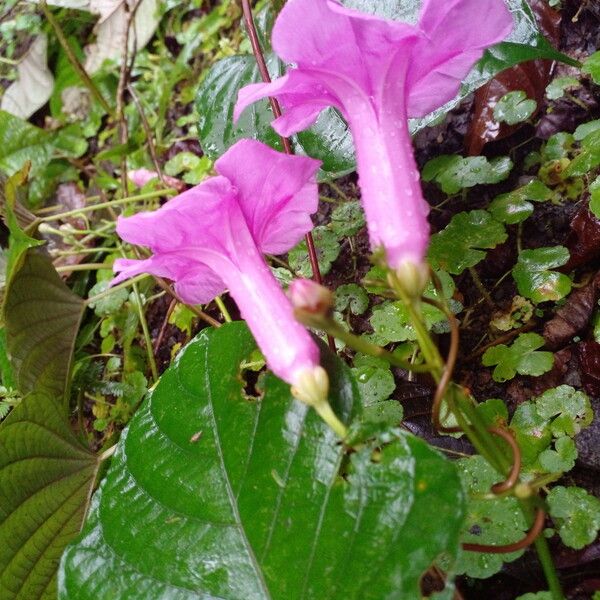
Known as a vigorous "Liana" or woody climber, Ipomoea philomega is the dramatic, tropical cousin of the common morning glory. Native to the lush rainforests of Central and South America, this plant is celebrated for its oversized, heart-shaped foliage and striking violet blooms. It is a plant that truly loves to reach for the canopy, making it a master of vertical spaces and a favorite for those looking to create a "jungle" feel.
🔍 How to Identify
- 🍃 Lush Foliage: Large, deeply heart-shaped (cordate) leaves that provide a dense, emerald-green curtain.
- 🌸 Velvety Blooms: Classic funnel-shaped flowers, typically in shades of vibrant purple or magenta, often featuring a darker "throat" at the center.
- 🧗 Woody Stems: Unlike common annual morning glories, this species develops thick, semi-woody stems as it matures, allowing it to climb significantly higher.
🏡 In Your Garden
- 🧱 Structural Needs: Because it is a heavy, vigorous climber, it requires a very sturdy trellis, pergola, or fence; flimsy supports will likely buckle under its weight as the plant ages.
- 💧 Tropical Humidity: It thrives in high humidity and well-draining soil that mimics the rainforest floor; it hates "wet feet" but will wilt quickly if the soil dries out completely.
⚠️ Safety & Toxicity
- 🚫 Toxic Status: Like many members of the Ipomoea genus, this plant is considered toxic if ingested.
- 🐾 Risk Factors: The seeds and vines contain alkaloids that can cause digestive distress, vomiting, or lethargy in cats, dogs, and curious children. It is best planted in areas where pets won't be tempted to chew on the trailing vines.
✨ Fun Fact
The name philomega is derived from Greek roots, roughly translating to "lover of the large." This refers to its impressive scale, as it produces some of the largest leaves and most robust climbing vines in the entire Morning Glory family!

Detailed Care Instructions








