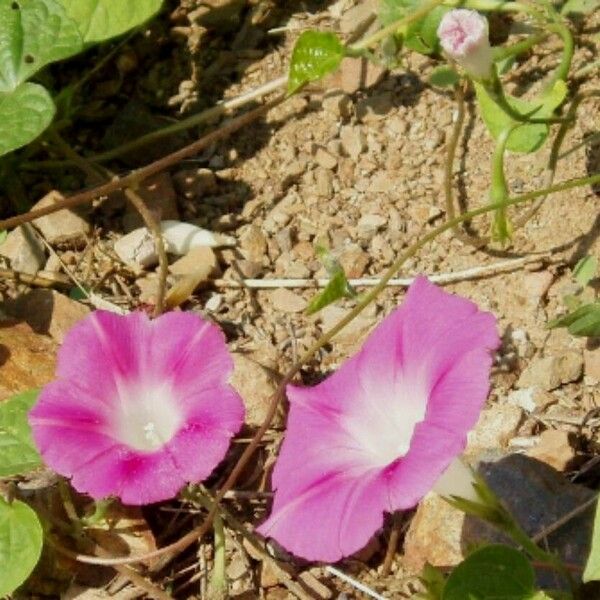
Plant Overview
Often called the Huachuca Mountain Morning Glory, Ipomoea plummerae is a pint-sized treasure of the American Southwest and Mexico. Unlike its aggressive, sky-climbing cousins that swallow fences whole, this delicate wildflower prefers to stay close to the earth, hugging rocky slopes and high-altitude meadows. It is a master of the "low-profile" lifestyle, emerging from the soil only when the conditions are just right.
🔍 How to Identify
- 🌿 The Foliage: The leaves are deeply divided into five to seven very narrow, thread-like lobes. They look almost like tiny green hands or starry fingers splayed out against the soil.
- 🌸 The Bloom: It produces classic funnel-shaped flowers, typically in shades of vivid magenta, lavender, or rose-pink. The center often features a darker, saturated "throat" that guides pollinators inside.
- 📏 Growth Habit: This is a prostrate or trailing plant. Instead of reaching for the sun by climbing, it spreads its slender stems horizontally along the ground, rarely rising more than a few inches high.
🏡 In Your Garden
- 🏜️ The High-Altitude Specialist: This plant is native to "sky islands"—mountainous regions surrounded by desert. In a garden setting, it demands excellent drainage and mimics its home by thriving in rocky or gravelly soil where water never sits.
- 💤 The Tuber Strategy: The secret to its survival is a small, fleshy underground tuber. This "energy bank" allows the plant to survive freezing winters and intense droughts by going completely dormant, disappearing from sight until the summer monsoons trigger new growth.
⚠️ Safety & Toxicity
- 🐾 Toxic to Pets: Like many members of the Morning Glory family, the seeds of Ipomoea plummerae contain alkaloids. If ingested by dogs, cats, or horses, they can cause digestive distress or more serious neurological symptoms.
- 👶 General Caution: While not typically considered a high-risk plant for casual touch, the seeds should be kept away from children. Ingesting them can lead to nausea, vomiting, or hallucinations in high quantities.
✨ Fun Fact
📜 A Pioneering Namesake: The plant is named after Sara Plummer Lemmon, a 19th-century botanist and mountaineer. Sara was a trailblazer who climbed the rugged mountains of Arizona in long skirts to collect specimens; she is also the person responsible for making the California Poppy the official state flower!

Detailed Care Instructions

Place in a bright room that is sun drenched almost all day. Or directly in a south-facing window.

Some plants require more regular watering than others, which should be done every few days. It's critical to maintain the soil moist all of the time. The water requirements of the same plant placed in pots with varying sizes will differ. Because the water in the smaller pot evaporates faster than the water in the larger pot, it will require more watering. Regardless of pot size, the surface should constantly be maintained moist.








