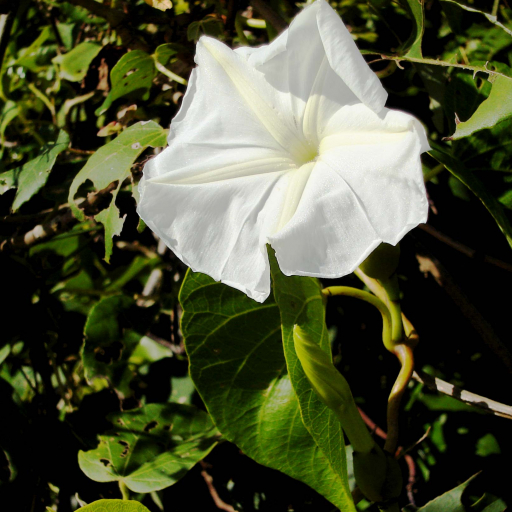
Plant Overview
Commonly known as the Beach Moonflower or Sea Moonflower, Ipomoea violacea is a stunning, fast-growing vine that turns any garden into an ethereal landscape. Unlike its daytime "Morning Glory" cousins, this plant is famous for its large, luminous white flowers that often glow under the moonlight. In many cultures, it is regarded as a symbol of the fleeting nature of beauty and the mysteries of the night.
🔍 How to Identify
- 🍃 Lush Foliage: Features large, vibrant green leaves shaped like perfect hearts (cordate), providing a dense green backdrop for its blooms.
- 🎺 Trumpet Flowers: Produces massive, trumpet-shaped white flowers that can reach up to 6 inches in diameter, sometimes featuring a subtle yellow star in the center.
- 🌀 Twining Stems: The plant grows via vigorous, smooth stems that "scout" for support, spiraling tightly around fences, trellises, or nearby trees.
🏡 In Your Garden
- 🌊 Coastal Warrior: Because it is a native of tropical coastal regions, this plant is exceptionally tolerant of salt spray, making it a favorite for seaside balconies and gardens.
- 🏗️ Support Specialist: This vine is a "marathon runner" and needs a sturdy structure to climb. It hates being moved once established because of its delicate root system, so choose its permanent home carefully.
- 🌙 Twilight Performance: To get the most out of this plant, place it near a patio or window where you sit in the evenings, as the fragrance is most potent at dusk.
⚠️ Safety & Toxicity
- 🚫 Status: Toxic to humans and pets.
- 🐾 Details: The seeds of Ipomoea violacea contain ergoline alkaloids (similar to LSA). If ingested by curious pets or children, it can cause significant distress, including nausea, vomiting, and in some cases, blurred vision or disorientation. Always handle seeds with gloves if you have sensitive skin.
✨ Fun Fact
Ancient Aztec and Zapotec cultures once used the seeds of this plant in sacred divinatory rituals. They referred to the seeds as tlitliltzin, believing the plant allowed them to communicate with the gods and see into the future.

Detailed Care Instructions
To grow Ipomoea Violacea (commonly known as Morning Glory) plant, follow these steps:
- Select a location: Choose a spot with full sun exposure, preferably a fence, trellis, or wall where the plant can climb and sprawl.
- Prepare the soil: Morning glory plants prefer well-draining soil. Loosen the soil and add organic compost or well-rotted manure to improve fertility and drainage.
- Planting: Sow the Morning Glory seeds directly into the soil after the frost has passed and the soil has warmed up. Alternatively, you can start seeds indoors 4-6 weeks before the last frost and transplant them outside when the weather is favorable.
- Watering: Keep the soil consistently moist until germination occurs. Once established, the plant can tolerate dry conditions but performs best with regular watering.
- Trellis or support: Provide a trellis, arbor, or similar support structure for the Morning Glory to climb and twine around. This will help the plant grow vertically and enhance its aesthetic appeal.
- Mulching: Apply a layer of organic mulch around the base of the plant to retain moisture, suppress weed growth, and regulate soil temperature.
- Pruning: Though not necessary, you can prune the plant to control its shape and prevent it from becoming invasive. Pruning can also help stimulate additional blooming.
- Fertilization: Morning Glories are relatively low-maintenance plants that don't require frequent fertilization. However, you can apply a balanced, slow-release fertilizer once or twice during the growing season to provide supplemental nutrients.
- Monitor pests and diseases: Keep an eye out for pests such as aphids, snails, and slugs. If detected, treat accordingly with organic insecticides or other appropriate methods. Also, watch for any signs of diseases such as powdery mildew or fungal infections. Providing adequate air circulation can help prevent such issues.
- Harvesting seeds: If you want to harvest seeds for future plantings, allow the flowers on the vine to fade and dry naturally. Collect the seeds once the seed pods have fully matured and turned brown.
Remember that Morning Glory plants can self-seed, so if you allow some seed pods to remain on the vine, new plants may emerge on their own in the following seasons.

Place in a bright room that is sun drenched almost all day. Or directly in a south-facing window.

To properly water this plant, first observe the soil to determine if the top layer is dry. If it is, use a watering can or hose with a gentle stream to water the soil around the plant until it is moist but not drenched. Avoid getting water on the leaves or flowers as this can promote disease or damage. Watering should be done regularly, but only when the soil becomes dry. Overwatering or leaving the soil constantly damp can lead to root rot or other health issues. It is important to also consider the plant's habitat and natural watering schedule when determining how much and how often to water.
To fertilize this plant, use a balanced fertilizer with equal amounts of nitrogen, phosphorus, and potassium. Use a slow-release fertilizer granule or a liquid fertilizer at half the recommended strength every two weeks during the growing season. Begin fertilizing when the plant has established itself in the soil and starts to develop new growth. Make sure to water the plant before and after applying the fertilizer to avoid burning the roots.
Ipomoea Violacea plant grows best in a soil that is well-draining and rich in organic matter. The soil should be neutral to slightly acidic with a pH level between 6.0 to 7.5. It should also be moist but not waterlogged. A mixture of garden soil, peat moss, and sand can provide the perfect environment for the plant to thrive. The use of fertilizers and compost is recommended to ensure the plant receives the necessary nutrients. It is important to avoid using soil that is compact or heavy, as this can affect the plant's growth and health.
To propagate this plant, start by taking a cutting from a healthy stem. Use a sharp, clean pair of pruning shears and cut a 4-6 inch stem from the mother plant. Remove the lower leaves from the stem so that no leaves are touching the soil when it is planted.
Prepare a small pot with well-draining soil and water it thoroughly. Make a hole in the soil with a pencil or other small tool and gently insert the stem into the soil, burying it about halfway. Firmly press the soil around the stem to secure it in place.
Water the newly planted stem lightly to settle the soil around it. Place the pot in a warm, bright location but out of direct sunlight. Mist the plant every few days to keep the leaves hydrated and prevent drying out.
Be patient and monitor the plant's progress over the next few weeks. If the stem is healthy, it should begin to grow new roots and leaves within a few weeks. Once it has established itself, you can transplant it to a larger pot or outside in the garden.








