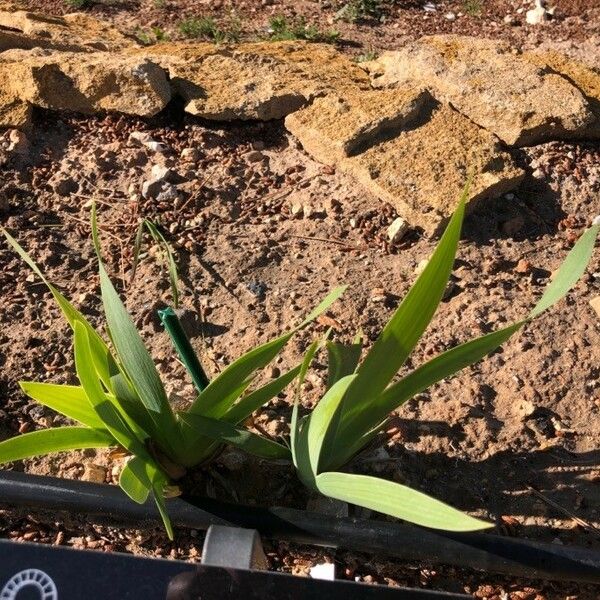
Plant Overview
Often called the Two-Headed Iris, this Mediterranean beauty is a rare gem originally found clinging to the limestone cliffs of the Gargano Peninsula in Italy. It is a hardy, rhizomatous perennial that brings a touch of wild Italian elegance to rock gardens, prized for its ability to produce multiple blooms where other dwarf irises might only offer one.
🔍 How to Identify
- 🌸 The Twin Blooms: True to its name, "bicapitata" refers to the plant’s unique habit of producing two flower buds (heads) on a single stem, providing a longer flowering period.
- 🗡️ Sword-Shaped Leaves: The foliage is distinctly "falcate" (curved like a sickle), forming a low, stiff fan of grey-green leaves that stay attractive even when the plant isn't in bloom.
- 🧔 The Bearded "Falls": The downward-pointing petals feature a fuzzy yellow "beard" in the center, typically contrasted against deep violet or occasionally pale yellow petals.
🏡 In Your Garden
- 🪨 The Drainage Specialist: This iris thrives in "scree" or rock garden conditions. It hates "wet feet" and requires gritty, well-draining soil to prevent its rhizomes from rotting during the winter months.
- ☀️ Rhizome Baking: To ensure flowers for the following year, the rhizome (the thick root) needs to be partially exposed to the sun. Think of it like a lizard—it needs to "sunbathe" on the surface of the soil to store energy for blooming.
⚠️ Safety & Toxicity
- 🐾 Toxic to Pets: Like most members of the Iridaceae family, it contains the compound iridin. If ingested by dogs or cats, it can cause salivation, vomiting, and lethargy.
- 👶 Skin Irritant: The sap from the leaves or the dust from the rhizomes can cause mild skin irritation or dermatitis in sensitive individuals. It is best to wear gloves when dividing the plants.
✨ Fun Fact
The Iris bicapitata is a "narrow endemic" species. In the wild, it is found almost exclusively in one specific region of Italy—the Gargano Peninsula—meaning it evolved to survive in that very specific microclimate and nowhere else!

Detailed Care Instructions

Place in a bright room that is sun drenched almost all day. Or directly in a south-facing window.

Some plants require more regular watering than others, which should be done every few days. It's critical to maintain the soil moist all of the time. The water requirements of the same plant placed in pots with varying sizes will differ. Because the water in the smaller pot evaporates faster than the water in the larger pot, it will require more watering. Regardless of pot size, the surface should constantly be maintained moist.








