Plant Overview
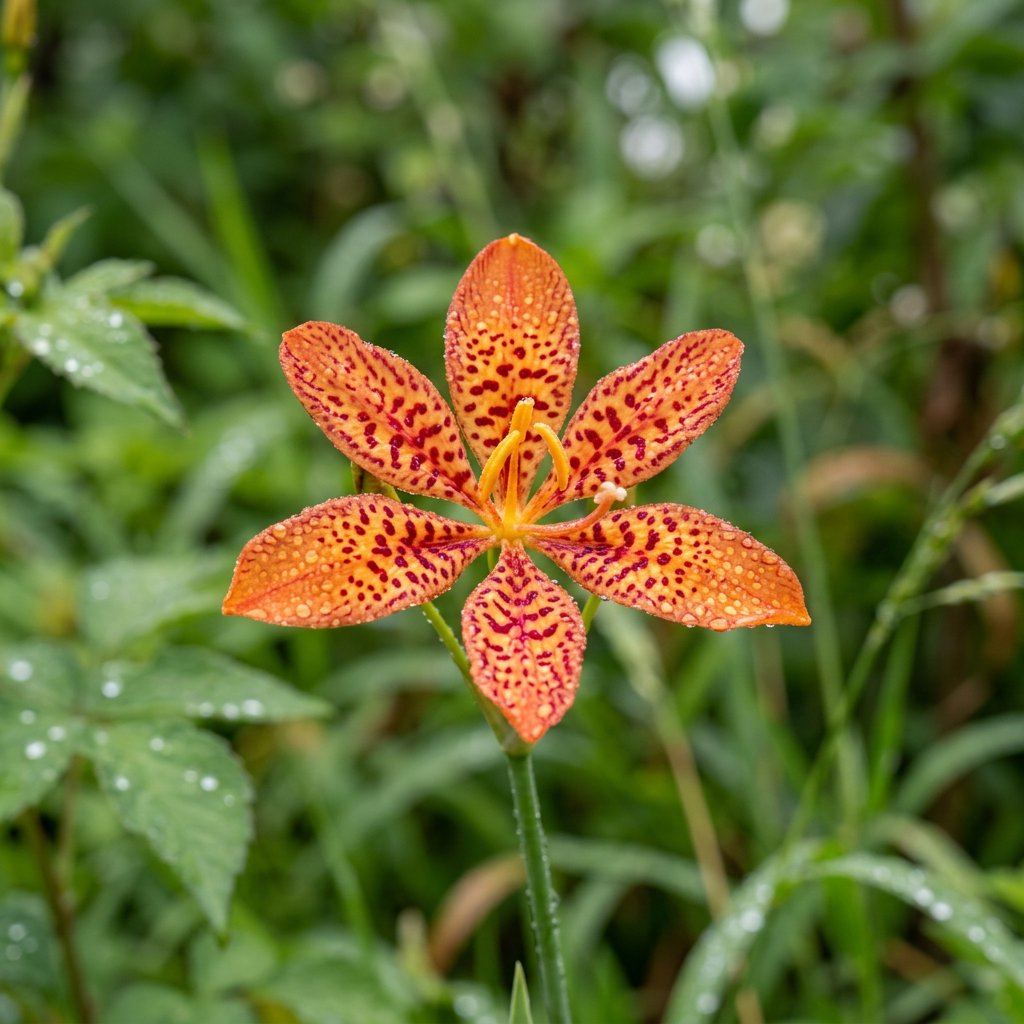
Known as the Leopard Lily for its freckled petals and the Blackberry Lily for its unique autumn seeds, Iris domestica is a true shapeshifter of the summer garden. Native to East Asia, this perennial is a favorite for those who love "conversation starter" plants that change dramatically throughout the seasons. It brings an exotic, tropical flair to temperate landscapes without requiring the fuss of a greenhouse.
🔍 How to Identify
- 🌸 The Bloom: Each flower features six spreading petals, usually bright orange or golden-yellow, heavily dappled with crimson or dark purple spots.
- 🍃 The Foliage: The leaves grow in a sharp, flat, fan-shaped arrangement, very similar to a Gladiolus, reaching about 2 to 3 feet in height.
- 🍇 The "Blackberries": In late summer, the seed pods burst open to reveal clusters of shiny, round black seeds that look remarkably like edible blackberries, though they are purely decorative.
🏡 In Your Garden
- ☀️ Sun Seeker: These plants thrive in full sun and well-drained soil. They are particularly "sturdy" and rarely need staking, unlike some of their taller Iris cousins, making them great for the middle of a flower border.
- 🌱 Seed Starting: While many Irises are grown from bulbs or rhizomes, the Leopard Lily is exceptionally easy to grow from its "blackberries." However, be patient—once they are planted and established, they prefer not to be moved due to their sensitive root systems.
⚠️ Safety & Toxicity
- 🐾 Mildly Toxic: Like most members of the Iridaceae family, Iris domestica contains compounds that can be irritating.
- 🚫 Risk to Pets: If ingested by dogs or cats, the rhizomes and leaves can cause digestive upset, drooling, or lethargy. It is best kept away from curious pets who might be tempted by the berry-like seeds.
✨ Fun Fact
For over 200 years, botanists placed this plant in its own unique genus called Belamcanda. It wasn't until 2005 that DNA sequencing proved it was actually a true Iris, leading to its official name change to Iris domestica.

Detailed Care Instructions
To grow Iris domestica (also known as blackberry lily or leopard lily), follow these steps:
- Choose a suitable location: Select a spot with well-draining soil and partial to full sun exposure. Iris domestica prefers slightly acidic to neutral soil pH.
- Prepare the soil: Loosen the soil using a garden fork or tiller to a depth of about 12 inches. Remove rocks, weeds, and debris from the planting area.
- Amend the soil: If your soil is heavy clay or sandy, improve its texture by adding organic matter like compost or well-rotted manure. Mix it well into the soil to enhance drainage and fertility.
- Planting: Dig a hole that is deep enough to accommodate the iris domestica rhizome (root) system. Place the rhizome horizontally, just below the soil surface. Ensure the pointed end is facing upwards. Space multiple rhizomes at least 12 inches apart.
- Watering: After planting, thoroughly water the area to help settle the soil and encourage root establishment. Irrigate the plant regularly during the growing season, providing about 1 inch of water per week.
- Mulching: Apply a layer of organic mulch like wood chips or straw around the plants to conserve moisture, suppress weeds, and regulate soil temperature. Keep the mulch a few inches away from the rhizomes to prevent rotting.
- Fertilization: Iris domestica typically doesn't require heavy feeding. However, you can amend the soil with a slow-release balanced fertilizer in early spring or use compost or organic fertilizers instead. Follow the package instructions for best results.
- Maintenance: Remove spent flowers to encourage continued blooming and prevent self-seeding. Divide the rhizomes every three to four years in early spring to maintain healthy growth and promote better flowering.
- Pests and diseases: Iris domestica may be susceptible to certain pests like aphids or snails. Keep an eye out for any signs of infestation and treat them promptly using appropriate insecticides or organic methods. Additionally, ensure good air circulation around plants to prevent fungal diseases.
- Winter protection: In colder regions, provide a layer of mulch or straw in late fall to provide insulation and protect the rhizomes from frost. In areas with severe winters, consider digging up the rhizomes and storing them in a cool, dry place until spring.
By following these steps, you can successfully grow Iris domestica and enjoy its beautiful flowers and unique blackberry-like seed pods.

Place in a bright room that is sun drenched almost all day. Or directly in a south-facing window.

To properly water this plant, it is important to ensure that the soil is moist but not waterlogged. This can be achieved by watering the plant deeply once or twice a week, depending on the climate and humidity levels. When watering, make sure to direct the water to the base of the plant rather than the leaves or flowers. Use a watering can, hose, or drip irrigation system to water the plant. It is also important to avoid getting water on the leaves and flowers as this can lead to fungal diseases. Check the soil regularly to ensure that it does not dry out completely between waterings. If the soil feels dry to the touch, it is time to water the plant again. It is important to note that overwatering can lead to root rot and other issues, so it is important to find the right balance in watering this plant.
To fertilize this particular plant, you should wait until after the flowering season is over. After this time, you can apply a slow-release fertilizer that is high in phosphorus and potassium. Be careful not to over-fertilize, as this can lead to excessive foliage growth at the expense of flowers. Additionally, make sure the soil is moist before applying the fertilizer and water thoroughly after application.
Iris Domestica is a plant that prefers well-draining soil with a neutral pH level. The soil should be rich in organic matter, such as compost or aged manure, and should not be too heavy or compacted. A mixture of one part loam, one part sand, and one part peat moss or compost can make an ideal soil for Iris Domestica. It is also important to ensure that the plant is not waterlogged, so the soil should be regularly checked for moisture levels and not allow the plant to sit in standing water. Additionally, the plant may benefit from a layer of mulch around the base to help retain moisture and regulate temperature.
Iris domestica is typically propagated by dividing the rhizomes of an established plant. This process should be done in the early spring or fall when the plant is dormant. Begin by digging up the clump of rhizomes with a garden fork or shovel. Gently separate the rhizomes by pulling them apart, being careful not to damage the roots. Each rhizome should have at least one stem and a few roots attached. Trim any broken or damaged roots and cut the foliage to about one-third of its original size. Plant the divided rhizomes in a well-draining soil mix, with the top of the rhizome just above the soil surface. Water the newly planted rhizomes thoroughly and place them in a partially shaded location. Keep the soil moist but not overly wet, and the newly propagated Iris domestica should begin to grow within a few weeks.
Common pests of the blackberry lily include Spider mites, aphids, whiteflies. Make a habit of checking your blackberry lily frequently for pests so that any infestations can be caught and managed early.








