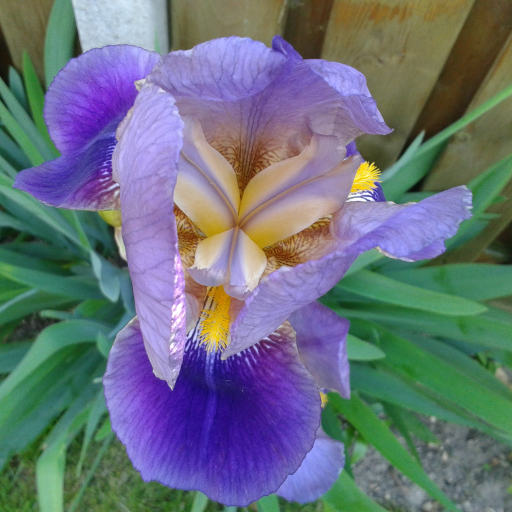
Plant Overview
Often hailed as the "Goddess of the Rainbow," the Bearded Iris is the crown jewel of the late spring garden. These architectural beauties have been cultivated for centuries, appearing in everything from ancient royal crests to Van Gogh’s most famous paintings. Whether in deep velvety purples or sunset oranges, they bring a touch of regal drama and a sweet, candy-like fragrance to any landscape.
🔍 How to Identify
- 🗡️ Foliage: Striking, sword-shaped leaves that grow in flat, fan-like clusters. They remain upright and bluish-green throughout the growing season.
- 🎨 The Bloom: A complex flower structure consisting of three upright petals called "standards" and three drooping petals known as "falls."
- 🧔 The "Beard": Look closely at the center of the drooping "fall" petals; you’ll find a fuzzy, caterpillar-like strip of colorful hairs. This "beard" acts as a landing strip for pollinators like bumblebees.
🏡 In Your Garden
- ☀️ Sunbathing Rhizomes: Unlike most plants, the thick, ginger-like roots (rhizomes) of the German Iris love to "see" the sun. Planting them too deep is the most common mistake; they should sit right at the soil surface to bake in the heat, which triggers next year's flowers.
- 💧 Drainage is Key: These plants are prone to "wet feet." They thrive in well-draining soil and are surprisingly drought-tolerant once established, making them perfect for sunny slopes where water doesn't linger.
⚠️ Safety & Toxicity
- 🚫 Status: Toxic to humans and pets.
- 🐾 Details: The highest concentration of toxins (irisin) is found in the rhizomes. If ingested by dogs or cats, it can cause vomiting, drooling, and lethargy. Gardeners with sensitive skin should wear gloves, as the sap can occasionally cause mild skin irritation or "Iris dermatitis."
✨ Fun Fact
The Iris is the inspiration for the "Fleur-de-lis," a symbol used by French royalty for centuries to represent light and life. It is named after Iris, the Greek messenger goddess who traveled along a rainbow to deliver messages from the gods to mortals.

Detailed Care Instructions
| Color | Red, Orange, Yellow, Blue, Purple, Brown, White, Black, Pink |
| Humidity | High |
| Lighting | Part Sun |
| Toxicity | Toxic |
| Soil Type | Average With Good Drainage |
| Bloom Time | Spring |
| Difficulty | Easy |
| Plant Type | Hardy Rhizomatous Perennial |
| Hibernation | Cold Period |
| Mature Size | 12 To 40 Inches Tall, With A Spread Of 1 To 2 Feet |
| Native Area | Southern Europe And The Mediterranean |
| Temperature | 15°C - 20°C |
| Sun Exposure | Full Sun |
| Hardiness Zones | 3 To 9, Usda |
To grow Iris Germanica, also known as bearded iris, you can follow these steps:
- Choose a suitable location: Bearded irises prefer full sun to part shade, so select a spot where they can receive at least 6 hours of sunlight daily. Ensure that the soil is well-draining.
- Prepare the soil: The soil should be loose, fertile, and well-draining. Incorporate organic matter like compost or well-rotted manure into the soil to improve its structure and fertility.
- Planting: Dig a hole that is wide and deep enough to accommodate the iris rhizome. Place the rhizome on a small mound of soil in the hole, spreading out the roots. Cover the rhizome with soil so that the top is just above or at the soil surface.
- Watering: After planting, give the iris a good soak and keep the soil consistently moist. Once established, water deeply but infrequently, allowing the soil to partially dry between waterings.
- Mulching: Apply a layer of organic mulch around the iris, such as straw, wood chips, or leaf litter. Mulching helps to conserve moisture, suppress weeds, and regulate soil temperature.
- Fertilizing: Provide the iris with a balanced fertilizer in early spring when new growth starts. Follow package instructions for the correct application rate. Avoid applying high-nitrogen fertilizers as they can lead to excessive foliage growth but fewer flowers.
- Pruning: After the iris has finished blooming, remove the spent flowers by cutting the stalk to the base. In late summer or early fall, prune the leaves to about 2-3 inches above the ground to prevent disease and promote strong regrowth.
- Dividing: Iris Germanica plants benefit from division every 3-4 years to maintain their vigor. Dig up the clump after it has finished flowering, carefully separate the rhizomes, and replant them.
- Pests and diseases: Bearded irises are relatively resistant to pests and diseases. However, they can occasionally be affected by iris borers or fungal diseases like leaf spot or crown rot. Monitor the plants regularly and promptly address any issues that arise.
- Winter care: Bearded irises are hardy perennials, but in regions with severe winters, it's good to provide some winter protection by applying a layer of mulch over the soil surface or using evergreen branches or straw to cover the plants.
Following these steps, you can enjoy the beautiful flowers of Iris Germanica in your garden.

Place in a bright room that is sun drenched almost all day. Or directly in a south-facing window.

To water this particular plant species, it is recommended to use a watering can or a hose with a gentle spray nozzle. The soil should be moist but not waterlogged, so water deeply once or twice a week depending on the climate and weather conditions. It is important to avoid getting water on the foliage to prevent fungal growth and damage to the leaves. In addition, it is advisable to water early in the morning or late in the evening to reduce water evaporation and prevent the plant from drying out. Finally, make sure the drainage is good to prevent the plant from being waterlogged, which could lead to root rot and other issues.
The plant should be fertilized in early spring before new growth appears and again in the late summer after blooming has finished. Use a balanced fertilizer with equal amounts of nitrogen, phosphorus, and potassium. Apply the fertilizer evenly around the plant, and water it in thoroughly. Avoid getting fertilizer on the leaves or blooms of the plant, as this can cause burning or damage. Repeat the fertilizer application annually to encourage healthy growth and blooms.
When planting Iris Germanica, it is recommended to use a well-draining soil mixture that is rich in organic matter. This type of soil should be able to retain moisture while preventing waterlogging. The proper pH levels for this plant are neutral to slightly acidic. The use of a fertilizer that is high in phosphorus is suggested to promote healthy flower production. The soil should be amended with compost, peat moss, and well-aged manure at planting time. It is important to avoid using heavy clay soil or soil that is compacted, as it will obstruct proper root development and inhibit the growth of the plant. Additionally, it is recommended to mulch around the plant to retain moisture and to help with weed control.
To propagate this plant, you will need to wait until the rhizomes are mature and have a few healthy leaves. You can then carefully dig up the rhizomes and separate them into smaller sections, making sure that each new section has at least one healthy shoot and a portion of the root. Plant the new sections about a foot apart in well-drained soil and keep them well-watered until they are established. It may take a year or two for the new plants to flower, but with proper care, they will eventually produce beautiful blooms.








