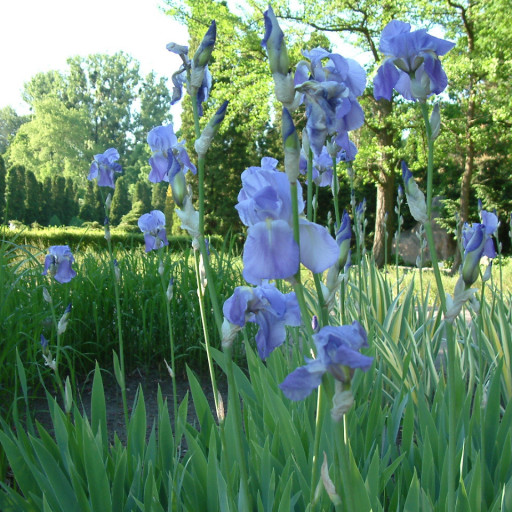
Plant Overview
Known as the "Dalmatian Iris," this Mediterranean beauty is a timeless classic that has graced European gardens for centuries. Often nicknamed the "Sweet Iris," it is most famous for its intoxicating fragrance—which many gardeners swear smells exactly like grape soda or sweet violets. With its distinct silvery-blue foliage, it provides architectural beauty in the garden even when it isn't in bloom.
🔍 How to Identify
- 🥈 The Foliage: Unlike the deep green of many irises, these leaves are a striking glaucous (waxy) silver-blue, sword-shaped, and grow in a fan-like arrangement.
- 🌸 The Bloom: Soft, pale lavender-blue flowers with delicate, paper-thin "spathes" (the sheaths at the base of the flower) that look like dried parchment.
- 🧔 The Beard: A fuzzy, bright yellow or white "beard" runs down the center of the lower petals, acting as a landing strip for pollinators.
🏡 In Your Garden
- ☀️ The Sun-Bather: This plant loves to "bake." For the best blooms, the thick rhizomes (the horizontal roots) should be partially exposed to the sun and not buried deep in mulch or soil, which helps prevent rot.
- 🌬️ Drought Specialist: Originating from the rocky coasts of Croatia, it is incredibly hardy and drought-tolerant once established. It hates "wet feet," so well-draining soil is a must.
- 🌿 Year-Round Interest: While many irises look ragged after flowering, Iris pallida maintains its clean, upright silvery fans throughout the summer, making it a favorite for landscape structure.
⚠️ Safety & Toxicity
- 🐾 Status: Toxic to dogs, cats, and horses.
- 🚫 Details: The highest concentration of toxins (iridin) is found in the rhizomes. Ingestion can lead to salivation, vomiting, or lethargy. The sap may also cause minor skin irritation or "iris dermatitis" in sensitive gardeners, so gloves are recommended when dividing them.
✨ Fun Fact
The roots of this plant, known as "Orris Root," are legendary in the perfume industry. Once dried and aged for three to five years, the roots develop a powerful violet scent and are used as a fixative in high-end fragrances and even as a botanical in premium gins!

Detailed Care Instructions
| Humidity | Dry |
| Lighting | Full Sun |
| Difficulty | Easy |
| Hibernation | Cold Period |
To grow Iris Pallida, also known as Sweet Iris or Dalmatian Iris, follow these steps:
- Choose a suitable location: Iris Pallida prefers full sunlight but can tolerate light shade. Choose a location with well-draining soil. Ideally, the soil should be slightly alkaline or neutral.
- Prepare the soil: Iris Pallida thrives in fertile, well-amended soil. Add organic matter like compost or well-rotted manure to improve the soil's texture and fertility. Mix it well to ensure it is evenly distributed.
- Planting: Iris Pallida is usually planted in early spring or late summer. Dig a hole large enough to accommodate the rhizome, which is the bulb-like structure from which the plant grows. The top of the rhizome should be just at or slightly below the soil surface. Space multiple rhizomes at least 1 foot apart to allow for their growth.
- Watering: After planting, water the Iris Pallida thoroughly and regularly during the first year. It is essential to keep the soil consistently moist but not waterlogged to establish a healthy root system. Once established, the plant can tolerate drought but still appreciates occasional deep watering during dry spells.
- Mulching: Applying a layer of organic mulch, such as shredded bark or straw, around the plant helps to maintain soil moisture, suppress weeds, and provide insulation during extreme temperatures.
- Fertilizing: Iris Pallida typically doesn't require heavy feeding. However, a balanced, slow-release fertilizer can be applied in early spring or according to the product instructions to promote healthy growth and blooming.
- Pruning: After the flowering season, remove any dead flower stalks and trim back the leaves to maintain a tidy appearance. However, avoid cutting back the foliage completely as it helps to provide nourishment to the rhizomes.
- Division: Over time, Iris Pallida may become overcrowded, leading to reduced flowering. To rejuvenate the plant, it can be divided every 3-5 years. Dig up the rhizomes in late summer or early fall, ensuring each division has healthy roots and at least one fan of leaves. Replant the divisions as mentioned above.
Remember to regularly monitor your Iris Pallida for pests and diseases, such as iris borer or leaf spot, and take appropriate measures to prevent or treat them if necessary.

Place in a window with dappled sun or a spot in the middle of a room. Or directly in a window facing west or east.

To water this plant, make sure to monitor the soil moisture level regularly. This plant prefers to be kept in moist soil but not in standing water. Avoid letting the soil dry out completely, but also do not overwater as it may cause root rot. Water deeply but infrequently, allowing the top layer of soil to dry slightly between watering. Use a well-draining soil mix and ensure the pot has drainage holes to prevent water from accumulating at the bottom. Water from the base of the plant rather than over the top, as wetting the foliage can increase the risk of fungal diseases. If planted in a garden, water at the base of the plant and avoid watering the foliage during the day to prevent sunburn. It is best to water early in the morning or late in the evening when the temperature is cooler.
To fertilize this plant, apply a balanced fertilizer with equal amounts of nitrogen, phosphorus, and potassium. Apply the fertilizer once in early spring and again in late spring to early summer. Be sure to water the plant thoroughly before and after applying fertilizer to prevent burning the roots. Avoid over-fertilizing as it can lead to excessive foliage at the expense of flowers.
Iris Pallida prefers well-drained soil with plenty of organic matter. The soil should be slightly acidic to neutral, with a pH between 6.0 and 7.5. The plant can tolerate some drought, but it is important to keep the soil consistently moist, especially during the growing season. Heavy clay soil should be amended with sand or grit for improved drainage. Adding compost or aged manure to the soil before planting can also improve soil fertility and texture. It is recommended to mulch around the plant to help retain moisture and suppress weed growth.
To propagate this particular plant, you can first start by dividing the rhizomes. This can be done in the autumn or early spring, when the plant is no longer actively growing. Carefully dig up the plant and carefully separate the rhizomes, ensuring that each division has at least one healthy shoot and a portion of the roots.
Once separated, replant the rhizomes at the same depth they were growing before, in well-draining soil enriched with compost or well-rotted manure. Keep the newly divided plants well-watered and sheltered from harsh winds and direct sun for a few weeks until they become established.
You can also propagate Iris Pallida by seed. Collect seeds from the plant after the flowers have faded and the seed pods have ripened. Sow the seeds in a seed tray filled with a light, well-draining soil mix and cover with a light layer of compost. Place the tray in a warm, bright spot and keep the soil moist but not waterlogged.
Germination can take anywhere from a few weeks to a few months, and the seedlings should be transplanted to individual pots or into the garden once they have developed true leaves. It usually takes a few years for the plants to reach maturity and flower.
Common pests of the sweet iris include Spider mites, aphids, whiteflies. Make a habit of checking your sweet iris frequently for pests so that any infestations can be caught and managed early.








