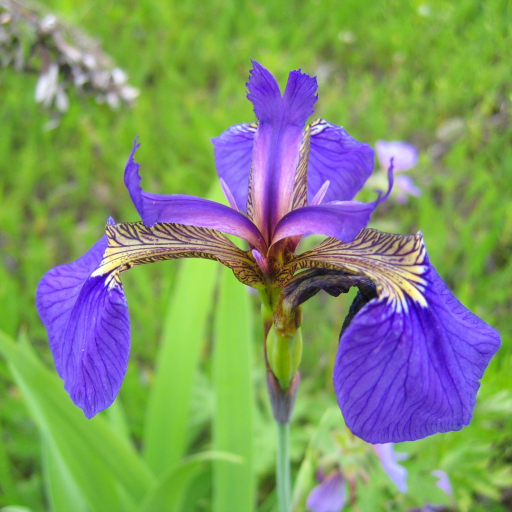
Plant Overview
Known as the "Arctic Iris" or "Beach Head Iris," this hardy beauty thrives where most other flowers would freeze. It paints the northern coastlines of Alaska, Canada, and Japan with striking shades of violet-blue. In folklore, its presence often signaled the arrival of true spring in the harsh subarctic wilderness, standing as a symbol of resilience against the cold.
🔍 How to Identify
- 📉 The "Standard" Mystery: Unlike typical garden irises, the three inner petals (called standards) are tiny and reduced to small bristles, making the large, drooping "falls" look even more dramatic.
- 🎨 Floral Veining: Each deep purple or blue petal features intricate, dark-violet veins and a splash of white or yellow at the base to act as a "landing strip" for bees.
- 🗡️ Sword-like Foliage: The leaves are flat, fan-shaped, and a vibrant green, forming dense, elegant clumps that remain attractive even after the flowers fade.
🏡 In Your Garden
- ❄️ Cold Weather Warrior: This plant is incredibly cold-hardy and actually prefers cooler summers. It is one of the few irises that thrives in USDA Zone 3, making it a "must-have" for northern gardeners.
- 💧 Bog Lover: It doesn't mind "wet feet" and is a perfect choice for pond edges, rain gardens, or damp spots where other plants might rot. It is also uniquely salt-tolerant, surviving easily in coastal wind and spray.
⚠️ Safety & Toxicity
- 🚫 Toxic if Ingested: Like its relatives, Iris setosa contains the resinous compound iridin. If any part of the plant is eaten, it can cause stomach upset, nausea, and vomiting.
- 🐾 Pet Warning: Keep this plant away from cats and dogs, as chewing on the rhizomes (roots) can lead to drooling and lethargy. The sap can also cause mild skin irritation in some people, so wearing gloves during pruning is a smart move.
✨ Fun Fact
In some traditional Alaskan cultures, the seeds of the Arctic Iris were once toasted and used as a coffee substitute—though we wouldn't recommend trying it today given the plant's toxic compounds!

Detailed Care Instructions
There are a few steps you can follow to grow Iris Setosa plants:
- Location: Choose a sunny spot in your garden that receives at least 6-8 hours of direct sunlight daily. Ensure that the soil is well-draining as Iris Setosa plants prefer slightly acidic to neutral soil.
- Soil preparation: Prepare the soil by removing any weeds, rocks, or debris. Loosen the soil and amend it with organic matter like compost or well-rotted manure to improve its fertility and drainage.
- Planting: Plant the Iris Setosa rhizomes (thickened underground stems) in the soil during early spring or late summer. Dig holes deep enough to accommodate the rhizomes, keeping them at the soil surface. Space the rhizomes around 6-8 inches apart.
- Watering: Water the plants thoroughly after planting to settle the soil. Afterward, water the Iris Setosa sparingly, allowing the soil to dry slightly between waterings. These plants prefer slightly drier conditions compared to other Iris varieties.
- Mulching: Apply a layer of organic mulch around the plants to retain moisture, suppress weeds, and maintain a stable soil temperature. Avoid placing mulch directly on the rhizomes to prevent rotting.
- Fertilizing: Iris Setosa plants generally do not require heavy fertilization. In early spring, you can apply a balanced slow-release fertilizer according to the package instructions. Avoid excessive nitrogen as it may promote leaf growth at the expense of flowering.
- Maintenance: Keep the area around the plants weed-free, as Iris Setosa prefers to grow without competition. Deadhead the spent flowers to encourage further blooming and remove any yellow or withered leaves to maintain plant health.
- Overwintering: Iris Setosa plants are hardy and can withstand cold temperatures. However, if you live in an extremely cold region, consider applying a layer of mulch or straw around the plants in late fall to insulate the soil and protect the rhizomes from freezing.
By following these steps and providing proper care, your Iris Setosa plants should grow and bloom beautifully.

Place in a bright room that is sun drenched almost all day. Or directly in a south-facing window.

The best way to water this plant is to provide it with a consistent and regular supply of water. This plant prefers damp soil, but does not tolerate standing water, so be sure to allow excess water to drain away. You can achieve this by watering the plant just enough to moisten the soil to about an inch deep. Wait until the top inch of soil dries out before watering again, and ensure that the soil is not completely dry before watering. This plant also prefers filtered or distilled water, as it is sensitive to high levels of minerals. Additionally, make sure that the pot has good drainage holes to prevent waterlogging, and place it in a location with bright, indirect sunlight, which will help the plant grow well.
To fertilize this plant, apply a slow-release granular fertilizer with an NPK ratio of approximately 10-10-10 in early spring, before new growth emerges. Avoid touching the fertilizer directly to the leaves and stems of the plant. Water thoroughly after applying the fertilizer. Repeat this process every year or as needed, based on the condition and health of the plant.
The soil suitable for planting Iris Setosa plant should be well-draining and sandy, with a pH between 6.0 to 7.5. It should also be enriched with organic matter and nutrients, such as compost or well-rotted manure. The soil should be loose and relatively dry, as excess moisture can cause root rot and fungal diseases. The plant requires full sunlight or partial shade, and regular watering during the growing season. Over-fertilization should be avoided, as it can cause excessive foliage growth at the expense of flowers. Adequate spacing between the plants is also important to promote good air circulation and prevent diseases.
Iris Setosa plant can be propagated through division of its rhizomes. Rhizomes are underground stems that produce roots and shoots. The propagation process involves carefully digging up the main plant and separating the rhizomes into smaller sections. Each section should have a few healthy roots and a few leaves. The sections can then be replanted in a new location or container filled with well-draining soil. The new plants should be watered regularly until they establish a strong root system. It is best to propagate Iris Setosa plant in early spring or late summer to ensure the new plants have enough time to establish roots before the onset of winter.








