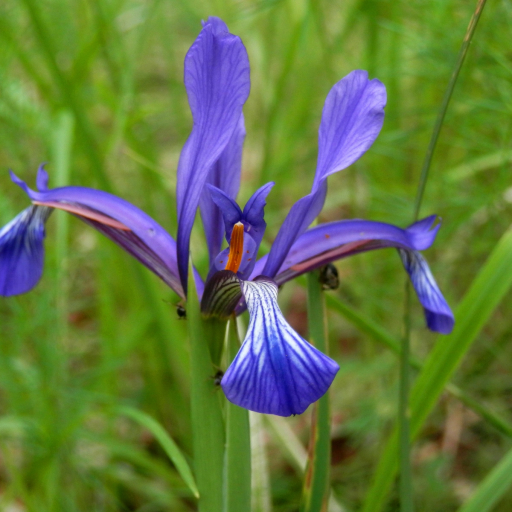
Plant Overview
Known as Sintenis’s Iris, this elegant wildflower is a hidden gem of the Balkan Peninsula and Turkey. While it looks remarkably similar to its cousin, the Plum-Scented Iris, it trades the fruity fragrance for a more refined, slender silhouette. It is a member of the "Spuria" group, beloved by enthusiasts for its delicate, grass-like foliage and intense violet-blue hues.
🔍 How to Identify
- 💜 The Flowers: Deep violet to cobalt-blue blooms featuring a prominent white patch on the "falls" (the drooping petals), intricately etched with dark purple veins.
- 🌿 The Foliage: Exceptionally narrow, stiff, sword-like leaves that resemble ornamental grass, staying tidy throughout the growing season.
- 📏 The Stature: A compact grower, typically reaching about 8 to 12 inches in height, making it much shorter and more "tufted" than common garden irises.
🏡 In Your Garden
- ☀️ Sun Seeker: This iris thrives in open, sunny spots and is surprisingly drought-tolerant once established, reflecting its origins on rocky Mediterranean hillsides.
- 🌱 Root Sensitivity: Unlike bearded irises that sit on top of the soil, Iris sintenisii prefers to be planted slightly deeper. It strongly dislikes being moved; once planted, leave it alone for several years to allow the clump to reach its full flowering potential.
- 💧 Drainage is Key: While it enjoys spring moisture, it requires excellent drainage in the winter to prevent the rhizomes from rotting.
⚠️ Safety & Toxicity
- 🚫 Toxic if Ingested: Like all members of the Iris family, this plant contains the compound iridin. It is toxic to humans, cats, dogs, and horses.
- 🤢 Symptoms: Ingestion of the rhizomes (roots) or leaves can cause nausea, vomiting, and abdominal pain.
- 🧤 Skin Sensitivity: Some gardeners may experience mild skin irritation (dermatitis) when handling the sap or bruised rhizomes; wearing gloves is recommended during division.
✨ Fun Fact
This plant was named in honor of Paul Sintenis, a 19th-century German botanist who braved the rugged landscapes of the Ottoman Empire to collect thousands of rare plant specimens, many of which were entirely new to science at the time!

Detailed Care Instructions
To grow Iris sintenisii, follow these steps:
- Planting: Choose a sunny spot in your garden with well-draining soil. Prepare the soil by adding organic matter, such as compost or aged manure, to improve its fertility and drainage. Iris sintenisii prefers neutral to slightly acidic soil. Dig a hole that is deep enough to accommodate the roots without bending or crowding them.
- Watering: Water the plant deeply after planting and then keep the soil consistently moist but not waterlogged. Iris sintenisii prefers moist conditions but does not tolerate sitting in water. Water it regularly, especially during dry spells, to promote healthy growth.
- Fertilizing: Iris sintenisii generally does not require heavy fertilization. Apply a balanced, slow-release fertilizer once per year in early spring or just after the blooming period. Follow the packaging instructions for the appropriate amount to apply.
- Mulching: Mulch around the base of the plant to help retain moisture and suppress weed growth. Apply a layer of organic mulch, such as wood chips or straw, after planting and replenish it as needed throughout the growing season.
- Dividing: Iris sintenisii can benefit from division every few years to prevent overcrowding and promote vigorous growth. The best time to divide the plant is after it finishes flowering. Carefully dig up the clump, separate the individual rhizomes, and replant them in prepared soil with adequate spacing.
- Pests and Diseases: While Iris sintenisii is generally resistant to pests and diseases, keep an eye out for common issues like aphids, snails, or fungal diseases. Treat them promptly using appropriate insecticides or fungicides, if necessary.
- Pruning: Deadhead the spent flowers to maintain a neat appearance, improve aesthetics, and prevent the plant from expending energy on seed production. Cut the flower stalk back to the base once it has finished blooming.
By following these care guidelines, you can successfully grow and enjoy Iris sintenisii in your garden.

Place in a bright room that is sun drenched almost all day. Or directly in a south-facing window.

To water this plant, use a watering can or hose with a gentle spray nozzle. Water directly around the base of the plant, being careful to avoid getting water on the leaves. Allow the soil to dry out slightly between waterings, as this plant prefers well-draining soil. Avoid overwatering, as this can lead to root rot. Water less frequently during the winter months, as the plant will require less water during this time.
To fertilize this plant, use a balanced fertilizer with an NPK ratio of 10-10-10. Apply the fertilizer in early spring before the plant begins to grow. Avoid over-fertilizing, as it can lead to stunted growth or damage to the plant. Water the plant thoroughly after fertilizing to ensure the nutrients are absorbed properly.
Iris Sintenisii is a plant that requires well-draining, slightly acidic soil with a pH range of 5.5 to 6.5. The soil should be fertile, nutrient-rich, and well-aerated to promote healthy growth. A sandy loam soil that is a mix of sand, silt, and clay is suitable for this plant. It is also recommended to mix in some organic matter like compost or peat moss to improve soil structure and provide nutrients. The plant prefers soil that is moist but not waterlogged, so watering should be done moderately. It is important to ensure that the soil is not compacted and has good drainage to prevent root rot. Overall, a well-draining, fertile, and slightly acidic soil with good aeration and good drainage is essential for the growth and development of Iris Sintenisii plant.
Iris Sintenisii can be propagated through the process of division. In order to do this, wait until the plant has finished blooming and has entered its dormant phase. This is typically in the fall.
First, carefully dig up the plant and gently remove any excess dirt or debris. Look for the cluster of rhizomes, or underground stems, that form the main structure of the plant. Using a sharp, clean knife or garden shears, carefully cut the rhizomes into sections. Make sure that each section has a healthy cluster of roots and at least one leaf fan or stem attached.
Plant each section in a well-draining soil mixture that has been amended with organic matter, such as compost or peat moss. Be sure to place the rhizomes just below the surface of the soil, with the roots facing downwards. Water in thoroughly, and keep the newly divided plants well-watered until they become established.
It's important to note that Iris Sintenisii should be divided every few years in order to maintain its health and vigor. This will also help to prevent overcrowding, which can lead to disease and reduced blooming.








