Plant Overview
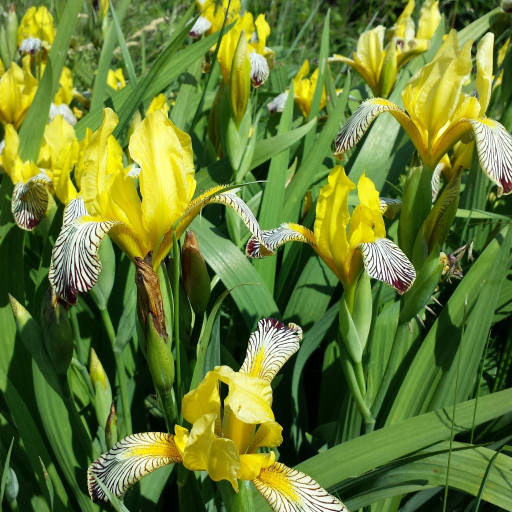
Often called the Hungarian Iris, this striking perennial is like a living relic from the wild meadows of Central and Eastern Europe. With its dramatic contrasting colors and intricate striped patterns, it looks as though a Victorian painter meticulously detailed every petal by hand. It is a rugged ancestor of modern bearded irises, providing the genetic "blueprint" for many of the yellow and bicolor hybrids found in gardens today.
🔍 How to Identify
- 🎨 The "Standards": The three upright petals are a solid, sunny lemon-yellow, creating a bright, clear crown at the top of the bloom.
- 🦓 The "Falls": The drooping lower petals feature a stunning contrast, with bold, dark purple or chestnut-brown veins "painted" over a creamy yellow base.
- 🗡️ Sword-like Foliage: The leaves are classic iris blades—stiff, upright, and grayish-green, typically forming a dense fan shape at the base of the plant.
🏡 In Your Garden
- ⛰️ Drainage is Vital: Because it naturally grows on rocky hillsides and forest edges, this iris is highly sensitive to "wet feet." It is crucial to plant the rhizomes (the thick root-like stems) so they are partially exposed to the sun and air; burying them too deep is the fastest way to cause rot.
- ☀️ Sun Seeker: While it can tolerate very light dappled shade, it needs plenty of direct sunlight to produce its signature blooms. If the plant becomes too shaded by taller neighbors, it will stop flowering and focus entirely on leaf growth.
- ✂️ Low Maintenance: Once established, it is incredibly drought-tolerant. Simply remove spent flower stalks and clear away dead leaves in autumn to prevent pests from overwintering in the foliage.
⚠️ Safety & Toxicity
- 🚫 Toxic if Ingested: All parts of the Hungarian Iris contain the compound iridin. If eaten, it can cause significant stomach upset, nausea, and vomiting.
- 🐾 Pet Safety: The rhizomes contain the highest concentration of toxins. Keep curious dogs or outdoor cats away from newly planted beds where the roots might be exposed.
- 🧤 Skin Irritation: The sap can cause mild skin irritation or "iris dermatitis" in sensitive individuals. It is best to wear gloves when dividing the clumps or trimming the leaves.
✨ Fun Fact
This plant is a true botanical survivor; it was first officially described by Carl Linnaeus in 1753. Unlike many modern hybrids that are "fussy" and prone to disease, the Iris variegata remains one of the hardiest species in the genus, capable of surviving harsh winters that would wither other flowers.

Detailed Care Instructions
To grow an Iris Variegata plant, you can follow these steps:
- Choose the right location: Iris Variegata plants prefer full sun but can tolerate partial shade. Make sure the area has well-draining soil.
- Prepare the soil: Before planting, amend the soil with organic matter to improve fertility and drainage.
- Plant the rhizomes: Iris Variegata plants grow from rhizomes, which are thick underground stems. Dig a hole that is wide and shallow enough for the rhizomes to be placed horizontally. Leave the tops exposed to the soil surface.
- Water properly: Keep the soil evenly moist for the first few weeks of planting to help the rhizomes establish. After that, water sparingly as these plants are somewhat drought-tolerant.
- Mulch the soil: Apply a layer of organic mulch around the plants to help retain moisture and suppress weed growth.
- Fertilize sparingly: Iris Variegata plants don't require heavy fertilization. Apply a balanced fertilizer in early spring when the new growth appears, following the package instructions.
- Divide regularly: Iris Variegata plants tend to multiply and form dense clumps over time. To prevent overcrowding, divide the clumps every 3-4 years during the dormant season (usually late summer or early fall). Replant the divided sections in different locations or share with other gardeners.
- Pests and diseases: Monitor the plants for pests like iris borers and treat them promptly. Additionally, ensure good air circulation around the plants to prevent diseases like rhizome rot.
- Enjoy the blooms: Iris Variegata plants typically bloom in late spring or early summer. The flowers are usually purple or blue with white or yellow variegation and a sweet fragrance.
By following these steps, you should be able to successfully grow and enjoy your Iris Variegata plant.

Place in a window with dappled sun or a spot in the middle of a room. Or directly in a window facing west or east.

When irrigating the plant with variegated leaves that belong to the Iris family, it is important to ensure that the soil is consistently moist. However, overwatering should be avoided as it can lead to root rot and other fungal diseases.
It is recommended that this plant is watered deeply once a week during the growing season and less frequently during the dormant period. The frequency and amount of water needed may vary depending on the specific location and growing conditions, so it is important to monitor the soil moisture levels regularly.
When watering, it is advisable to avoid getting water on the leaves and flowers as this can increase the risk of fungal diseases. Instead, water the soil around the base of the plant using a watering can or hose with a gentle spray nozzle.
In addition to regular watering, it is important to ensure that the soil is well-draining to prevent waterlogging and root rot. Adding organic matter such as compost or mulch can help improve soil drainage and retain moisture.
- Begin fertilizing in the early spring, once the plant has begun to emerge from dormancy.
- Choose a balanced fertilizer with equal parts nitrogen, phosphorus, and potassium.
- Apply the fertilizer at a rate of 1/4 cup per plant, scattered evenly around the base of the plant.
- Water thoroughly after applying the fertilizer.
- Repeat the fertilization process once every 4-6 weeks during the growing season.
- Reduce fertilization in the late summer as the plant prepares for dormancy.
- Avoid fertilizing during the winter months when the plant is dormant.
For an Iris Variegata plant, it is recommended to use well-draining soil that is rich in organic matter. This type of soil will help prevent waterlogging which can lead to root rot. The soil should also have a slightly acidic to neutral pH range around 6.0 to 7.0. It is important to avoid using heavy clay soils as they tend to retain too much water and restrict root growth. A good option could be a sandy loam soil. Additionally, adding mulch or compost to the soil can help increase its organic content and improve drainage.
To propagate this plant, take a rhizome from the parent plant and cut it into sections, making sure each section has at least one healthy shoot. Allow the cuttings to dry for a day or two, then plant them in a mixture of well-draining soil and perlite or sand. Water lightly and keep the soil moist until new growth appears, which can take several weeks. Once the new plants are established, they can be transplanted into their permanent location in the garden.








