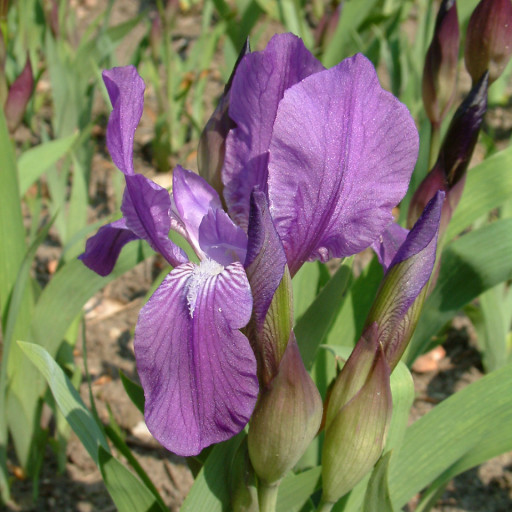
Plant Overview
Named after the Greek goddess of the rainbow, the Iris has been a symbol of royalty, wisdom, and communication for thousands of years. From the classic "Fleur-de-lis" of French heraldry to the wild flags found in marshlands, these perennials are beloved for their architectural beauty. They are the heralds of late spring, offering a spectrum of colors that can fit into almost any garden style.
🔍 How to Identify
- 🌸 The Bloom Structure: Each flower consists of three "falls" (petals that droop downward) and three "standards" (petals that stand upright), creating a complex, layered look.
- 🗡️ Sword-like Foliage: Irises are easily recognized even when not in bloom by their flat, blade-shaped leaves that grow in a distinct fan-like arrangement.
- 🧔 The "Beard": Many popular garden varieties feature a fuzzy, caterpillar-like strip on the falls known as a beard, which acts as a landing strip for bumblebees.
🏡 In Your Garden
- ☀️ Sun-Baked Feet: Most Irises grow from thick underground stems called rhizomes. Unlike most roots, these rhizomes actually like to "sunbathe"—burying them too deep is the most common reason they fail to bloom.
- ✂️ Post-Bloom Maintenance: To keep the plant healthy, it’s best to cut the flower stalks down to the base once they fade, but leave the green leaves alone so they can gather energy for next year's show.
- 🌱 The Need for Space: Every 3 to 5 years, Iris clumps become crowded and the center may stop blooming. Digging them up and snapping the rhizomes apart to "divide" them keeps the plant vigorous and gives you new plants to share.
⚠️ Safety & Toxicity
- 🐾 Toxic to Pets: Irises contain compounds called iridin, which are toxic to dogs and cats. The highest concentration is found in the rhizomes (the roots).
- 🧤 Skin Sensitivity: Some gardeners experience mild skin irritation or "dermatitis" when handling the sap or the rhizomes, so wearing gloves during division is recommended.
- 🚫 Keep Away from Kids: While beautiful, no part of the plant should be ingested, as it can cause nausea and stomach upset.
✨ Fun Fact
- 🧪 The Scent of Time: The roots of the Iris (known as Orris root) are dried for up to five years to develop a fragrance similar to violets. This precious powder is used as a fixative in high-end perfumes and is even a key botanical in many premium gins!

Detailed Care Instructions
To grow an iris plant, follow these steps:
- Choose the right location: Select a spot that receives at least 6 hours of direct sunlight each day. Ensure the area has well-draining soil.
- Prepare the soil: Remove any weeds or debris from the area. Loosen the soil using a garden fork or spade to a depth of 8-10 inches. Add organic matter, such as compost or well-rotted manure, to improve soil fertility and drainage.
- Select the iris variety: Choose the type of iris you want to grow. The most common types are bearded iris, Siberian iris, and Japanese iris. Consider the climate and growing conditions in your region to ensure the selected variety is suitable.
- Planting iris rhizomes: Iris plants grow from rhizomes, which are thick, fleshy root structures. Plant the rhizomes in late summer or early fall, allowing enough time for them to establish before winter. Dig a hole that is wide enough to accommodate the rhizome without bending it. Place the rhizome horizontally on top of the soil, with the roots extending downwards, and cover it with 1-2 inches of soil.
- Watering: After planting, water the rhizomes thoroughly to settle the soil. From then on, water the plants regularly, especially during dry spells. Irises prefer moist but not waterlogged soil. Make sure to provide regular watering until the plants are established.
- Mulching: Spread a layer of organic mulch, such as straw or wood chips, around the base of the plants. This helps retain moisture, suppress weed growth, and regulate soil temperature.
- Fertilizing: Feed iris plants with a balanced granular fertilizer in early spring, before new growth appears. Follow the manufacturer's instructions for application rates.
- Pruning: Remove any dead or dying foliage throughout the year. After the blooming period, cut back the flowering stems to the base to promote new growth.
- Dividing: Every few years, iris plants may become overcrowded and require division. Dig up the rhizomes, separate them carefully, and replant in a newly prepared bed or share with friends and neighbors.
By following these steps, you can successfully grow iris plants and enjoy their beautiful blooms.

Place in a window with dappled sun or a spot in the middle of a room. Or directly in a window facing west or east.

Iris plants require regular watering to ensure healthy growth and blooming. When watering, it is important to avoid getting water on the foliage or flowers as this can cause damage and disease.
To water an Iris plant, start by checking the soil moisture level. This can be done by inserting your finger about an inch deep into the soil. If it feels dry, it's time to water.
When watering, use a watering can or a gentle stream from a hose. Apply water directly to the soil around the plant, making sure to avoid wetting the foliage or blooms. Water until the soil is moist, but not waterlogged.
During hot, dry weather, Iris plants may require more frequent watering. Be sure to also check the soil moisture level in between watering to avoid over or under watering.
In addition to regular watering, Iris plants may benefit from a layer of mulch applied around the base of the plant. This can help retain moisture and regulate soil temperature.
When fertilizing iris plants, use a slow-release fertilizer with a balanced ratio of nitrogen, phosphorus, and potassium. Apply the fertilizer evenly around the base of the plant, avoiding contact with the leaves or rhizomes. Water the plant thoroughly after fertilizing to help distribute the nutrients. Fertilize once in early spring before the plant begins to actively grow, and again after the plant has finished blooming in the summer. Avoid fertilizing in the fall or winter when the plant is dormant.
The best soil for the plant should have a pH level of 6.8-7.5 and be well-draining. The soil should be rich in organic matter and humus, with good water retention capacity. It should also be free of weeds, pests, and disease-causing organisms, and should be able to provide ample nutrients for the plant. A mixture of sand, peat moss, and loam is ideal for growing this plant. Additionally, ensuring that the planting area is properly prepared beforehand is crucial for the plant's success.
Iris plants can be propagated through a process called division. This involves carefully removing the rhizome, which is the underground stem that the plant grows from, and separating it into smaller pieces that each have at least one healthy shoot and root system. It is important to make clean cuts with a sharp, sterilized tool to avoid damage to the rhizome. The new, smaller rhizomes can be replanted immediately in well-draining soil and watered thoroughly. It is best to propagate Iris plant in the fall after the plant has finished flowering and the leaves have died back, or in the early spring before new growth begins. This allows the plant to recover and establish itself before the next growing season.
Common pests of the irises include Spider mites, aphids, whiteflies. Make a habit of checking your irises frequently for pests so that any infestations can be caught and managed early.







