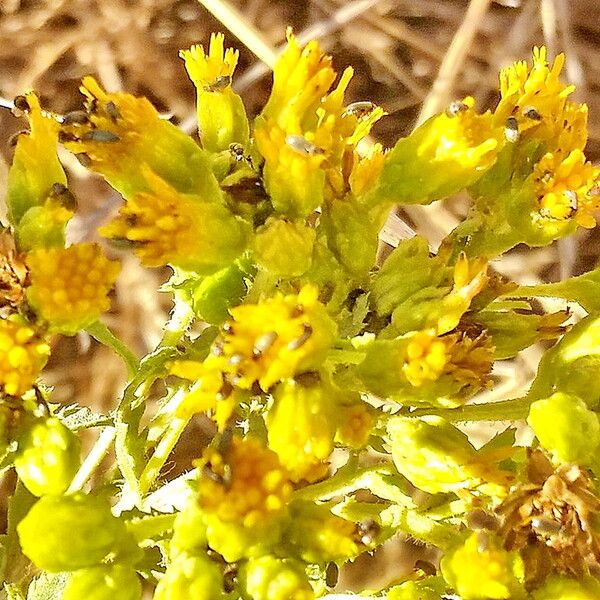
Plant Overview
Known as Menzies' Goldenbush, this hardy evergreen shrub is a rugged staple of the sun-drenched California coast and chaparral. While it might look like a humble wildflower from afar, it is a master of survival, capable of thriving in salty sea breezes and bone-dry, rocky soils. In the late summer when most other plants have faded under the heat, this "golden survivor" bursts into a brilliant display of yellow, acting as a vital late-season oasis for local wildlife.
🔍 How to Identify
- 🌼 Flower Heads: Look for small, yellow, button-like clusters. Unlike daisies, these flowers lack long outer petals, giving them a fuzzy, "flat-top" appearance.
- 🍃 Sticky Foliage: The narrow, slightly toothed leaves are covered in a tacky resin. If you gently touch the foliage, it will feel distinctly sticky—a clever trick the plant uses to prevent water loss.
- 🪵 Mounding Form: It typically grows as a low, dense mound about 1 to 3 feet tall, with older branches becoming tough and woody at the base.
🏡 In Your Garden
- 🏜️ The Drainage Rule: This plant is a specialist in "lean" living. It hates rich, soggy soil; if you plant it in heavy clay without drainage, the roots are likely to struggle. It thrives in sandy or gravelly spots where water moves quickly.
- 🦋 A Pollinator Lifeline: Because it blooms in late summer and autumn, it provides a "last call" buffet for bees and butterflies (including the rare El Segundo Blue butterfly) when other nectar sources have dried up.
- ✂️ Maintenance Needs: To keep it from looking "leggy" or unkempt, give it a light haircut after the flowers have faded. This encourages a tighter, more silver-green appearance for the following spring.
⚠️ Safety & Toxicity
- ✅ Low Risk: Menzies' Goldenbush is generally considered non-toxic to humans and common household pets.
- 🧴 Resin Warning: The sticky resin on the leaves can trap dust and pollen, which might irritate the skin or eyes of sensitive individuals. It is best to wear gloves if you are pruning a large patch.
- 🚫 Not for Grazing: While not inherently poisonous, it is not a forage plant. Its resinous taste usually prevents pets or livestock from wanting to take more than a curious nibble.
✨ Fun Fact
✨ The genus name Isocoma is derived from the Greek words for "equal hair." This refers to the fluffy, hair-like bristles attached to its seeds, which act like tiny parachutes to help the wind carry them across the golden hills of the West Coast.

Detailed Care Instructions

Place in a bright room that is sun drenched almost all day. Or directly in a south-facing window.

When the top few inches of soil dry out, water your plants. If the top few inches of soil are still moist, do not water your plant. Wait a few days, then poke your finger into the soil to see if anything has changed. Overwatering poses a disease risk, such as the development of fungal diseases in the roots. These plants have adaptations in there leaves that allow them to survive in low water supply.







