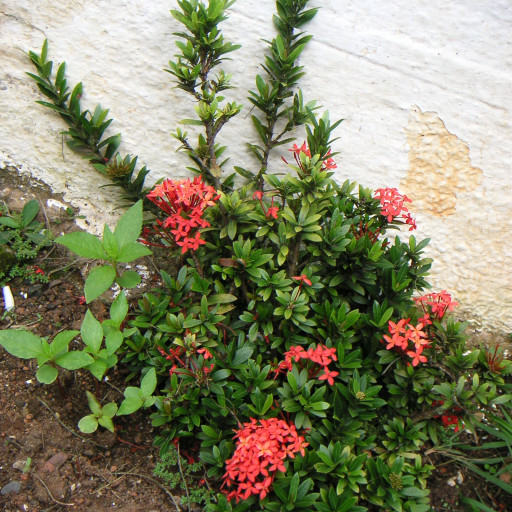
Plant Overview
Known as the Jungle Flame or Flame of the Woods, the Ixora Coccinea is a tropical showstopper that looks like it belongs in a royal courtyard. Native to Southern India and Sri Lanka, this evergreen shrub is famous for its dense, fiery flower clusters that bloom almost year-round in warm climates. It is a favorite among gardeners who want to attract butterflies while maintaining a lush, "manicured" look.
🔍 How to Identify
- 🌺 Flower Clusters: Dense, rounded clusters of tiny, star-shaped flowers. While most famous in scarlet red, they also come in orange, yellow, and pink.
- 🍃 Glossy Foliage: The leaves are leathery, oblong, and dark green with a shiny finish, growing in pairs or whorls along the stems.
- 📏 Compact Form: Naturally grows as a multi-branched, dense shrub that can reach 4–6 feet, though many ornamental varieties stay much smaller.
🏡 In Your Garden
- 🧪 Acidic Soil Lover: Ixora is a "calcifuge," meaning it struggles in alkaline soil. If you notice the leaves turning yellow while the veins stay green, the plant likely needs more iron and more acidic soil.
- ✂️ Pruning for Blooms: Because Ixora blooms on "new wood," regular pruning is your best friend. Trimming it back after a flowering cycle encourages a fresh flush of growth and even more "flames."
⚠️ Safety & Toxicity
- 🐾 Pet Status: Good news for pet owners! Ixora is generally considered non-toxic to dogs, cats, and horses according to the ASPCA.
- 👶 Human Safety: While not considered poisonous, the plant is purely ornamental. Ingesting the berries or leaves may cause mild stomach upset in small children, so it’s best kept as a "look, don't eat" garden resident.
✨ Fun Fact
In its native India, Ixora Coccinea is more than just a pretty face; it is deeply rooted in tradition and is frequently used in Hindu temple offerings and Ayurvedic medicine to treat various skin conditions and digestive issues.

Detailed Care Instructions
| Soil Ph | Acidic |
| Humidity | Normal |
| Lighting | Full Sun |
| Soil Type | Rich, Moist, Peat-Based Soil |
| Difficulty | Medium |
| Temperature | 15°C - 27°C |
| Hardiness Zones | 11 - 12 |
To grow Ixora coccinea plant, such as the flame of the woods, consider the following steps:
- Choose a suitable location: Ixora plants prefer full sun to partial shade, so make sure to find a spot that receives at least 6 hours of direct sunlight per day. They also need well-draining soil.
- Prepare the soil: Ixora plants thrive in slightly acidic soil with a pH level between 5.5 and 6.5. It is recommended to mix sand and organic matter like compost or peat moss into the soil to improve drainage and fertility.
- Planting: Dig a hole roughly twice as wide and deep as the plant's root ball. Place the plant in the hole, making sure that the top of the root ball is level with the surrounding soil. Fill the hole with soil and gently firm it around the base of the plant.
- Watering: Water the plant thoroughly immediately after planting and continue to keep the soil moist but not waterlogged. During the hot summer months, it may require watering more frequently.
- Mulching: Apply a layer of organic mulch around the base of the plant, leaving a few inches of space around the stem. This will help retain moisture, regulate soil temperature, and prevent weeds.
- Fertilization: Ixora plants benefit from regular feeding. Apply a balanced fertilizer, such as a slow-release granular fertilizer, every 2-3 months during the growing season. Follow the instructions on the fertilizer package for proper dosage.
- Pruning: Regular pruning is essential to maintain the plant's shape and promote bushiness. Prune after the flowering cycle to remove any dead or diseased branches and to encourage new growth.
- Pest and disease control: Ixora plants are generally resistant to pests and diseases. However, keep an eye out for common issues like aphids, scale insects, and fungal diseases. Treat any problems promptly with appropriate insecticides or fungicides.
- Winter care: Ixora plants are sensitive to cold temperatures. If you live in a region with frost or freezing temperatures, consider protecting the plant by covering it with a blanket or moving it indoors. Alternatively, you can grow it in containers that can be brought indoors during the winter months.
By following these steps and providing the necessary care, your Ixora coccinea plant should thrive and produce beautiful clusters of flowers.

Place in a window with dappled sun or a spot in the middle of a room. Or directly in a window facing west or east.

To properly water this plant, you should first check the soil to see if it is dry to the touch. If it is, water the plant thoroughly until water runs out of the drainage holes at the bottom of the pot. Avoid watering the foliage of the plant, as this can lead to fungal issues. Instead, water directly at the base of the plant. In general, it is best to water this plant deeply and infrequently rather than giving it frequent shallow watering. Depending on the environment and growing conditions, you may need to adjust your watering schedule accordingly to prevent over or under watering.
To fertilize this plant, apply a slow-release fertilizer with a balanced NPK ratio of 10:10:10 every three months during the growing season. Water the plant thoroughly before and after application to prevent fertilizer burn. Avoid over-fertilizing, as this can lead to excessive vegetative growth with few flowers.
The ideal soil for the plant is a well-draining, slightly acidic soil with a pH range of 5.5 to 6.5. It should be rich in organic matter and nutrients, but not too dense or compacted, as the roots need room to spread and breathe. A mix of compost, sphagnum moss, and perlite or sand can be used to achieve the desired consistency and drainage. It is also recommended to add a slow-release fertilizer to the soil to provide ongoing nutrition for the plant.
To propagate this plant, start by taking a cutting from a healthy parent plant. Choose a stem that is firm and green, and remove any leaves or flowers from the bottom 2 inches of the stem.
If you have rooting hormone, dip the cut end of the stem into it to encourage root growth. You can also use a natural rooting hormone by dipping the end of the stem in honey or aloe vera gel.
Next, prepare a planting pot by filling it with well-draining soil, such as a mixture of potting soil and perlite. Make a small hole in the soil with your finger or a pencil, and gently place the cutting into the hole. Firmly press the soil around the base of the stem to hold it in place.
Water the cutting thoroughly, and cover it with a plastic bag or clear plastic wrap to create a mini greenhouse. This will help to keep the cutting moist and humid, which encourages root growth.
Place the pot in a warm, bright location, but out of direct sunlight. Check the cutting regularly to make sure the soil stays moist, but do not overwater it. After a few weeks, you should see new growth appearing, which means that roots have formed.
Once the cutting has established a strong root system, you can transplant it into a larger pot or outside in your garden.
Common pests of the flame of the woods include Scale insect, mealybugs, aphids, thrips. Make a habit of checking your flame of the woods frequently for pests so that any infestations can be caught and managed early.








