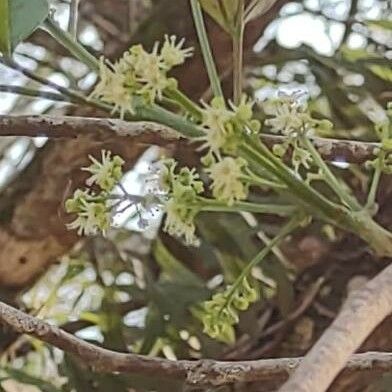
Plant Overview
Often called the Long-pointed Jacaranda, this South American native is the elegant, sharper-leaved cousin of the world-famous Jacaranda mimosifolia. Hailing from the dry forests of Brazil and Bolivia, it is a medium-sized tree that transforms into a cloud of violet-blue every spring. It is highly prized by landscapers for its "see-through" canopy that provides dappled shade without completely blocking out the sun.
🔍 How to Identify
- 🍃 The Leaf Tip: Unlike its cousins, the leaflets of J. cuspidifolia end in a long, distinct point (hence the name "cuspidifolia," meaning pointed leaf).
- 🪻 Vibrant Panicles: It produces large, upright clusters of trumpet-shaped flowers. These blossoms are typically a deeper, more intense lavender than the common Jacaranda.
- 📦 Woody Pods: After the floral show, the tree develops flat, circular, woody seed capsules that look like small brown castanets. When they dry, they crack open to release winged seeds.
🏡 In Your Garden
- ☀️ Light & Space: This tree is a sun-worshipper. To get the best floral display, it needs a position in full sun. It grows relatively fast and develops a wide, spreading crown, so give it plenty of "elbow room" away from power lines or house foundations.
- 🌱 Soil & Drainage: The Long-pointed Jacaranda is sensitive to "wet feet." It thrives in well-draining, sandy, or loamy soil. If your garden has heavy clay, consider planting it on a slight mound to ensure water doesn't pool around the roots.
- ❄️ Frost Sensitivity: While mature trees are somewhat hardy, young saplings are very tender. They need protection from frost during their first few winters until they develop a thick, corky bark.
⚠️ Safety & Toxicity
- 🐾 Pet Safety: The Jacaranda is generally considered non-toxic to dogs, cats, and horses. It is a very safe choice for family backyards.
- 🧹 Litter Awareness: While not toxic, the tree is "messy." The fallen flowers can create a slippery carpet on wet pavement, and the woody pods can be a tripping hazard or a minor choking hazard for very small children if they try to chew on them.
✨ Fun Fact
In many parts of the Southern Hemisphere, Jacarandas are known as "Exam Trees." Because they bloom in late spring—right when university finals take place—legend has it that if a purple blossom falls on your head, you are guaranteed to pass all your classes!

Detailed Care Instructions
To grow a Jacaranda cuspidifolia plant, you can follow these steps:
- Choose a suitable location: Jacarandas prefer full sun exposure, so select a spot in your garden that gets at least 6-8 hours of direct sunlight per day. The soil should be well-draining and fertile.
- Propagation: You can grow Jacaranda plants from seeds or cuttings. Collect seeds from a mature Jacaranda tree or purchase them from a reputable supplier. If using cuttings, take 6-8 inch long stems from a healthy parent plant.
- Planting seeds: Soak the Jacaranda seeds in warm water for 24 hours to soften the outer shell. Plant them in individual pots filled with well-draining soil and place them in a warm and bright location, such as a greenhouse or a sunny windowsill. Keep the soil consistently moist but not waterlogged.
- Planting cuttings: Dip the cut end of the stem in rooting hormone to encourage root growth. Plant the cutting in a pot filled with a mixture of well-draining soil and vermiculite or perlite. Mist the cutting with water to maintain humidity and place the pot in a warm and bright location.
- Watering: Once the seeds or cuttings are planted, keep the soil consistently moist but avoid overwatering, as it may lead to root rot. Water the plants deeply but infrequently, allowing the top inch of soil to dry out between waterings.
- Fertilizing: Apply a balanced, slow-release fertilizer once in spring and once in summer to promote healthy growth. Follow the instructions on the fertilizer package for the correct dosage.
- Pruning: Jacaranda trees can be pruned in late winter or early spring to remove any dead or damaged branches and to maintain a desired shape. Avoid heavy pruning as it can inhibit blooming.
- Protection: Provide protection to young plants during frosts or cold winters by covering them with a frost cloth or moving them indoors. Jacarandas are sensitive to cold temperatures and may suffer damage if exposed to freezing conditions.
- Transplanting: Once the seedlings or cuttings have developed a sturdy root system, they can be transplanted into larger pots or directly into the ground. Choose a location with adequate space to accommodate the tree's mature height and spread.
- Maintenance: Regularly monitor the plant for pests and diseases. Treat any issues promptly. Mulching around the base of the tree can help conserve moisture and suppress weed growth.
By following these steps, you can successfully grow a Jacaranda cuspidifolia plant and enjoy its beautiful purple flowers.

Place in a bright room that is sun drenched almost all day. Or directly in a south-facing window.

When watering this particular plant, it is important to ensure that the soil is evenly moist but not waterlogged. You can achieve this by watering deeply but less frequently rather than lightly and frequently. You should also wait for the top layer of soil to dry out before watering again.
It is recommended to water the plant in the morning or evening to avoid evaporation during the hottest parts of the day. Additionally, it is important to water at the base of the plant rather than on the leaves or flowers to prevent fungal growth.
It is important to note that overwatering can lead to root rot and other issues, so it is better to under-water than over-water. It is also important to adjust the watering frequency based on the specific conditions of your plant's environment, such as humidity and temperature.
In summary, to properly water this plant, water it deeply but less frequently, wait for the top layer of soil to dry out before watering again, water at the base of the plant, and adjust watering frequency based on environmental conditions.
To fertilize this plant, use a balanced fertilizer with equal amounts of nitrogen, phosphorus, and potassium. Apply the fertilizer once a month during the growing season, which is typically from spring to fall. Avoid over-fertilizing as it can damage the roots and cause the plant to become weak and susceptible to diseases. Water the plant thoroughly before and after fertilizing to prevent root burn.
The ideal soil for Jacaranda Cuspidifolia should be well-draining and enriched with organic matter. The soil pH should be slightly acidic to neutral, with a range between 6.0 and 7.5. Avoid heavy clay soils, compacted or waterlogged soil as it can cause root rot. A sandy loam mixture with equal parts of peat moss and perlite is a good option. Additionally, adding compost or aged manure can improve soil fertility and drainage. Make sure the soil is adequately moist, but not waterlogged, as these plants require consistent moisture during the growing season.
- Choose a healthy mature plant with strong stems and leaves.
- Take a cutting from the plant that is about 6-8 inches long with a sharp, sterilized pair of scissors or pruning shears.
- Remove the bottom leaves from the cutting, leaving only a few at the top to protect the plant from water loss.
- Dip the cut end of the cutting in rooting hormone.
- Place the cutting in a pot filled with well-draining soil, making sure to bury the cut end about an inch into the soil.
- Water the cutting thoroughly and cover it with a plastic bag.
- Place the pot in a sunny location with indirect light.
- Check the cutting regularly and water it as needed to keep the soil moist but not waterlogged.
- After 3-4 weeks, check to see if the cutting has rooted by gently tugging on it. If it resists being pulled out of the soil, it has successfully rooted.
- Once the cutting has rooted, remove the plastic bag and continue to care for the plant as you would a mature Jacaranda Cuspidifolia plant, eventually transplanting it to a larger pot or into the ground.








