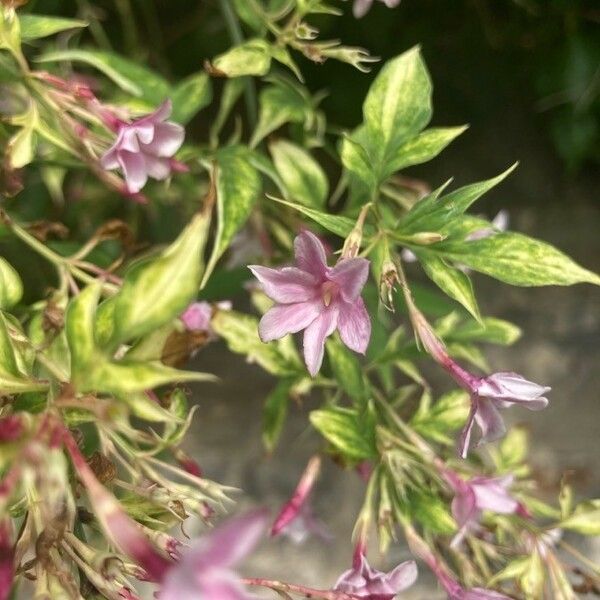
Plant Overview
Often called the Red Jasmine, this Chinese beauty breaks the traditional rules of its genus by ditching classic white petals for deep crimson and rose-pink hues. Named after the famous Bees Ltd nursery, it is a semi-evergreen climber that brings a touch of romance and dramatic verticality to any landscape. While its fragrance is more subtle and spicy than its white-flowered cousins, its visual impact is unmatched in the jasmine family.
🔍 How to Identify
- 🌸 The Flowers: Small, star-shaped blossoms that range from deep rose-pink to a rich carmine red, appearing in clusters during early summer.
- 🌿 The Foliage: Slender, lance-shaped leaves with a slightly velvety texture; they are opposite-facing and usually stay green through mild winters.
- 🌑 The Berries: After the flowers fade, the plant produces shiny, jet-black berries that linger on the vine through the winter months.
🏡 In Your Garden
- 🧗 The Scrambler: Unlike some vines that have aggressive "suction cups," this jasmine is a scrambler. It needs a trellis, wire, or a sturdy fence to weave through as it climbs.
- ☀️ Sun for Blooms: While it is a hardy survivor in partial shade, it requires plenty of sunlight to produce its signature red flowers. Too much shade will result in a "leggy" plant with lots of green leaves but no color.
- ✂️ Pruning Timing: This plant blooms on the previous year's wood. To avoid losing your flowers, only prune it immediately after it finishes blooming in the summer.
⚠️ Safety & Toxicity
- ✅ General Safety: True jasmines (Jasminum genus) are generally considered non-toxic to humans and pets.
- 🐾 Pet Friendly: It is listed as non-toxic to dogs and cats, making it a much safer alternative to "Carolina Jasmine" or "Star Jasmine," which can be irritating.
- 🚫 Berry Caution: While not classified as deadly, the black berries are not edible and should not be consumed by children or pets, as they may cause mild digestive upset.
✨ Fun Fact
This plant was "hunted" and brought to the West by the legendary explorer George Forrest. He discovered it in the high-altitude mountains of Yunnan, China, and named it in honor of the "Bees of Chester," the nursery that funded his daring and often dangerous botanical expeditions.

Detailed Care Instructions
To grow Jasminum Beesianum, also known as Himalayan jasmine or simply "beesianum," you can follow these steps:
- Choose a suitable location: Select a spot that receives full sun or partial shade. This plant prefers well-draining soil with a slightly acidic to neutral pH level.
- Prepare the soil: Amend the soil with organic matter, such as compost, to improve its fertility and drainage. Remove any weeds or debris from the planting area.
- Planting process:
- Dig a hole that is slightly larger than the root ball of the plant.
- Place the plant in the hole and backfill it with soil, ensuring that the crown of the plant is level with the soil surface.
- Gently firm the soil around the plant, avoiding excessive compacting.
- Water the newly planted jasmine thoroughly.
- Dig a hole that is slightly larger than the root ball of the plant.
- Watering: Water the plant regularly during its establishment period. Once it is established, water it deeply but infrequently, allowing the soil to dry out between watering sessions. Avoid overwatering, as it can lead to root rot or other diseases.
- Fertilization: Feed your Jasminum Beesianum with a balanced slow-release fertilizer in early spring. Follow the instructions on the fertilizer packaging for proper application.
- Pruning: Prune your plant after flowering or in late winter/early spring to remove any dead, damaged, or tangled branches. This will help maintain its shape, control its size, and stimulate new growth.
- Training and support: If you desire a climbing or cascading effect, provide trellises, fences, or other supports for the jasmine vines to latch onto as they grow.
- Pests and diseases: Monitor your plant regularly for common pests like aphids, spider mites, or whiteflies. Treat any infestations promptly with appropriate insecticidal soaps or horticultural oils. Additionally, watch out for symptoms of diseases like powdery mildew or root rot and take appropriate actions to address them.
- Winter protection: In areas with cold winters, consider providing protection during the colder months. Mulching around the base of the plant and covering it with burlap or a frost cloth can help insulate it from freezing temperatures.
Remember to keep an eye on your Jasminum Beesianum throughout the growing season, maintaining proper care, and providing adequate support to ensure its healthy growth.

Place in a window with dappled sun or a spot in the middle of a room. Or directly in a window facing west or east.

Jasminum Beesianum is a flowering plant that should be watered regularly to keep the soil evenly moist but not waterlogged. It is important to avoid letting the soil completely dry out as this can lead to stress and damage to the plant.
When watering, it is best to apply water directly to the soil rather than overhead watering, which can cause the flowers and leaves to become damaged or diseased. Watering should be done early in the day to allow the soil to absorb the moisture before the heat of the day sets in.
The frequency of watering will depend on the temperature, humidity, and soil conditions. It is important to monitor the soil moisture level regularly and adjust the watering schedule accordingly.
During the growing season, the plant may require more frequent watering, while in the winter months it may require less. It is important to avoid overwatering, as this can lead to root rot and other problems.
Overall, it is important to provide Jasminum Beesianum with consistent, adequate moisture to ensure healthy growth and vibrant blooms.
- Choose a balanced fertilizer with equal amounts of nitrogen, phosphorus, and potassium.
- Dilute the fertilizer in water according to package instructions.
- Apply the diluted fertilizer to the soil around the plant.
- Water the plant thoroughly after fertilizing to help the nutrients penetrate the soil.
- In the growing season, fertilize the plant every four to six weeks.
- Follow label instructions carefully and avoid over-fertilizing, as it can damage the plant.
- If the plant shows signs of nutrient deficiency, such as yellowing leaves or stunted growth, increase the frequency of fertilizing or switch to a fertilizer with higher levels of the deficient nutrient.
- Always wear gloves and protective clothing while handling fertilizers, as they can be hazardous to skin and eyes.
Jasminum Beesianum plant requires a well-draining soil that is rich in organic matter. The soil pH should be slightly acidic to neutral, ideally between 6 and 7.5. The plant prefers a loamy soil with good water retention capacity, but it cannot tolerate waterlogged soil or heavy clay soils. It is recommended to use a mix of garden soil, compost, and coarse sand or perlite to improve soil structure and drainage. The soil should also be enriched with a balanced fertilizer before planting. It is important to ensure that the soil is not too compacted as it can impede root growth and cause stress to the plant.
Jasminum Beesianum is propagated through stem cuttings which are taken during the growing season, ideally in late spring. Select a healthy mother plant from which to take the cutting. Choose a stem with a softwood section, about 4-6 inches long, making sure it has at least one node. Remove the leaves from the lower part of the cutting, leaving only 2-3 at the top. Dip the cut end of the stem in rooting hormone, then plant it in a pot filled with a mix of compost and perlite or sand. Water it well and cover it with a plastic bag to trap humidity. Place it in a warm, well-lit area, but avoid direct sunlight. Mist the cutting regularly to keep it humid. After a few weeks, check for root development by gently tugging on the stem. If you feel resistance, roots have formed. Gradually acclimate the young plant to outdoor conditions and transplant it to a larger container or in-ground location.
Common pests of the red jasmine include Scale insect, mealybugs, spider mites, aphids, thrips. Make a habit of checking your red jasmine frequently for pests so that any infestations can be caught and managed early.








