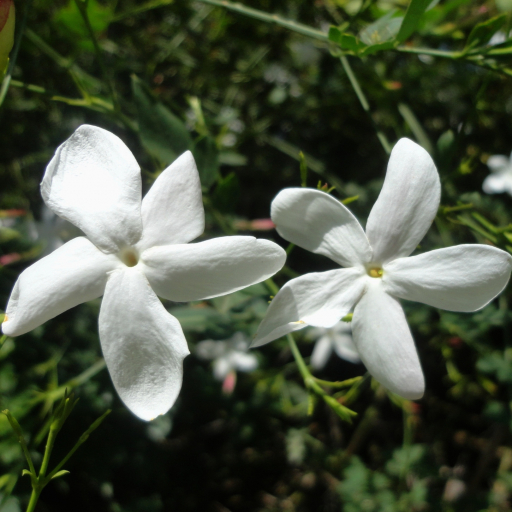
Plant Overview
Often called the "King of Fragrance," Jasminum grandiflorum is the crown jewel of the perfume world. Known by nicknames like Royal Jasmine or Spanish Jasmine, this elegant climber is famous for its intoxicating, sweet scent that intensifies as the sun sets. While it originated in the valleys of the Himalayas, it found its way into the heart of French perfumery and Mediterranean gardens centuries ago.
🔍 How to Identify
- 🌸 Starry Blooms: Pure white, star-shaped flowers with five petals. If you look closely at the buds, they often have a delicate pink or purplish tint on the underside before opening.
- 🌿 Feathery Foliage: The leaves are "pinnate," meaning they grow in sets of 5 to 11 small, oval leaflets on a single stalk, giving the plant a light, airy appearance.
- 🪜 Scrambling Stems: It grows as a deciduous shrub with long, arching branches. While it isn't a true "twining" vine, it loves to scramble over fences, trellises, or nearby shrubs for support.
🏡 In Your Garden
- ☀️ The Sun Connection: To get the best fragrance and the most flowers, this jasmine needs plenty of direct sunlight. In too much shade, the plant becomes "leggy" and focuses on leaves rather than blossoms.
- ✂️ Pruning for Bloom: This species flowers on new growth. It’s best to prune it back significantly in early spring to encourage fresh, vigorous stems that will carry the season's heavy flower load.
- 🌬️ Air Circulation: Because of its dense growth habit, it appreciates a spot with good airflow. This helps prevent fungal issues on the leaves during humid summer months.
⚠️ Safety & Toxicity
- ✅ Generally Safe: Jasminum grandiflorum is considered non-toxic to humans and common household pets like cats and dogs.
- ⚠️ The "False" Danger: Always ensure you have a "True Jasmine." Many plants with "Jasmine" in their common name—like Star Jasmine or Carolina Jasmine—belong to different families and can be highly toxic if ingested or irritating to the skin.
✨ Fun Fact
It takes a staggering amount of labor to capture this plant's essence: approximately 8,000 hand-picked blossoms are required to produce just one single gram of Jasmine Absolute, the concentrated oil used in legendary perfumes like Chanel No. 5.

Detailed Care Instructions
| Humidity | High |
| Lighting | Full Sun |
| Difficulty | Medium |
| Hibernation | Cold Period |
| Hardiness Zones | 8 - 10 |
To grow Jasminum Grandiflorum, also known as Spanish Jasmine or Royal Jasmine, follow these steps:
- Choose a suitable location: Jasminum Grandiflorum prefers a sunny spot with well-draining soil. It can also tolerate light shade, but full sun is ideal.
- Soil preparation: Prepare the soil before planting by ensuring it is loose and fertile. Amend it with organic matter like compost or manure to improve its quality.
- Planting: Dig a hole that is slightly larger than the root ball of the plant. Place the plant in the hole, making sure it is at the same level as it was in its nursery container. Backfill the hole with soil, firming it gently around the plant.
- Watering: Water thoroughly after planting and maintain regular watering to keep the soil lightly moist but not waterlogged. The plant may need more frequent watering in hot, dry weather.
- Mulching: Apply a layer of organic mulch around the base of the plant. This helps retain moisture, suppresses weeds, and keeps the soil temperature stable.
- Pruning: Jasminum Grandiflorum benefits from regular pruning to maintain its shape and promote healthy growth. Prune after the flowering period, cutting back any dead or damaged branches and reducing the overall size if needed.
- Fertilization: Feed the plant with balanced slow-release fertilizer in early spring and again in late summer. Follow the instructions on the fertilizer package for specific application rates.
- Pests and diseases: Monitor the plant for common pests like aphids, mealybugs, or whiteflies. Treat any infestations promptly using organic insecticidal soaps or horticultural oils. Watch out for fungal diseases like powdery mildew, which can be controlled by improving air circulation and avoiding overhead watering.
- Support: If planting jasmine against a wall or trellis, provide support for the climbing vine to attach itself to. Install a trellis or wire framework to guide the plant's growth.
- Winter protection: In regions with cold winters, provide winter protection by providing a layer of mulch around the base of the plant and covering it with burlap or a frost cloth during freezing temperatures.
With proper care, Jasminum Grandiflorum should grow well, producing beautiful flowers and filling your garden with its delightful fragrance.

Place in a window with dappled sun or a spot in the middle of a room. Or directly in a window facing west or east.

To water this plant, you should first check the moisture level of the soil by inserting your finger into the top inch or two of soil. If it feels dry to the touch, it's time to water. Use a watering can or hose with a gentle spray attachment to water around the base of the plant. Avoid getting water on the leaves or flowers as this can cause issues with fungus and disease. Water deeply enough to saturate the soil but not to the point of creating standing water. Allow the soil to dry out slightly between waterings, but don't let it get too dry. During periods of high heat or drought conditions, you may need to water more frequently.
To fertilize this plant, use a balanced, water-soluble fertilizer with equal amounts of nitrogen, phosphorus, and potassium. Apply the fertilizer every two weeks during the growing season according to the package instructions. Be sure to water thoroughly before and after fertilizing to prevent any burning of the roots. Avoid fertilizing during the winter months when the plant is dormant.
The soil suitable for planting a specific plant species should be well-draining and have a pH level that is slightly acidic, i.e., around 6.0-7.0. The best soil for this plant should be a well-draining sandy loam that contains a balanced blend of organic matter for better nutrient absorption. The use of soils with high clay content should be avoided, as they do not offer adequate drainage for root health. Furthermore, it is essential to ensure that the soil is moist but not waterlogged, as water accumulation can cause root rot and other harmful fungal diseases that can kill the plant. Additionally, fertilizers and other chemical supplements should be used judiciously, as excessive use can disrupt the plant's natural growth patterns and compromise flower quality.
One way to propagate this plant is to take semi-ripe cuttings during the growing season. Choose healthy shoots that are not too woody or too soft, and make a clean cut just below a node. Remove the leaves from the lower half of the cutting, leaving only a few at the top. Dip the cut end in rooting hormone powder and plant it in a well-draining potting mix. Water it thoroughly and cover it with a plastic bag to create a humid environment. Place the pot in a bright but indirect light and keep the soil moist, but not soggy. After a few weeks, new shoots should appear, which indicates that the cutting has rooted. Once the cutting has established roots, you can transplant it into a larger container or outdoors in a sunny spot.
Common pests of the spanish jasmine include Scale insect, mealybugs, spider mites, aphids, thrips. Make a habit of checking your spanish jasmine frequently for pests so that any infestations can be caught and managed early.








