Plant Overview
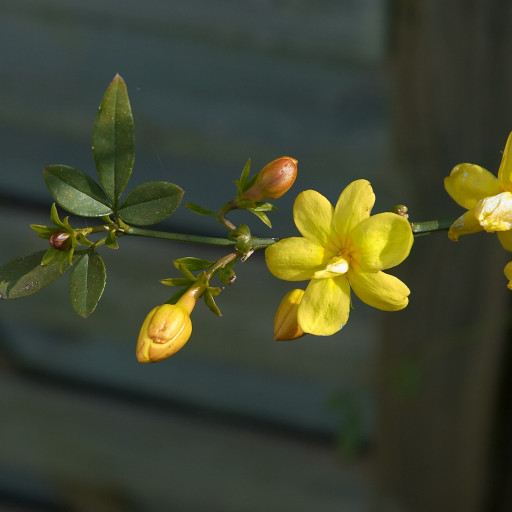
Known widely as the Primrose Jasmine or Japanese Jasmine, this vigorous evergreen shrub is a herald of spring, often blooming while the winter frost still lingers. Native to Western China, it is beloved for its "fountain-like" growth habit, where long, arching branches spill over walls and fences in a cascade of brilliant yellow. While it lacks the famous fragrance of other jasmines, its sheer visual impact makes it a staple for gardeners looking to add vertical drama.
🔍 How to Identify
- 🌼 The Flowers: Large, semi-double, funnel-shaped blossoms that are a bright, buttery yellow. Unlike many jasmines, these flowers are almost entirely scentless.
- 🍃 The Foliage: Leaves are dark green, glossy, and "trifoliate," meaning they grow in sets of three lance-shaped leaflets along the stem.
- 🌿 The Stems: The young stems are distinctly square-shaped and remain green for a long time, helping the plant photosynthesize even in the leaner months.
🏡 In Your Garden
- ✂️ Growth Control: This plant is a "scrambler" rather than a true climber; it doesn't have tendrils, so it needs to be tied to a support if you want it to go up. Left alone, it creates a massive, mounding thicket.
- ☀️ Sun & Space: It thrives in full sun but is surprisingly tolerant of shade. Because it grows incredibly fast, it is perfect for quickly hiding an ugly fence or stabilizing a slope to prevent erosion.
- 💧 Drought Nuance: Once established, it is remarkably drought-tolerant. However, it blooms best if it receives regular deep watering during its primary growth phase in the summer.
⚠️ Safety & Toxicity
- ✅ Status: Generally Non-Toxic.
- 🐾 Details: Jasminum mesnyi is considered safe for cats, dogs, and horses. It is often confused with "Carolina Jessamine" (Gelsemium sempervirens), which is highly toxic. Always double-check the leaf shape and flower color to ensure you have the true, safe Primrose Jasmine.
✨ Fun Fact
The plant was named in honor of William Mesny, a flamboyant British adventurer who became a high-ranking general in the Chinese Imperial Army and spent his life documenting the flora of the Chinese interior.

Detailed Care Instructions
| Humidity | Normal |
| Toxicity | Poisonous |
| Difficulty | Easy |
| Hibernation | Cold Period |
| Hardiness Zones | 8 - 10 |
To grow Jasminum Mesnyi, also known as Primrose Jasmine or Japanese Yellow Jasmine, follow these steps:
- Choose a suitable location: The plant prefers full sun to partial shade. It needs at least 4-6 hours of direct sunlight every day. Ensure the soil is well-draining.
- Prepare the soil: Before planting, dig a hole twice as wide and deep as the plant's root ball. Mix organic compost or well-rotted manure into the soil to improve its fertility and drainage.
- Plant the Jasmine: Place the plant in the prepared hole, ensuring the top of the root ball is level with or slightly above the soil surface. Backfill the hole with soil, gently firming it around the roots. Water thoroughly to settle the soil.
- Watering and moisture: Jasmine plants like moist soil but not overly wet conditions. Water deeply and thoroughly, especially during hot, dry periods. Allow the soil to dry between waterings, as too much water can lead to root rot.
- Fertilization: Apply a slow-release balanced fertilizer or organic compost in early spring to encourage healthy growth. Repeat this process every 3-4 months during the growing season. Follow the instructions on the fertilizer packaging for the appropriate application rates.
- Pruning: Prune your Jasminum Mesnyi plant after it finishes blooming to maintain shape and control its size. Trim back any dead or damaged branches, and remove any crossing or overcrowded branches. This encourages new growth and helps maintain an attractive appearance.
- Mulching: Apply a layer of mulch around the base of the plant, keeping it 2-3 inches away from the stem. Mulching helps retain moisture, suppress weeds, and insulate the roots.
- Pests and diseases: Watch for common garden pests like aphids, scale insects, and whiteflies. Treat infestations promptly with organic insecticides or use natural pest control methods such as introducing beneficial insects like ladybugs or lacewings. Avoid over-watering to prevent fungal diseases.
- Winter care: Jasminum Mesnyi is hardy to USDA zones 8-11. In colder regions, protect the plant from freezing temperatures by covering it or moving it indoors to an area with bright light. Monitor the soil moisture during winter to prevent drying out.
Follow these care instructions, and with time, your Jasminum Mesnyi plant should grow and thrive, producing beautiful yellow flowers and a lovely fragrance.

Place in a window with dappled sun or a spot in the middle of a room. Or directly in a window facing west or east.

When watering this plant, it is important to keep the soil consistently moist, but not waterlogged. To achieve this, be sure to avoid watering too frequently or too heavily at once. Instead, water the plant deeply but infrequently, allowing the top inch of soil to dry out slightly before watering again. When watering, aim to water the roots directly and avoid getting water on the leaves or flowers, as this can cause damage or disease. Additionally, make sure the soil has good drainage to prevent water from pooling around the roots.
Apply a balanced fertilizer to the soil around the plant in early spring, following the manufacturer's instructions for dosage and frequency. Repeat the application every 4-6 weeks until late summer. Avoid fertilizing during winter and fall. Water the plant before and after applying the fertilizer to prevent any root damage.
Jasminum Mesnyi prefers a well-draining soil that is rich in organic matter and slightly acidic to neutral in pH. The soil should be moist but not waterlogged, and it should be able to retain moisture without becoming compacted. A mixture of sandy loam soil and organic matter such as compost or peat moss is recommended for optimal growth and development. It is important to avoid using heavy or clay soils as they can lead to poor drainage and root rot. Regular fertilization with a balanced fertilizer is also recommended to promote healthy growth and flowering.
To propagate this plant, take a stem cutting from a healthy plant using sterilized pruning shears. Make sure the cutting is at least 6 inches long and has several nodes (where leaves grow from). Remove the bottom set of leaves and dip the cut end in rooting hormone. Plant the cutting in a pot filled with well-draining soil and water well. Keep the soil moist but not waterlogged and place the pot in a bright but indirect light. After a few weeks, the cutting should start developing roots and new growth. Once the new plant has matured enough, it can be transplanted into a larger pot or outdoor garden bed.
Common pests of the japanese jasmine include Scale insect, mealybugs, spider mites, aphids, thrips. Make a habit of checking your japanese jasmine frequently for pests so that any infestations can be caught and managed early.








