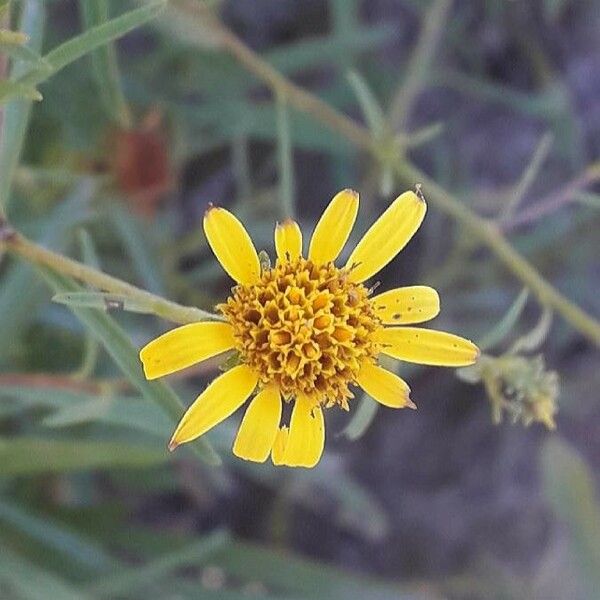
Plant Overview
Known as one of the "Rock Teas" of the Mediterranean, Jasonia tuberosa is a hardy perennial that clings to limestone cliffs and sun-drenched rocky slopes. It carries a delightful, slightly camphor-like aroma and has been prized for centuries by mountain dwellers as a soothing digestive tonic. While it may look like a common wildflower, its ability to thrive in the harshest cracks of a cliffside makes it a symbol of resilience.
🔍 How to Identify
- 🌼 Golden Blooms: It produces small, bright yellow flower heads that resemble tiny, rayless daisies, typically appearing in late summer and early autumn.
- 🌿 Narrow Foliage: The leaves are slender, lance-shaped, and covered in fine hairs that give the plant a grayish-green tint.
- 🍯 Sticky Texture: If you touch the stems, you'll notice a resinous, sticky feeling; this is the plant secreting aromatic oils to protect itself from the intense sun.
- 🥔 The Tuber: Hidden beneath the soil is a thick, woody tuberous root system that stores water and nutrients, allowing the plant to survive extreme droughts.
🏡 In Your Garden
- 🪨 The Rock Specialist: This plant thrives on "tough love." It requires exceptionally well-draining, alkaline soil—ideally a mix of gravel and limestone—mimicking the mountain crevices of its native Spain.
- ☀️ Sun Seeker: It demands full, unfiltered sun to concentrate its aromatic resins. If kept in even partial shade, the plant will become leggy and lose its characteristic scent.
- 💧 Drought Champion: Once established, it rarely needs watering. Overwatering is its greatest enemy, as the tuberous roots are highly susceptible to rot in soggy soil.
⚠️ Safety & Toxicity
- 🍵 Human Status: Generally considered safe and is traditionally consumed as an herbal "Rock Tea" (Té de Roca) to aid digestion.
- 🐾 Pet Caution: While not listed as highly toxic, the high concentration of essential oils and resins can cause mild stomach upset or drooling in cats and dogs if they chew on the foliage.
- 🧴 Skin Sensitivity: Because the plant is resinous, individuals with sensitive skin might experience mild contact dermatitis after handling the sticky stems for long periods.
✨ Fun Fact
In Spanish folk medicine, Jasonia tuberosa was once so highly valued for its "stomach-opening" properties that it was often gifted to travelers to help them digest heavy mountain meals during their journeys.

Detailed Care Instructions
When watering this plant, it is important to ensure that the soil is evenly moist but not waterlogged. You can check the moisture level of the soil by using a moisture meter or by sticking your finger into the soil up to the first knuckle. If the soil feels dry, it's time to water.
Water from the base of the plant and avoid getting water on the leaves, as this can lead to fungal diseases. Use a watering can or hose with a fine, gentle spray, and aim for the soil around the base of the plant. Water slowly and evenly, allowing the water to soak in.
In general, water this plant more frequently during hot, dry weather and less often during cooler, more humid conditions. It is also important to adjust your watering frequency based on the size of the pot or container the plant is in, as smaller pots will dry out more quickly than larger ones.
Overall, be careful not to overwater this plant, as it is sensitive to waterlogged soil and can easily develop root rot if left in damp conditions for too long.
The ideal soil for the Jasonia Tuberosa plant is one that is well-draining and fertile. It should have a pH level between 6.0 and 7.5, which is slightly acidic to neutral. A mix of sandy loam soil and compost or organic matter is recommended to improve soil structure and provide necessary nutrients for the plant. It is important to avoid using soil that has a tendency to become waterlogged or compacted, as this can lead to root rot and other problems. Additionally, the soil should be kept moist but not waterlogged, and the plant should be fertilized regularly during its growing season to promote healthy growth and flowering.








