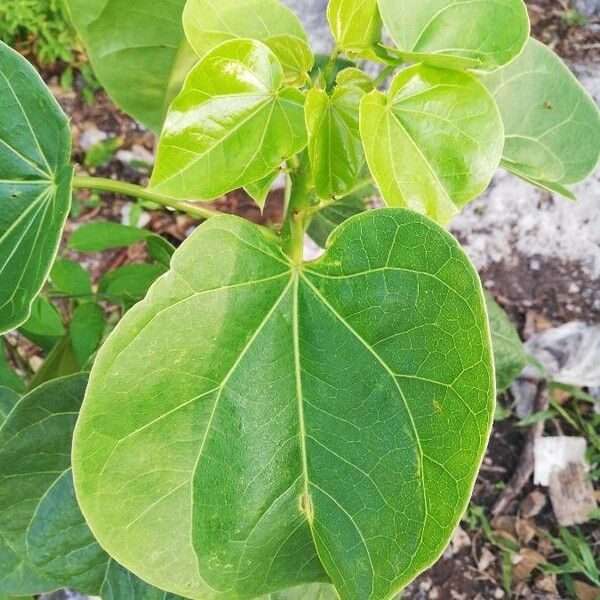
Plant Overview
Known in its native lands as Pomolché, Jatropha gaumeri is a resilient, architectural shrub that hails from the sun-drenched Yucatan Peninsula. Often found in dry tropical forests, this plant is a master of survival, featuring a thick, fleshy trunk that stores water for lean times. For many, it is a living link to Mayan history, where its sap was once a staple in traditional folk remedies.
🔍 How to Identify
- 🍃 The Foliage: The leaves are typically broad and deeply lobed, often resembling a hand with three to five "fingers." They have a vibrant green color but will drop quickly if the plant feels a drought coming on.
- 🪵 The Trunk: As it matures, the stem becomes thick, succulent, and somewhat swollen at the base (caudiciform), giving it a prehistoric or bonsai-like appearance.
- 💧 The Sap: If a leaf is broken or the bark is nicked, the plant exudes a thick, cloudy white latex that is sticky to the touch.
🏡 In Your Garden
- ☀️ Sun & Soil: Because it originates from rocky, limestone-rich areas of Mexico, it demands exceptional drainage. It thrives in "neglectful" conditions where it gets plenty of intense sunlight and very little fussing.
- 🪴 Container Potential: Due to its slow growth and unique trunk shape, it makes an excellent specimen for large pots. It is perfect for those who want a "tropical" look without the high-water demands of traditional lush plants.
⚠️ Safety & Toxicity
- 🚫 Status: Toxic and Irritant.
- 🐾 Details: Like many members of the Euphorbiaceae family, the milky sap can cause significant skin irritation or "dermatitis" upon contact. The seeds and fruit are particularly dangerous if ingested by curious pets or children, leading to severe stomach upset. Always wear gloves when pruning.
✨ Fun Fact
In ancient Mayan culture, the sap of the Pomolché was used as a natural "liquid bandage" and even a treatment for mouth sores, though modern science warns that the plant's chemical compounds should only be handled with extreme caution!

Detailed Care Instructions
Growing Jatropha gaumeri, commonly known as the Jatropha tree, requires some attention to soil, climate, and care conditions. Here are steps to guide you through the process:
1. Choosing the Right Location
- Climate: Jatropha gaumeri thrives in tropical and subtropical climates. It prefers warm temperatures and is sensitive to frost.
- Sunlight: Select a location that receives full sun exposure for optimal growth. It requires at least 6-8 hours of sunlight daily.
2. Soil Preparation
- Soil Type: Well-drained sandy loam or loamy soil is ideal. The plant can tolerate poor soils but grows best in fertile conditions.
- pH Level: It prefers a slightly acidic to neutral pH (around 6-7.5).
- Drainage: Ensure good drainage to prevent waterlogging, which can harm the plant's roots.
3. Sourcing Seeds or Cuttings
- Seeds: Obtain seeds from a reliable source. Fresh seeds germinate more readily.
- Cuttings: You can also propagate Jatropha gaumeri from cuttings. Select healthy, semi-hardwood cuttings for the best results.
4. Planting Procedure
From Seeds:
- Soaking: Soak the seeds in water for 24 hours to enhance germination.
- Sowing: Plant the seeds in seedling trays or directly in well-prepared garden beds, about 0.5-1 cm deep.
- Watering: Keep the soil moist but not waterlogged. Germination typically occurs within 1-3 weeks.
From Cuttings:
- Preparation: Take cuttings about 20-30 cm long with multiple nodes.
- Treatment: Dip the cut end in rooting hormone to promote root development.
- Planting: Insert the cuttings into the soil, ensuring at least one node is buried.
- Watering: Water thoroughly after planting.
5. Watering and Maintenance
- Watering: Water the plant regularly, especially during the establishment phase. Once mature, Jatropha is drought-tolerant but benefits from occasional watering during dry periods.
- Fertilization: Apply a balanced fertilizer every 2-3 months during the growing season for better growth. Avoid over-fertilization.
- Pruning: Prune the plant to shape it and remove any dead or diseased branches. Pruning also encourages bushier growth.
6. Pest and Disease Control
- Common Pests: Keep an eye out for common pests like aphids, mealybugs, and spider mites. Use organic insecticides or neem oil if necessary.
- Diseases: Be vigilant for signs of root rot, which can be prevented by ensuring good soil drainage. Remove and discard any infected plant parts to prevent the spread of disease.
7. General Tips
- Mulching: Mulch around the base of the plant to retain soil moisture and reduce weed growth.
- Support: Young plants might need staking to support initial growth until they develop a sturdy stem.
- Companion Planting: Plant Jatropha with other drought-tolerant species to create a low-maintenance garden ecosystem.
By following these steps, you can successfully grow Jatropha gaumeri in your garden and enjoy its numerous benefits, including its attractive appearance and potential uses in biofuel production.
Watering Jatropha gaumeri requires attention to both the needs of the plant and the conditions of its growing environment. Here are some detailed guidelines:
Soil Moisture Management
- Initial Watering: After planting, water the soil thoroughly to help establish the roots. Ensure that the water reaches the deeper layers of the soil.
- Drainage: The plant prefers well-drained soil to prevent root rot. Avoid waterlogging by ensuring the pot or garden bed has sufficient drainage. You can add sand or perlite to improve soil drainage if necessary.
Watering Frequency
- Growing Season: During the main growing season, which is typically in the warmer months, keep the soil consistently moist but not soggy. You may need to water more frequently in hot, dry weather.
- Dormancy Period: In cooler months, the plant's water needs decrease. Allow the top layer of the soil to dry out between waterings.
Techniques to Ensure Proper Watering
- Deep Watering: Water deeply to encourage the roots to grow deeper into the soil, making the plant more resilient to drought. This means watering until you see some runoff from the bottom of the pot, or the soil feels moist several inches below the surface.
- Mulching: Applying a layer of mulch around the base of the plant can help retain soil moisture and reduce the frequency of watering.
- Morning Watering: Water the plant in the early morning to allow any excess moisture on the leaves to evaporate through the day, reducing the risk of fungal diseases.
Signs to Watch For
- Under-watering: If the leaves start to wilt or turn yellow, it might be a sign that the plant is not receiving enough water.
- Over-watering: If the leaves are yellowing and the soil is consistently wet, you might be over-watering. Cut back on watering and ensure proper drainage.
Environmental Factors
- Weather: Adjust your watering schedule based on local weather conditions. Hot and windy conditions may require more frequent watering, while cooler and more humid conditions may need less.
- Container vs. Ground: Plants grown in containers typically need more frequent watering than those planted in the ground, as containers dry out faster.
By following these guidelines, you can ensure that your Jatropha gaumeri receives the right amount of water, promoting healthy growth and development.
Here are the fertilizing instructions for Jatropha gaumeri:
- Soil Preparation: Before planting, improve the soil quality by mixing in compost or well-rotted manure. This will provide a good nutrient base for the plant.
- Initial Fertilization: After planting, you can apply a balanced, slow-release fertilizer, such as a 10-10-10 (Nitrogen-Phosphorus-Potassium) formula. Follow the manufacturer’s instructions for the quantity.
- Frequency: During the growing season (typically spring to early fall), fertilize every 6-8 weeks. Reduce or halt fertilization during the dormant winter period.
- Application Method: Sprinkle the fertilizer evenly around the base of the plant, keeping it at least a few inches away from the stem. Lightly rake it into the top layer of soil and water thoroughly to help it reach the root zone.
- Organic Options: If you prefer organic fertilizers, consider using compost tea, fish emulsion, or a balanced organic granular fertilizer. These can be applied in the same manner as synthetic fertilizers.
- Monitoring: Keep an eye on the plant’s foliage. Yellowing leaves may indicate nutrient deficiencies, while overly lush, dark green foliage with little flowering might mean the plant is getting too much nitrogen. Adjust the fertilization schedule and type accordingly.
- Soil pH: Ensure the soil pH is slightly acidic to neutral (pH 6.0-7.0). Soil pH can affect nutrient availability; you can test your soil and amend it if necessary.
Remember, it's always best to err on the side of under-fertilizing rather than over-fertilizing, as too much fertilizer can harm the plant and the surrounding environment.
To cultivate Jatropha gaumeri effectively, it is essential to consider specific soil requirements for optimal growth. This plant species thrives in well-drained soils, which are crucial for preventing root rot and other moisture-related issues. Here are the key soil properties and considerations for growing Jatropha gaumeri:
- Drainage:
- Well-drained soil: Ensure the soil has excellent drainage properties to prevent waterlogging. Sandy-loamy soil is ideal as it offers a balance of drainage and nutrient retention.
- Well-drained soil: Ensure the soil has excellent drainage properties to prevent waterlogging. Sandy-loamy soil is ideal as it offers a balance of drainage and nutrient retention.
- Soil Texture:
- Sandy-Loam: A soil texture that combines the beneficial properties of both sand and loam is preferable. This type of soil facilitates good aeration and root penetration.
- Loam: If sandy-loam is not available, a loam soil can also be suitable as long as it meets the drainage criteria.
- Sandy-Loam: A soil texture that combines the beneficial properties of both sand and loam is preferable. This type of soil facilitates good aeration and root penetration.
- pH Level:
- Slightly Acidic to Neutral: The soil should have a pH ranging from 6.0 to 7.5. Conduct a soil test to determine the pH and amend it if necessary using lime to raise the pH or sulfur to lower it.
- Slightly Acidic to Neutral: The soil should have a pH ranging from 6.0 to 7.5. Conduct a soil test to determine the pH and amend it if necessary using lime to raise the pH or sulfur to lower it.
- Nutrient Content:
- Moderate Fertility: While Jatropha gaumeri does not require highly fertile soil, it benefits from a moderate level of organic matter. Incorporate well-aged compost or organic matter to enrich the soil.
- Moderate Fertility: While Jatropha gaumeri does not require highly fertile soil, it benefits from a moderate level of organic matter. Incorporate well-aged compost or organic matter to enrich the soil.
- Soil Amendments:
- Organic Matter: Adding organic matter such as compost or leaf mold enhances soil structure, moisture retention, and nutrient content.
- Perlite or Sand: In heavy clay soils, incorporating perlite or coarse sand can improve drainage and aeration.
- Organic Matter: Adding organic matter such as compost or leaf mold enhances soil structure, moisture retention, and nutrient content.
- Salinity:
- Low Salinity: The plant is not highly tolerant of saline conditions, so avoid saline soils. If necessary, soil salinity can be managed by ensuring proper drainage and irrigation practices to leach excess salts.
- Low Salinity: The plant is not highly tolerant of saline conditions, so avoid saline soils. If necessary, soil salinity can be managed by ensuring proper drainage and irrigation practices to leach excess salts.
- Compaction:
- Avoid Compacted Soil: Ensure the soil is not compacted, as compaction can inhibit root growth and water infiltration. Use raised beds or perform soil aeration if necessary.
By adhering to these soil requirements, you'll create a conducive environment for the healthy growth and development of Jatropha gaumeri. Always remember to monitor the soil moisture and condition regularly to make any necessary adjustments.
- Avoid Compacted Soil: Ensure the soil is not compacted, as compaction can inhibit root growth and water infiltration. Use raised beds or perform soil aeration if necessary.
Propagating Jatropha gaumeri involves either seed propagation or stem cuttings. Here are the detailed steps for each method:
Propagation by Seeds
- Seed Collection:
- Obtain fresh seeds from mature, dry fruits. Ensure the seeds are healthy and disease-free.
- Obtain fresh seeds from mature, dry fruits. Ensure the seeds are healthy and disease-free.
- Preparation:
- Soak the seeds in water for 24 hours to enhance germination rates.
- Soak the seeds in water for 24 hours to enhance germination rates.
- Sowing:
- Fill seed trays or pots with a well-draining potting mix, such as a mix of sand and compost.
- Sow the seeds about 1-2 cm deep into the soil. Cover them lightly with soil.
- Fill seed trays or pots with a well-draining potting mix, such as a mix of sand and compost.
- Watering:
- Water the soil gently to keep it moist but not waterlogged. Ensure good drainage to prevent rotting.
- Water the soil gently to keep it moist but not waterlogged. Ensure good drainage to prevent rotting.
- Germination:
- Place the seed trays or pots in a warm, sunny location with temperatures ideally between 20-30°C (68-86°F).
- Germination should occur within 2-4 weeks. Keep an eye on the moisture levels and avoid letting the soil dry out completely.
- Place the seed trays or pots in a warm, sunny location with temperatures ideally between 20-30°C (68-86°F).
- Transplanting:
- Once seedlings have developed 2-3 true leaves and are strong enough to handle, they can be transplanted into individual pots or directly into the ground.
- Choose a location with well-draining soil and full sun exposure.
Propagation by Stem Cuttings
- Once seedlings have developed 2-3 true leaves and are strong enough to handle, they can be transplanted into individual pots or directly into the ground.
- Selection of Cuttings:
- Select healthy, mature stems from a parent plant. Look for stems that are semi-hardwood, meaning they are not too green or too woody.
- Select healthy, mature stems from a parent plant. Look for stems that are semi-hardwood, meaning they are not too green or too woody.
- Cutting Preparation:
- Cut 15-20 cm (6-8 inch) sections of the stem using a sharp, sterilized knife. Ensure each cutting has at least a few nodes.
- Remove all leaves from the lower half of the cuttings to reduce water loss.
- Cut 15-20 cm (6-8 inch) sections of the stem using a sharp, sterilized knife. Ensure each cutting has at least a few nodes.
- Rooting Hormone (Optional):
- Dip the cut end of each stem cutting in rooting hormone to encourage faster root development.
- Dip the cut end of each stem cutting in rooting hormone to encourage faster root development.
- Planting Cuttings:
- Insert the cuttings into a moist, well-draining potting mix. Bury at least one node below the soil surface.
- Firm the soil around the cuttings to ensure good contact.
- Insert the cuttings into a moist, well-draining potting mix. Bury at least one node below the soil surface.
- Watering:
- Water the soil thoroughly and maintain consistent moisture levels. The soil should be damp but not soggy.
- Water the soil thoroughly and maintain consistent moisture levels. The soil should be damp but not soggy.
- Environment:
- Place the cuttings in a warm, shaded location with indirect sunlight. Avoid direct sunlight until roots have established.
- Place the cuttings in a warm, shaded location with indirect sunlight. Avoid direct sunlight until roots have established.
- Root Development:
- Roots typically form within 4-6 weeks. You can check by gently tugging on the cuttings; if you feel resistance, roots have likely developed.
- Roots typically form within 4-6 weeks. You can check by gently tugging on the cuttings; if you feel resistance, roots have likely developed.
- Transplanting:
- Once roots are well established, you can transplant the cuttings into larger pots or directly into the ground.
- Choose a location with well-draining soil and full sun exposure.
General Care After Planting
- Once roots are well established, you can transplant the cuttings into larger pots or directly into the ground.
- Watering:
- Water the plants regularly during the establishment phase. Once established, Jatropha gaumeri is relatively drought-tolerant.
- Water the plants regularly during the establishment phase. Once established, Jatropha gaumeri is relatively drought-tolerant.
- Fertilization:
- Apply a balanced fertilizer during the growing season to promote healthy growth.
- Apply a balanced fertilizer during the growing season to promote healthy growth.
- Pruning:
- Prune as needed to shape the plant and remove any dead or diseased branches.
- Prune as needed to shape the plant and remove any dead or diseased branches.
- Pest and Disease Control:
- Monitor for common pests and diseases, and take appropriate actions if needed, such as using organic insecticides or fungicides.
By following these steps carefully, you can successfully propagate Jatropha gaumeri either by seeds or stem cuttings.
- Monitor for common pests and diseases, and take appropriate actions if needed, such as using organic insecticides or fungicides.








