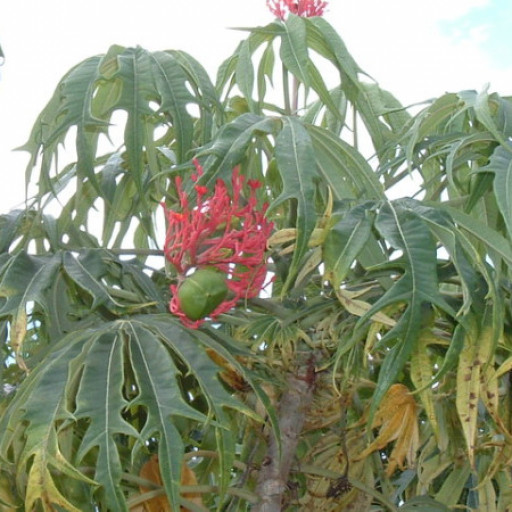
Plant Overview
Often called the Coral Plant or Guatemala Rhubarb, Jatropha multifida is a tropical showstopper that looks like it stepped straight out of a botanical illustration. With its deeply lobed, lace-like leaves and vibrant clusters of flowers that mimic undersea coral, it brings an exotic, architectural flair to any landscape. While it looks delicate, it is a surprisingly hardy member of the Euphorbiaceae family, prized for its ability to thrive in the heat.
🔍 How to Identify
- 🌿 The Foliage: The leaves are its most striking feature—large, circular in outline, but deeply divided into 7 to 11 narrow, pointed lobes, giving them a distinct "ferny" or palm-like appearance.
- 🪸 The Blooms: Small, star-shaped flowers grow in flat-topped clusters (cymes) on long stalks. They are a brilliant coral-red or "hot pink" color, resembling real ocean coral.
- 🪵 The Structure: It typically grows as a single-stemmed small tree or large shrub with a thick, succulent-like trunk that can hold water during dry spells.
🏡 In Your Garden
- ☀️ Sun Seeker: This plant thrives in full sun; the more light it receives, the more compact the growth and the more prolific the "coral" blooms will be.
- 💧 Drainage is Key: Because it is related to succulents, it has a "thick skin" regarding drought but will quickly develop root rot if kept in soggy soil. It is best grown in sandy, well-draining mixes.
- ✂️ Growth Habit: It can become "leggy" or thin if left to its own devices. Don't be afraid to prune the top to encourage a bushier, more branched shape.
⚠️ Safety & Toxicity
- 🚫 Status: High Toxicity. Like many members of the Spurge family, all parts of the plant are poisonous if ingested.
- 🐾 Pets & Kids: The seeds, in particular, are highly toxic and can cause severe gastrointestinal distress. The milky sap (latex) can also cause skin irritation or dermatitis upon contact. Always wear gloves when pruning and keep it out of reach of curious pets.
✨ Fun Fact
The genus name Jatropha is derived from the Greek words iatros (physician) and trophe (food/nutrition). Despite its modern reputation as a toxic ornamental, various parts of the plant were historically used in traditional medicine to treat wounds and skin infections!

Detailed Care Instructions
| Humidity | High |
| Lighting | Full Sun |
| Difficulty | Easy |
| Hibernation | Normal |
| Temperature | 21°C - 25°C |
| Hardiness Zones | 9 - 11 |
To grow Jatropha Multifida plant, follow the steps below:
- Obtain seeds: Purchase Jatropha Multifida seeds from a reliable source. Ensure they are fresh and viable.
- Soil preparation: Jatropha Multifida prefers well-drained soil with a pH level between 6.5 and 7.5. Prepare the soil by removing any weeds or debris and loosen it to enhance drainage.
- Planting: Plant the Jatropha Multifida seeds in small pots or seed trays. Sow the seeds about 1 inch deep into the soil. Water the seeds gently to maintain moisture.
- Germination: Place the pots in a warm and sunny location. Ensure the soil remains moist but not waterlogged. Germination usually takes about 2-4 weeks.
- Transplantation: Once the seedlings have grown a few inches tall and developed good root systems, they can be transplanted to larger pots or directly into the garden. Maintain a spacing of 4-5 feet between each plant if planting in the ground.
- Watering: Water the Jatropha Multifida plant thoroughly after transplanting and then water regularly to keep the soil evenly moist. However, avoid overwatering as it can lead to root rot.
- Sunlight: Jatropha Multifida requires full sun exposure for at least 6-8 hours a day. Ensure the plants receive adequate sunlight to promote healthy growth and flower production.
- Fertilization: Apply a balanced fertilizer every 4-6 weeks during the growing season to promote healthy growth and flower production. Follow the instructions on the fertilizer packaging for proper application.
- Pruning: Prune the plant to maintain its shape and remove any dead or damaged branches. This will also help stimulate new growth.
- Pest and disease control: Monitor the plant regularly for pests such as aphids or spider mites. Treat any infestations with organic insecticides or soapy water. Also, watch out for any signs of diseases like root rot or leaf spot, and take appropriate measures to control them.
- Harvesting: Jatropha Multifida produces red flowers, followed by seed pods that contain seeds. The seeds can be harvested once they have ripened and turned dark brown. Extract the seeds from the pods and store them in a cool, dry place for future planting or oil extraction.
By following these steps and providing proper care, you can successfully grow Jatropha Multifida plants.

Place in a window with dappled sun or a spot in the middle of a room. Or directly in a window facing west or east.

Jatropha Multifida is a plant species that requires proper watering to grow and thrive. To water this plant, it is important to consider the soil type and the environmental conditions. Here are some tips for watering Jatropha Multifida:
1. Soil type: Jatropha Multifida prefers well-drained soil that is not waterlogged. Make sure that the soil is not too sandy or too heavy, as this can affect the drainage and water retention. Water the plant when the soil is dry to the touch, but not completely dry.
2. Environmental conditions: Jatropha Multifida thrives in warm and humid conditions, but it can tolerate some dryness. Avoid overwatering the plant, as this can lead to root rot and other fungal diseases. Water the plant in the morning or evening, when the temperatures are cooler and the sun is less intense.
3. Watering technique: When watering Jatropha Multifida, use a watering can or a hose with a gentle flow to avoid damaging the roots or foliage. Water the soil around the base of the plant, rather than the leaves or flowers. Allow the water to penetrate deep into the soil, but avoid saturating it.
4. Frequency of watering: Jatropha Multifida requires regular watering, but not on a daily basis. Depending on the soil type and environmental conditions, water the plant every 3-5 days or as needed. Monitor the soil moisture regularly and adjust accordingly.
By following these tips, you can ensure that your Jatropha Multifida plant receives the right amount of water to grow and thrive.
To fertilize this plant, it is recommended to use a balanced NPK fertilizer with an equal proportion of nitrogen, phosphorus, and potassium. Fertilize during the growing season, from spring to autumn, every two weeks. Dilute the fertilizer in water and apply to the soil around the base of the plant, avoiding getting it on the leaves. Always follow the manufacturer's instructions for the appropriate amount to use.
Jatropha Multifida plant prefers well-draining soil that is rich in organic matter. A sandy loam soil with a pH ranging from slightly acidic to slightly alkaline is ideal for the plant. The soil should be fertile, with good water retention capabilities. It is recommended to mix compost with the soil at the time of planting to provide adequate nutrients for growth. The soil should be loose and airy to allow proper root development. Avoid using heavy clay soils or soils with poor drainage as these can lead to root rot and other soil-borne diseases. Adding a layer of mulch can also help to conserve moisture and regulate soil temperature.
To propagate this plant, you will need to collect mature seeds from the plant's flowers. Once you have collected the seeds, remove the outer covering and soak them in water for a few hours. After soaking, plant the seeds in a well-draining potting soil mix and water thoroughly. Place the pot in a warm, bright location and keep the soil moist but not waterlogged. Germination should occur within a few weeks, and the seedlings can be transplanted into larger pots or in the ground once they are big enough. Alternatively, cuttings can be taken from the plant's stem and rooted in a moist potting mix. To do this, take a 4-6 inch cutting with a sterilized, sharp knife and remove the lower leaves. Dip the cut end in rooting hormone and insert it into moist soil. Place the pot in a warm, bright location and maintain moisture levels by misting regularly. Once roots have formed, the cutting can be transplanted into a larger pot or in the ground.
Common pests of the coral plant include Scale insect, mealybugs, spider mites. Make a habit of checking your coral plant frequently for pests so that any infestations can be caught and managed early.








