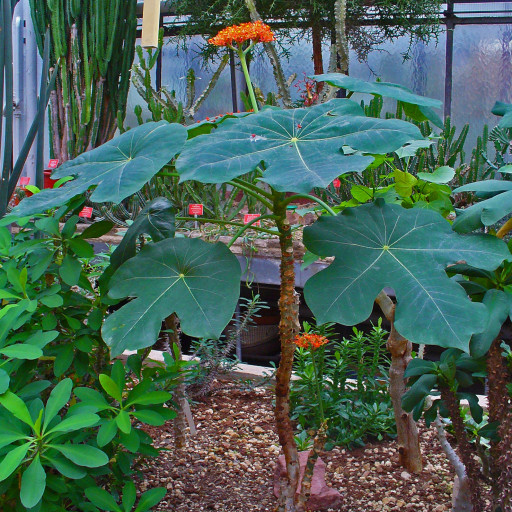
Plant Overview
Often called the Buddha Belly Plant or Gout Plant, Jatropha podagrica is a living sculpture that looks like it belongs in a prehistoric landscape. Native to Central America, this succulent shrub is beloved by collectors for its bizarre, swollen trunk and its ability to bloom vibrant "coral" flowers even when the plant itself is quite small. It’s the perfect conversation piece for a sunny windowsill or a rock garden.
🔍 How to Identify
- 🫃 The "Belly": A distinctive, bottle-shaped swollen trunk (caudex) that stores water, giving the plant its famous nickname.
- 🍁 Peltate Leaves: Large, leathery, bright green leaves that can grow up to 10 inches wide. They are usually 3 to 5-lobed and resemble a shield or a maple leaf.
- 🏮 Coral-Like Blooms: Tiny, star-shaped flowers in brilliant shades of orange-red or scarlet that grow in branched clusters, looking remarkably like sea coral.
🏡 In Your Garden
- 🏜️ Drought Specialist: Because of its water-storing trunk, this plant is incredibly "forgiveful" if you forget to water it. However, it hates "wet feet"—ensure it is in a fast-draining gritty mix to prevent the belly from rotting.
- ☀️ Light & Growth: It thrives in bright, indirect light. If kept in too much shade, the trunk will stretch and lose its iconic squat, round shape.
- 🍂 Winter Dormancy: Don't panic if it drops all its leaves in the winter! This is a natural survival tactic. Reduce watering to almost zero until new growth appears in the spring.
⚠️ Safety & Toxicity
- 🚫 High Toxicity: All parts of the Jatropha podagrica, especially the seeds, contain a toxalbumin called curcin. It is highly toxic if ingested.
- 👧 Kids & Pets: Keep this plant on high shelves away from curious toddlers, cats, or dogs. Ingestion can cause severe stomach upset and more serious systemic issues.
- 🧪 Milky Sap: Like many members of the Euphorbiaceae family, it produces a milky sap when cut. This can cause skin irritation or rashes, so wearing gloves while pruning is highly recommended.
✨ Fun Fact
The species name Podagrica actually comes from the Greek word for "gout." It was named this because the swollen, distorted base of the trunk reminded early botanists of a person's foot swollen by a gout attack!

Detailed Care Instructions
| Humidity | Normal |
| Lighting | Full Sun |
| Toxicity | Poisonous |
| Difficulty | Medium |
| Temperature | 18°C - 27°C |
| Hardiness Zones | 10A - 11B |
To grow a Jatropha Podagrica plant, follow these steps:
- Climate requirements: Jatropha Podagrica is a tropical plant, so it requires a warm climate. It grows best in USDA hardiness zones 10-11.
- Soil: Use well-draining soil with a pH between 6.0 and 7.5. Amend the soil with organic matter, such as compost, to improve its fertility and drainage.
- Location: Choose a sunny location for your plant. Jatropha Podagrica thrives in full sun.
- Propagation: You can grow Jatropha Podagrica either from seeds or cuttings.
- From seeds: Soak the seeds in warm water for 24 hours before planting. Sow the seeds in pots or directly in the ground, 1 inch deep. Keep the soil consistently moist until germination occurs, which usually takes 1-2 weeks.
- From cuttings: Take cuttings from mature plants in spring or early summer. Dip the cut end in rooting hormone and place it in a well-draining potting mix. Keep the soil lightly moist. Roots should develop in 2-3 weeks.
- Watering: Water the plant regularly but avoid overwatering, as it can cause root rot. Allow the soil to dry between waterings.
- Fertilization: Fertilize the plant with a balanced, slow-release fertilizer during the growing season (spring to summer) to encourage healthy growth. Follow the package instructions for application rates.
- Pruning: Jatropha Podagrica can become woody and leggy over time. Prune back the plant in late winter or early spring to maintain its shape and promote bushier growth.
- Pests and diseases: Keep an eye out for common pests like aphids, whiteflies, and spider mites. Treat any infestations with suitable insecticides. Jatropha Podagrica is generally resistant to diseases.
Remember, Jatropha Podagrica is toxic if ingested, so keep it out of reach of children and pets. It's also important to check if it is allowed to be grown in your area, as it may be considered invasive in some regions.

Place in a bright room that is sun drenched almost all day. Or directly in a south-facing window.

Jatropha Podagrica is a plant that requires a careful watering routine to ensure its health. To water this plant, you should first determine the soil's moisture level. You can do this by sticking your finger into the soil up to the depth of an inch. If the soil feels dry, it is time to water the plant.
When watering, you should use room temperature water. The water should be applied gently to the soil around the plant's base to avoid splashing on the leaves. Make sure you do not overwater the plant, as this can cause root rot and damage the plant.
Ensure that the plant's soil is well-draining, as Jatropha podagrica does not tolerate standing water. You can achieve this by mixing perlite or sand into the soil.
To maintain the plant's health, it is best to water it in the morning so that excess water can evaporate throughout the day. Avoid watering the plant late in the evening, as this can lead to fungal growth.
Additionally, water Jatropha podagrica often during the growing period, and reduce watering during the winter season when the plant is dormant.
To fertilize this plant, apply a balanced fertilizer with a NPK ratio of 10-10-10 once a month during the growing season. Water the plant before and after applying the fertilizer to prevent root burn. Avoid over-fertilizing as it can lead to salt buildup in the soil.
The ideal soil for Jatropha Podagrica plant should be well-draining and rich in nutrients, with a slightly acidic pH level. The soil should have a good balance of sand, silt, and clay content, with a mix of organic matter such as compost or aged manure. The plant prefers soil that is slightly sandy or loamy in texture, which provides adequate drainage and allows air to circulate around the roots. It is important to ensure that the soil does not become waterlogged, as this can lead to root rot and other issues. Adding perlite or vermiculite to the soil mixture can help to improve drainage and prevent waterlogging. Additionally, the soil should be kept moist but not overly wet, and fertilized regularly with a balanced fertilizer to promote healthy growth.
To propagate this plant, start by collecting mature seeds from the plant. Once you have collected the seeds, they must be cleaned and dried before planting. To plant the seeds, fill a small container with well-draining soil and plant the seeds about 1 cm deep. Water the soil regularly, and make sure it is kept moist.
The seeds should germinate within 2-4 weeks. Once the seedlings have sprouted, they should be transplanted into larger pots or directly into the ground, allowing plenty of space for their roots to grow. The plant thrives in full sun, and watering should be done regularly but ensure not to over-water the plant.
In addition to seed propagation, the plant can also be propagated through stem cuttings. Cut a 10-15 cm section of the plant's stem, making sure to include at least two leaves. Dip the cuttings into rooting hormone and plant them in well-draining soil. Water the cuttings regularly and place them in a warm and humid environment. In about four weeks, the cuttings should begin to sprout new roots and can then be transplanted into larger pots or directly into the ground.
Common pests of the buddha belly plant include Scale insect, mealybugs, spider mites. Make a habit of checking your buddha belly plant frequently for pests so that any infestations can be caught and managed early.








