Plant Overview
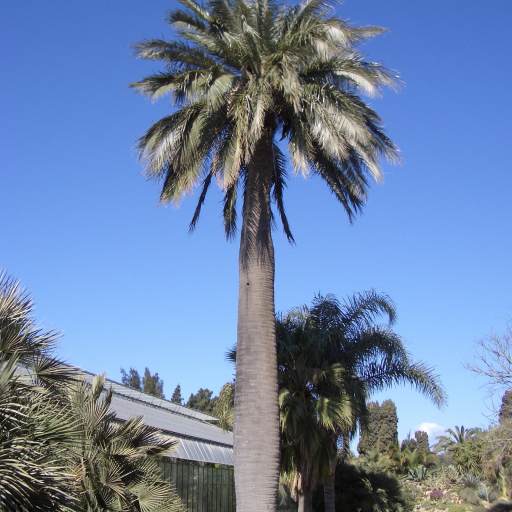
Often called the "Elephant Palm" due to its massive, sturdy trunk, the Jubaea chilensis is a living relic from the Mediterranean climate of central Chile. Known as the Chilean Wine Palm, it is famous for its incredible longevity and the delicious, miniature "coconuts" it produces. It is the heavyweight champion of the palm world, growing slowly but surely into a majestic, prehistoric-looking garden anchor.
🔍 How to Identify
- 🐘 The Trunk: Unlike the slender trunks of many tropical palms, this one is smooth, grey, and can reach up to five feet in diameter, strongly resembling a massive elephant’s leg.
- 🌿 The Fronds: It features stiff, pinnate (feather-shaped) leaves that arch slightly at the ends, creating a dense, rounded crown of dark green to blue-green foliage.
- 🥥 The Fruit: It produces small, yellow-orange fruits that contain a single seed—the "coquito"—which looks and tastes exactly like a marble-sized coconut.
🏡 In Your Garden
- ⏳ Patience is Key: This palm is notoriously slow-growing. It may take several decades to develop its signature thick trunk, making it a "legacy plant" that is often passed down through generations.
- 🥶 Unexpected Toughness: It is remarkably cold-hardy for a feather palm, capable of surviving temperatures down to 15°F (-9°C) once established, though it prefers dry winters.
- ☀️ Sun & Drainage: While it loves full sun, its biggest enemy is "wet feet." It requires gritty, well-draining soil that mimics the rocky hillsides of its native Chilean habitat.
⚠️ Safety & Toxicity
- ✅ Safe for All: The Chilean Wine Palm is non-toxic to cats, dogs, and humans.
- 😋 Edible Harvest: The seeds (coquitos) are a popular delicacy. They are safe to eat and have a crunchy, sweet flavor similar to a standard coconut.
✨ Fun Fact
The name "Wine Palm" comes from the sugary sap that was historically fermented into wine or boiled into syrup. Tragically, in the past, the entire tree had to be chopped down to harvest the sap, which nearly led to the species' extinction. Today, the tree is strictly protected in Chile!

Detailed Care Instructions
To grow a Jubaea Chilensis plant, also known as the Chilean wine palm, you can follow these steps:
- Climate and location: Check if your climate and location are suitable for growing Jubaea Chilensis. It is native to temperate regions of Chile and prefers mild winters and warm summers. It requires full sun and well-draining soil.
- Seeds or seedlings: Acquire Jubaea Chilensis seeds or seedlings from a reputable nursery or source. Seeds are typically the most common way to propagate this plant.
- Soil preparation: Prepare a well-draining potting mix or garden soil with organic matter. The soil should be loamy and slightly acidic.
- Germination (from seeds): Soak the seeds in warm water for 24-48 hours to soften the hard seed coat. Then, sow the seeds in individual pots, burying them slightly under the soil. Keep the pots in a warm, bright location with consistent moisture. Germination can take several months, so be patient.
- Planting (from seedlings): If you have seedlings, transplant them into prepared soil or large pots. Ensure the root ball is well-covered with soil, but avoid burying the stem.
- Watering: Water the plant regularly, keeping the soil moist but not waterlogged. Jubaea Chilensis prefers slightly drier conditions during winter, but it still needs some water.
- Fertilization: Feed the plant with a well-balanced fertilizer during the growing season, from spring to early fall. Follow the instructions on the fertilizer packaging for the appropriate dosage.
- Pruning: Prune any dead or damaged fronds (leaves) to keep the plant tidy and maintain its overall health.
- Winter protection: If you live in a cool climate, ensure appropriate winter protection for your Jubaea Chilensis. Consider covering it with straw or burlap during freezing temperatures.
- Patience: Growing Jubaea Chilensis can be a slow process. It takes several years for the plant to reach its full size and produce its characteristic, tall, feathery fronds.
Remember to regularly monitor the plant for pests or diseases. Additionally, note that the Jubaea Chilensis is a large palm that can reach up to 60 feet in height. Make sure you have enough space to accommodate its growth.

Place in a bright room that is sun drenched almost all day. Or directly in a south-facing window.

Watering this plant requires regular attention to its moisture level. To keep it healthy, regular watering is necessary, especially during prolonged periods of dryness. When watering, it’s essential to ensure that the water is penetrating the soil to a depth of at least 6 inches to ensure that the roots are well-hydrated. Overwatering can be detrimental to this plant as it can lead to root rot. Thus, it’s important to monitor its soil moisture level and avoid keeping the soil continually damp. Instead, wait until the top 1 to 2 inches of soil are dry before watering again. In addition to regular watering, adding a layer of mulch around the plant can help to retain soil moisture and keep the roots cool during intense heat.
For optimum growth and health of this plant, it is recommended to fertilize it at least twice a year – once in the spring and once in the fall. Use a slow-release, balanced fertilizer with a 3-1-2 or 4-1-2 NPK ratio. Avoid using high-nitrogen fertilizers as they may damage the plant. Apply the fertilizer evenly around the root zone, about 6 inches away from the trunk, and water thoroughly to help the nutrients penetrate the soil. Over-fertilization may cause damage to the plant, so be cautious not to use too much.
The recommended soil for the Jubaea Chilensis plant is a well-draining soil mix that is rich in nutrients and organic matter. It should ideally have a pH level between 6.0 to 7.5. The soil should also be able to hold moisture but not become waterlogged, as this can lead to root rot.
The ideal soil mix for Jubaea Chilensis should be a blend of fine sand, loam or clay, and compost. It is also recommended to mix in some perlite or vermiculite to help with drainage.
The plant requires a soil that is high in nutrients, so the soil should be fertilized regularly with a balanced fertilizer. The ideal soil texture should also have a slight amount of coarseness, which will allow for better airflow and root development.
When transplanting the Jubaea Chilensis plant, it is important to use a larger pot or container that will allow for ample root growth. A deep pot will also provide added stability for the plant as it grows.
Overall, the ideal soil for Jubaea Chilensis should be well-draining, nutrient-rich, and slightly coarse. By providing the plant with the right soil conditions, it will thrive and grow into a healthy mature tree.
Propagation of this plant can be accomplished by harvesting fresh seeds from mature plants or purchasing them from a reputable seed dealer. Soak the seeds in water for 24 hours, changing the water once or twice to remove any excess pulp. Plant the seeds in well-draining soil mix and keep them moist but not waterlogged. They should germinate within a few weeks to several months. Once the seedlings have developed a few sets of leaves, they can be transplanted into larger containers or directly into the ground. Another method of propagation is by division or separating offsets from established plants. This should be done in the spring or early summer when plants are actively growing. Carefully remove the offsets, making sure they have roots attached, and plant them in containers or directly in the ground. Provide regular watering and fertilization to encourage growth and establish healthy plants.








