Plant Overview
Often called the Canadian Rush, this hardy wetland native is a master of the water’s edge. Often found standing tall in marshes and bogs across North America, it acts as a structural anchor for wild landscapes. While it may look like a grass at first glance, its stiff, upright posture and unique seed clusters give it a distinct, architectural beauty that thrives where other plants might drown.
🔍 How to Identify
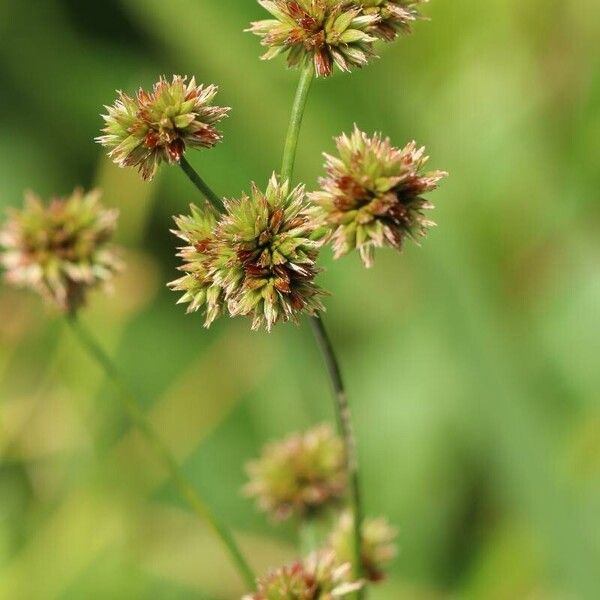
- 🟢 The "Round" Stem: True to the old botanist's rhyme ("Rushes are round"), the stems of the Canadian Rush are perfectly cylindrical, smooth, and solid—unlike the hollow or triangular stems of grasses and sedges.
- 🧮 Seed Clusters: In late summer, the plant produces dense, branched clusters of tiny, pointed capsules. These turn a deep cinnamon or reddish-brown, looking like miniature starbursts at the tips of the stems.
- 📏 Growth Habit: It grows in tidy, vertical clumps (tussocks) that can reach up to three feet in height, providing a striking linear element to any landscape.
🏡 In Your Garden
- 💧 The "Wet Feet" Rule: This plant is the perfect solution for those "trouble spots" in a yard that stay soggy. It is a star performer in rain gardens, bioswales, or along the margins of a backyard pond where the soil never truly dries out.
- 🌱 Erosion Control: Because it spreads via a thick network of underground rhizomes, it is excellent for stabilizing loose soil near moving water, preventing your garden edges from washing away during heavy storms.
⚠️ Safety & Toxicity
- ✅ Safe Status: Juncus canadensis is generally considered non-toxic and safe for environments shared with curious pets or children.
- 🌾 Not a Snack: While it isn't poisonous, the stems are very tough and high in silica, making them unpalatable and difficult to digest. It’s best kept as a visual treat rather than a culinary one.
✨ Fun Fact
There is an old saying used by naturalists to tell wetland plants apart: "Sedges have edges, rushes are round, and grasses are hollow right up from the ground." The Canadian Rush is the perfect example of those "round" stems that have been used historically for everything from weaving floor mats to making primitive candle wicks!

Detailed Care Instructions

Place in a dark room with little light, like a dark bedroom or a spot far away from a window or directly in a north-facing window.

Some plants require more regular watering than others, which should be done every few days. It's critical to maintain the soil moist all of the time. The water requirements of the same plant placed in pots with varying sizes will differ. Because the water in the smaller pot evaporates faster than the water in the larger pot, it will require more watering. Regardless of pot size, the surface should constantly be maintained moist.







