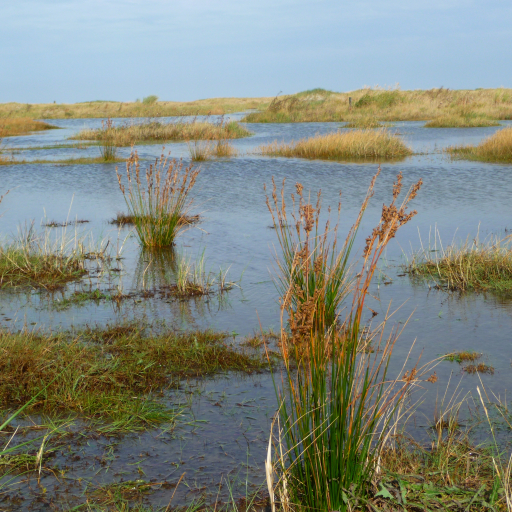
Plant Overview
Often called the Sea Rush, this architectural hardy is the resilient architect of the coastline. Thriving where most plants would wither from the salt, it forms dense, golden-green tufts that battle the spray and shifting sands of Mediterranean and Atlantic shores. It’s a plant that tells a story of survival, having been used for centuries by coastal communities to weave mats and provide structural beauty in harsh landscapes.
🔍 How to Identify
- ⚔️ The Stems: Look for tall, cylindrical, and very stiff stems (culms) that taper into an incredibly sharp, needle-like point.
- 🌾 Side-Blooming Flowers: The brownish-green flower clusters are unique because they appear to sprout from the side of the stem, rather than the tip, due to a bract that continues upward.
- 🟢 Color & Texture: The plant maintains a deep, waxy green color year-round, which turns a handsome tawny-gold as the seasons transition.
🏡 In Your Garden
- 🌊 Salt Specialist: This is the go-to plant for coastal gardens or "rain gardens" where soil might be brackish or poor. It acts as a natural stabilizer for loose, wet soil.
- 🧱 Low Maintenance: Because it has evolved to survive the punishing tides, it is nearly indestructible once established. It rarely needs pruning, though you can comb out dead stems in early spring to keep it looking tidy.
⚠️ Safety & Toxicity
- 📍 Physical Hazard: While not chemically poisonous, the tips of the stems are exceptionally sharp. It should be planted away from walkways where children or pets might run into it.
- 🐾 Pet Safety: It is generally considered non-toxic if ingested by cats or dogs, though the tough, fibrous texture can cause mild stomach upset if they decide to snack on it.
✨ Fun Fact
In the days before affordable wax candles, the internal pith of the Sea Rush was harvested, dried, and dipped in animal fat to create "rushlights." These served as the primary source of light for many rural households for hundreds of years!

Detailed Care Instructions

Place in a bright room that is sun drenched almost all day. Or directly in a south-facing window.

The plant in question is best watered using a method known as bottom watering. This involves filling a tray or saucer with water, then placing the plant's pot on top of the tray or saucer so that the water can be absorbed through the bottom of the pot. It is important not to overwater the plant, as too much moisture can lead to root rot. The frequency of watering will depend on the plant's environment and the surrounding humidity, but generally, the plant should be watered when the soil surface becomes dry to the touch. It is recommended to use a well-draining soil mix to prevent water from sitting in the pot for too long. Additionally, the plant should not be allowed to sit in standing water for extended periods of time, as this can also lead to root rot.
Juncus Maritimus prefers a soil that is well-draining and has a sandy texture. The soil should be mildly acidic to neutral with a pH between 6.0 and 7.2. It is important to make sure that the soil is not waterlogged or too dry. It is recommended to mix in organic matter such as compost or peat moss to improve the soil's nutrient content and water retention. Additionally, this plant can tolerate a range of soil types from poor to moderately fertile.








