Plant Overview
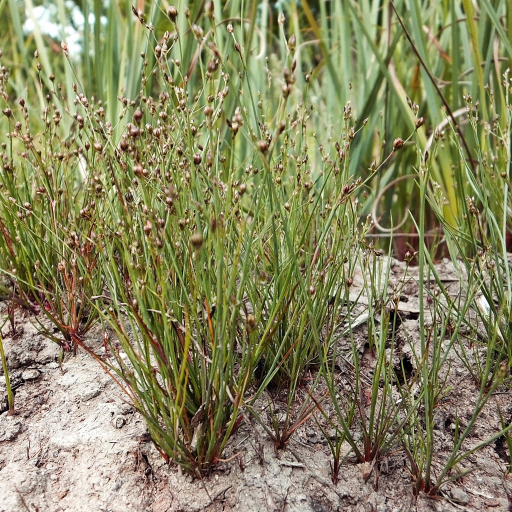
Meet the Juncus tenageia, commonly known as the Mud Rush. Unlike its larger, more aggressive cousins that dominate pond edges, this delicate annual is a master of the "ephemeral" life. It is a specialist of the shoreline, appearing briefly in damp, sandy margins where water has recently receded, making it a subtle but fascinating find for nature lovers exploring wetlands.
🔍 How to Identify
- 🌿 Branching Pattern: One of its most distinct features is its "dichotomous" branching. The stems fork repeatedly in a Y-shape, giving the plant a wiry, zig-zagging appearance compared to the straight spikes of other rushes.
- 🌸 Solitary Blooms: Instead of growing in dense clusters or "mops," the tiny, greenish-brown flowers sit solo along the branches. They are spaced out like small, star-shaped knots on a thin wire.
- 🌱 Delicate Stature: Because it is an annual (living only one season), it lacks the thick, woody base or creeping roots seen in common garden rushes. It is slender, pale green, and rarely grows taller than 10–30 centimeters.
🏡 In Your Garden & Habitat
- 💧 The Drawdown Zone: This plant thrives in "drawdown zones"—areas that are submerged in winter but become muddy and exposed by early summer. It requires this specific cycle of flooding followed by drying to trigger its seeds to sprout.
- 🏜️ Soil Preferences: It is a pioneer species for "hungry" soils. It loves nutrient-poor, acidic sand or peaty mud. In a garden setting, it would only thrive in a specialized bog garden or the damp edges of a rain garden where it doesn't have to compete with tall grasses.
⚠️ Safety & Toxicity
- ✅ Status: Non-toxic and generally safe.
- 🐾 Details: The Mud Rush is not known to be poisonous to humans, dogs, or cats. While it isn't an edible plant, it poses no threat if touched or if a pet accidentally nibbles on its wiry stems.
✨ Fun Fact
- ⏳ The Time Traveler: The seeds of the Mud Rush are incredibly resilient. They can lie dormant in dry soil for several years, waiting patiently for the perfect "wet" season. When the water levels hit just the right height and then recede, thousands of these plants can suddenly appear in a spot where they haven't been seen for a decade!

Detailed Care Instructions
To water this plant, observe the soil moisture level to ensure it remains consistently moist, but not oversaturated or waterlogged. This can be achieved by regularly checking the soil and watering as needed to maintain adequate moisture. It is important to avoid allowing the soil to dry out completely between waterings, as this can be detrimental to the health of the plant. Additionally, it can be helpful to use a well-draining soil mix to ensure excess water can escape easily. When watering, it is best to directly apply water to the base of the plant and avoid getting water on the foliage, as this can promote fungal growth.
Juncus Tenageia plants thrive when planted in a soil that is well-drained and rich in organic matter. The recommended soil has a slightly acidic pH level, ranging from 5.0 to 6.5. The soil should be moist but not waterlogged, allowing for proper drainage and air circulation to the roots. It is important to avoid using heavy, clay soils as they may hold too much water and cause root rot. Instead, a mixture of sandy loam and peat moss is recommended for optimal growth. Additionally, any fertilizers used should be balanced and applied sparingly to prevent excessive nitrogen levels which can cause damage to the plant. Regularly adding organic matter to the soil can help maintain its nutrient content and improve soil structure.








