Plant Overview
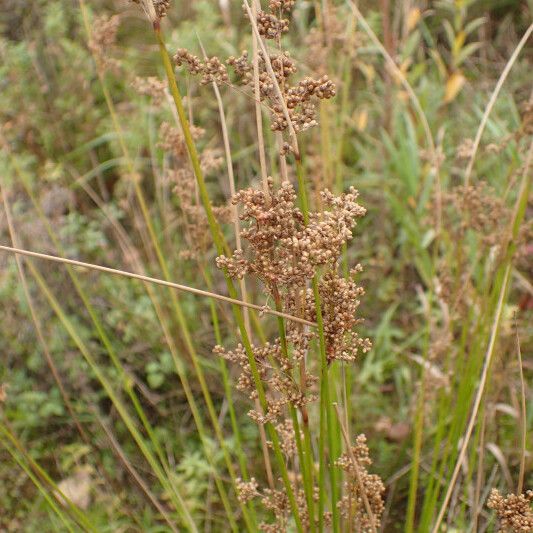
Known as the Common Rush or Pin Rush, Juncus usitatus is the "sturdy survivor" of the wetland world. Often found hugging the edges of Australian dams or urban ponds, it looks like a collection of vibrant green knitting needles bursting from the earth in dense, arching tufts. It is a favorite for gardeners who need a structural, architectural plant that can thrive in "wet feet" areas where most other plants would simply drown.
🔍 How to Identify
- 🌾 Cylindrical Stems: Unlike grasses with flat leaves, this plant features smooth, wiry, upright stems that are perfectly round in cross-section.
- 🟤 Side-Sprouting Blooms: The flowers are tiny, pale brown, and branched. Interestingly, they don't grow from the very tip; they appear to burst out from the side of the stem near the top.
- 🧹 Dense Tussocks: It grows in a very tight, mop-like clump (tussock), reaching about 1 meter in height, giving it a fountain-like appearance.
🏡 In Your Garden
- 💧 The Wetland Warrior: This plant is a "bog specialist." It excels in rain gardens, swales, or at the edge of a pond where the soil stays consistently moist or even temporarily submerged.
- 💪 The Tough Negotiator: While it loves water, it is surprisingly hardy. Once its deep root system is established, it can survive periods of dry soil, making it perfect for regions with fluctuating water levels or "unpredictable" gardeners.
- 🐸 Wildlife Haven: It acts as a natural bio-filter, cleaning runoff water while providing a perfect vertical playground for small frogs and a sturdy perching spot for dragonflies.
⚠️ Safety & Toxicity
- ✅ Non-Toxic Status: Juncus usitatus is generally considered safe and non-toxic for humans, cats, and dogs.
- 📍 Physical Hazard: Because the stems are thin, stiff, and grow upright at eye level for children and pets, they can be a "poking" hazard. It is best planted slightly back from high-traffic pathways to avoid accidental scratches or eye injuries.
✨ Fun Fact
In many cultures, various "Rushes" were once used to make "rushlights"—a cheap alternative to wax candles. The outer skin of the stem was peeled away to reveal the white inner pith, which was then soaked in animal fat and burned as a primitive wick!

Detailed Care Instructions







