Plant Overview
Known as the Alligator Juniper, this tree is a living relic of the American Southwest and Mexico. Its rugged, checkered bark looks remarkably like the hide of a prehistoric reptile, allowing it to stand out among its smoother-barked cousins. Growing slowly over hundreds of years, it is a symbol of endurance, often found clinging to rocky slopes in high-altitude deserts.
🔍 How to Identify
- 🐊 The Bark: Its most distinct feature; deep fissures break the thick, gray bark into square, armor-like plates that perfectly mimic alligator skin.
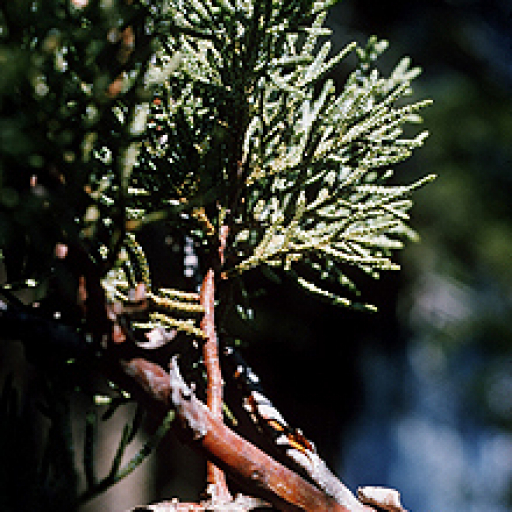
- 🌲 The Foliage: Small, scale-like leaves that overlap tightly. They are usually a dusty sage green, often appearing silvery-blue from a distance.
- 🫐 The "Berries": These are actually fleshy seed cones. They start with a powdery blue-gray waxy coating and mature into a hard, reddish-brown fruit.
🏡 In Your Garden
- 🏜️ Drought Warrior: This juniper is incredibly water-wise. Once its root system is established, it can survive on minimal rainfall, making it a "set it and forget it" choice for xeriscaping.
- ⛏️ The Taproot Rule: It develops a deep, aggressive taproot early in life to find water. Because of this, it hates being transplanted; always choose its "forever home" in your yard very carefully.
- 🦉 A Living Hotel: Because of its dense canopy and longevity, it provides essential nesting sites for mountain birds and shelter for small mammals during harsh winter storms.
⚠️ Safety & Toxicity
- 🐾 Mildly Toxic: The berries and foliage contain essential oils that can cause mild stomach upset (vomiting or diarrhea) in dogs, cats, or curious children if consumed in large amounts.
- 🤧 Pollen Heavy: Like many junipers, the male trees produce a fine yellow pollen in late winter or early spring that can be a major trigger for people with seasonal allergies.
- 🌵 Prickly Texture: While not "thorny," the scale-like leaves can be abrasive to sensitive skin; wearing gloves while pruning is recommended.
✨ Fun Fact
The Alligator Juniper is an ancient survivor; some specimens in the mountains of Arizona and New Mexico are estimated to be over 1,000 years old, having survived centuries of lightning strikes, droughts, and wildfires.

Detailed Care Instructions
Alligator junipers have had practical uses for many centuries and are an important component in the habitat of many different woodland creatures in their native range. The large berries are enjoyed by several different species of birds and mammals, and can even be eaten by humans as well. The attractive, fragrant wood of the alligator juniper is occasionally milled for lumber and used to make particleboard and furniture, as well as novelty products.
Is alligator juniper a cedar?
Technically, an alligator juniper is related to the Eastern red cedar (Juniperus virginiana).
How long will an alligator juniper live?
This tree can last for lifetimes. Alligator junipers are known to live between 500 and 800 years, but records have shown that these trees have lived up to 1,400 years.
To grow Juniperus deppeana or Alligator Juniper, you can follow these steps:
- Location: Choose a well-draining location that receives full sun to partial shade. Juniperus deppeana prefers dry, rocky soils and can tolerate exposed and windy conditions.
- Soil preparation: Prepare the soil by mixing organic matter, such as compost or well-rotted manure, to improve drainage and fertility. Remove any rocks or debris from the planting area.
- Planting: Dig a hole slightly larger than the root ball of the plant. Place the Juniperus deppeana plant in the hole, making sure it is level with the surrounding soil. Backfill with soil, firming it gently around the roots.
- Watering: Water the plant thoroughly after planting to settle the soil and ensure good root-to-soil contact. Afterward, only water when the soil is dry to the touch. Juniperus deppeana is highly drought-tolerant once established, so avoid overwatering.
- Mulching: Apply a layer of organic mulch around the base of the plant, such as wood chips or pine needles. Mulching helps conserve moisture, suppresses weeds, and regulates soil temperature.
- Pruning: Juniperus deppeana generally requires minimal pruning. However, you can selectively remove any dead, damaged, or overgrown branches to maintain a desirable shape. Prune in early spring before new growth begins.
- Fertilization: Juniperus deppeana usually doesn't require much fertilization. However, if the plant appears weak or lacks vigor, you can apply a slow-release, balanced fertilizer in early spring. Follow the manufacturer's instructions for the specific fertilizer you choose.
- Pests and diseases: Alligator Juniper is generally resistant to pests and diseases. However, occasional issues with spider mites or bagworms may arise. Regularly inspect the plant for any signs of infestation and treat accordingly with appropriate insecticides or insecticidal soap.
- Propagation: Juniperus deppeana can be propagated from seeds or cuttings. Seeds require stratification, which involves cold treatment to break dormancy. Take semi-hardwood cuttings in late summer or early fall and root them in well-draining soil or a rooting medium.
Remember that Juniperus deppeana is a slow-growing plant, so be patient and provide it with the necessary care and maintenance.

Place in a bright room that is sun drenched almost all day. Or directly in a south-facing window.

Juniperus Deppeana plant should be watered thoroughly when the topsoil is dry to the touch. It requires consistent moisture but should not be overwatered as it can lead to root rot. Care should be taken to avoid getting water on the foliage as it can cause damage. Additionally, it is important to use well-draining soil to prevent waterlogging and promote healthy root growth.
To fertilize this plant, apply a balanced granular fertilizer with an NPK ratio of 10-10-10 or 12-12-12 in early spring before new growth begins. Follow the instructions on the fertilizer package for application rates based on the size of the plant. Avoid over-fertilizing as this can lead to excessive growth and potentially harm the plant. Water the area after applying the fertilizer to help it dissolve and reach the roots. Repeat the application once or twice throughout the growing season, spacing each application 6-8 weeks apart. Stop fertilizing in late summer or early fall to allow the plant to enter dormancy.
The ideal soil for growing the plant referred to as Juniperus Deppeana should be well-draining and fairly alkaline, with a pH between 7.0 and 8.0. It is important that the soil contains plenty of organic matter, such as compost or well-rotted manure, to help improve soil structure and fertility. The plant prefers a soil that is slightly sandy or loamy, and should be kept moist but not waterlogged. It is also important to ensure that the soil is free from any contaminants or pollutants, such as heavy metals or chemicals, as these can be toxic to the plant. To maintain the soil quality, it should be regularly mulched with organic matter to help protect the roots and retain moisture.
One way to propagate this plant is through stem cuttings. Take a stem cutting from a healthy, mature plant during its active growth period. The cutting should be about 4-6 inches long with a few nodes, and make sure to take it from a branch tip. Remove the leaves from the lower third of the cutting, leaving only a few leaves on the top. Dip the cut end of the stem cutting in rooting hormone and plant it in a well-draining potting mix. Maintain high humidity and keep the soil moist but not waterlogged. Place the pot in a warm, bright location but out of direct sunlight. After several weeks, roots should begin to form, and the cutting can be transplanted into a larger pot or the ground once established. Another method of propagation is through seed germination, but this can take longer and is less reliable. Collect ripe seed pods, and soak them in water for several hours before sowing them in a well-draining seed-starting mix. Keep the soil moist and maintain high humidity. Germination may take several weeks, so be patient.








