Plant Overview
Known as the "Chuparosa" (the Spanish word for hummingbird), Justicia candicans is a vibrant desert shrub that acts as a natural magnet for winged visitors. Native to the arid regions of Arizona and Northern Mexico, this resilient beauty thrives where other plants might scorch, offering a brilliant display of tubular flowers against dusty-green stems. It is a staple of xeriscaping, prized for its ability to bring life and color to water-wise gardens.
🔍 How to Identify
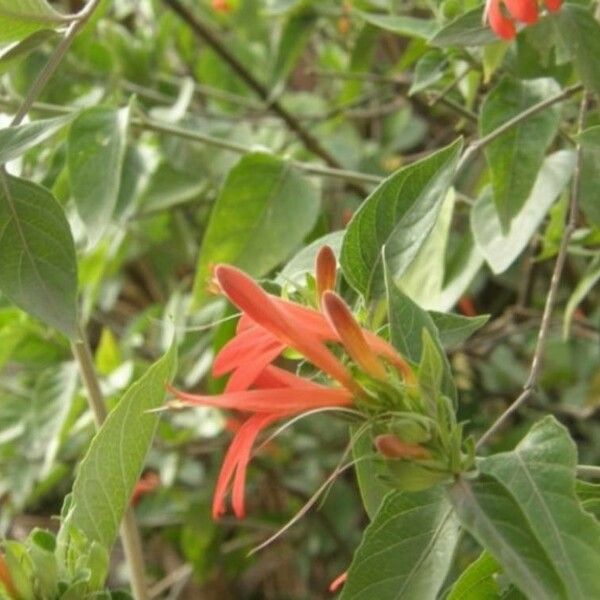
- 🌺 The Flowers: Slender, tubular blooms that are typically a fiery "fire-engine" red, though rare orange and yellow varieties exist. They grow in clusters at the ends of the branches.
- 🍃 The Leaves: Small, oval-shaped leaves with a soft, velvety texture. They are a muted, grayish-green color, which helps the plant reflect intense desert sunlight.
- 🌿 The Structure: A sprawling, multi-stemmed shrub that can grow up to 5 feet tall and wide. Its branches are somewhat brittle and have a distinctive "airy" or architectural look.
🏡 In Your Garden
- ☀️ Heat Hero: This plant is a true sun-worshiper. It prefers full sun and is exceptionally heat-tolerant. In fact, the more sun it gets, the more profuse its flowering will be.
- 💧 Water Logic: While it is highly drought-tolerant, it follows a "boom or bust" cycle. In extreme drought, it may drop its leaves to conserve energy, but it will quickly leaf out and bloom again after a good deep soaking.
- 🏜️ Drainage is Key: Because it evolved in rocky, sandy desert soils, it hates "wet feet." Ensure your soil is well-draining to prevent root rot, especially during cooler winter months.
⚠️ Safety & Toxicity
- ✅ Pet & Kid Friendly: Justicia candicans is generally considered non-toxic to humans, dogs, and cats. It is a very "safe" choice for family landscapes.
- ☁️ Soft Touch: Unlike many of its desert neighbors like Ocotillo or Cacti, the Chuparosa has no thorns or spines, making it ideal for planting near walkways or high-traffic areas.
✨ Fun Fact
The relationship between this plant and hummingbirds is so strong that some species, like the Costa’s Hummingbird, will actually defend a single Chuparosa bush as their exclusive territory, chasing away any other birds that try to take a sip!

Detailed Care Instructions
To grow Justicia candicans, also known as the Brazilian Plume Flower, you can follow these steps:
- Choose a suitable location: Justicia candicans prefers partial shade or filtered sunlight, so find a spot in your garden or indoors where it can receive a few hours of direct sunlight each day but is protected from harsh rays. It also prefers warm temperatures and high humidity.
- Prepare the soil: Justicia candicans thrives in well-draining soil, so make sure the soil in the chosen location is loose and fertile. Amend the soil with organic matter, such as compost, to improve drainage and fertility.
- Planting: Dig a hole that is slightly larger than the root ball of the plant. Place the plant in the hole and cover it with soil, gently patting it down to remove any air pockets. Make sure the soil is level with or slightly higher than the surrounding ground to avoid water pooling around the plant.
- Watering: Justicia candicans requires regular watering to keep the soil moist but not waterlogged. Water deeply, allowing the water to reach the roots, and then let the top inch of soil dry out before watering again. Avoid overwatering, as it can cause root rot.
- Fertilizing: Feed your Justicia candicans plant with a balanced fertilizer every two to three weeks during the growing season (spring and summer). Follow the instructions on the fertilizer package for the correct dosage. This will promote healthy growth and blooming.
- Pruning: Regular pruning helps shape the plant and encourage bushier growth. Trim back any dead or damaged branches and remove spent flowers to encourage new blooms. Pruning can be done after the blooming period in spring or early summer.
- Protect from frost: If you live in a region with cold winters, Justicia candicans is not frost-tolerant. If temperatures drop below freezing, you may need to move the plant indoors or provide protective measures, such as covering it with a blanket or using frost cloth.
- Propagation: Justicia candicans can be propagated by taking stem cuttings. Take 4-6 inch cuttings from healthy plants, remove the lower leaves, and place them in a well-draining potting mix. Keep the cuttings moist and warm, and they should root within a few weeks.
By following these steps, you can successfully grow Justicia candicans and enjoy its beautiful plume-like flowers.
To properly water this plant, it is important to first check the soil moisture level by touching the top inch of soil with your finger. If it feels dry, it is time to water. Use a watering can or hose to slowly and evenly water the soil around the plant, avoiding the leaves. Water until excess water drains out of the drainage holes at the bottom of the pot. Allow the soil to partially dry out before watering again, as overwatering can lead to root rot. The frequency of watering will depend on the environmental conditions, such as temperature and humidity, as well as the size of the pot and root system. It is important to avoid letting the plant sit in standing water, as this can also promote root rot.
To fertilize the Justicia Candicans plant, use a balanced, water-soluble fertilizer with equal amounts of nitrogen, phosphorus, and potassium. Dilute the fertilizer according to the instructions on the package. Apply the fertilizer to the soil around the base of the plant, avoiding getting the fertilizer on the leaves or stems. Fertilize every two weeks during the growing season and reduce frequency in the winter months. Over-fertilizing can harm the plant, so be sure to follow the instructions on the package carefully.
Justicia Candicans thrives in well-draining soil that is enriched with organic matter. This plant prefers soil that is slightly acidic to neutral with a pH range of 6.0 to 7.0. It is important to avoid using heavy or compacted soils that do not allow for proper drainage. Sandy loam soil is considered to be the most suitable choice for Justicia Candicans as it promotes good root growth and supplies adequate nutrients for healthy growth. It is also recommended to maintain consistent soil moisture by watering the plant regularly while avoiding waterlogging. Adding a layer of mulch around the plant can help in retaining moisture and reducing soil temperature fluctuations. Overall, the soil should provide a stable environment for the plant's roots to grow and absorb nutrients efficiently.
To propagate this plant, take a stem cutting that is at least 4 inches long and has several leaves on it. Remove the leaves from the lower two-thirds of the stem, leaving only a few leaves at the top. Dip the cut end of the stem in rooting hormone powder and plant it in a pot filled with moist potting soil. Cover the pot with a clear plastic bag to create a humidity dome and place it in a bright, indirect light. Keep the soil moist but not waterlogged and check for roots in about 4-6 weeks. Once the cutting has rooted, remove the plastic bag and gradually acclimate it to a brighter light.