Plant Overview
Often called the "Brazilian Fuchsia," this charming evergreen shrub is like a burst of tropical sunshine in the middle of a grey winter. Hailing from the rainforests of South America, it is famous for its "two-tone" flowers that look like tiny, glowing candies. It is a favorite for gardeners looking to add a splash of warmth to a shaded porch or a bright indoor corner during the off-season.
🔍 How to Identify
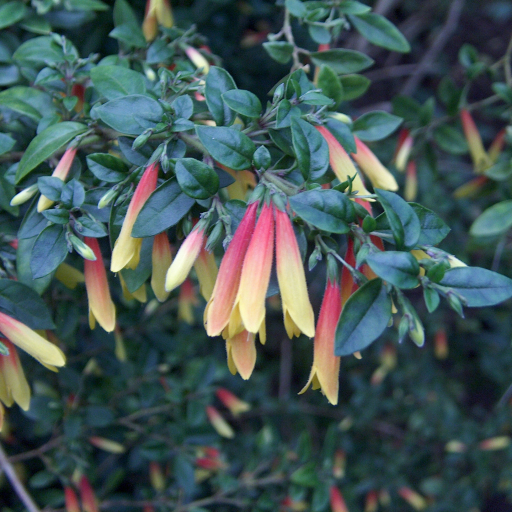
- 🎨 Bicolored Blooms: The most striking feature is the nodding, tubular flowers that transition from a fiery orange-red at the base to a bright lemon-yellow at the tip.
- 🍃 Lush Foliage: Small, elliptical, dark green leaves that have a slightly velvety texture and grow in a dense, bushy pattern along woody stems.
- 🌿 Compact Habit: It typically maintains a neat, rounded shape, rarely exceeding two or three feet in height, which makes it an ideal candidate for decorative pots.
🏡 In Your Garden
- 🌥️ Dappled Light: Unlike many flowering tropicals that crave scorching sun, the Brazilian Fuchsia thrives in "bright shade." Think of the light filtering through a canopy; too much direct sun will bleach the leaves.
- 💧 Consistency is Key: Coming from the rainforest, this plant hates "wet feet" but loathes drought. If the soil dries out completely, it will dramatically drop its leaves to conserve energy—a signal that it needs a deep drink immediately.
- 🌬️ Frost Phobia: This plant is a true tropical and has zero tolerance for frost. If you live in a cooler climate, treat it as a "winter guest" that lives outdoors in summer and moves inside to a bright window before the first chill.
⚠️ Safety & Toxicity
- ✅ Safe Status: Justicia floribunda is generally considered non-toxic to humans and common household pets like cats and dogs.
- 🐾 Digestive Note: While it doesn't contain dangerous toxins, it’s always best to keep it out of reach of curious nibblers. Ingesting any plant material in large quantities can still lead to a mild tummy ache for a pet.
✨ Fun Fact
In its native Brazil, this plant serves as a vital "fuel station" for hummingbirds. Its tubular flowers are perfectly engineered for a hummingbird’s long beak, providing high-energy nectar during the cooler months when other floral resources are scarce.

Detailed Care Instructions
To grow Justicia Floribunda, also known as the Brazilian Plume Flower or Jacobinia, follow these steps:
- Location: Choose a well-lit area with indirect sunlight. Justicia Floribunda prefers bright, filtered light, so placing it near a window with sheer curtains or in a partially shaded outdoor location would be ideal.
- Soil: Use a well-draining potting mix that is rich in organic matter. Ensure the soil is loose and not compacted.
- Watering: Water the plant thoroughly, allowing the soil to dry slightly between waterings. Avoid overwatering as it may lead to root rot. Justicia Floribunda prefers slightly moist soil but can tolerate short periods of dryness.
- Temperature and Humidity: These plants thrive in warm temperatures between 60°F and 80°F (15°C to 27°C). Maintain a moderate to high humidity level around the plant by misting it regularly or placing a tray of water near the plant to increase humidity.
- Fertilizer: Feed the plant during the growing season (spring and summer) with a balanced, water-soluble fertilizer every 2-4 weeks. Follow the instructions on the package for dilution and application rates.
- Pruning: Trim the plant regularly to maintain a compact shape and encourage new growth. Remove any dead or damaged leaves or branches.
- Propagation: Justicia Floribunda can be propagated from stem cuttings. Take a cutting about 4-6 inches long from a healthy, mature plant and remove any lower leaves. Plant the cutting in a well-draining potting mix and keep it moist until roots develop.
- Pests and Diseases: Monitor the plant for common pests like aphids, mealybugs, or spider mites. If infested, treat with an appropriate pesticide or use natural methods like neem oil or soapy water. Additionally, ensure good air circulation around the plant to prevent diseases like leaf spot or powdery mildew.
Remember to research any specific care requirements or instructions for Justicia Floribunda, as they may vary slightly depending on your location and climate.

Place in a window with dappled sun or a spot in the middle of a room. Or directly in a window facing west or east.

Justicia Floribunda is a tropical plant that requires regular watering for optimal growth. To water this plant, first check the soil moisture level by inserting your finger into the soil to a depth of about an inch. If the soil feels dry, it's time to water the plant.
Use a watering can or a hose with a gentle spray nozzle to water the plant. Slowly pour water onto the soil surrounding the plant, making sure not to splash water onto the leaves. Water until the soil is evenly moist but not waterlogged.
During the growing season, typically from spring to fall, water the plant once or twice a week, depending on how quickly the soil dries out. In winter, reduce watering to once every two weeks, or as needed.
It's important to avoid overwatering, as this can lead to root rot and other issues. To prevent overwatering, make sure the pot has drainage holes and allow excess water to drain away. If the soil stays wet for too long, consider adjusting the watering schedule or repotting the plant with fresh, well-draining soil.
- Choose a balanced fertilizer with a N-P-K ratio of 10-10-10 or 20-20-20.
- Apply the fertilizer during the plant's active growing season, typically in the spring and summer.
- Follow the package instructions for the appropriate amount of fertilizer to use.
- Apply the fertilizer evenly around the base of the plant.
- Water the plant thoroughly after fertilizing to help distribute the nutrients throughout the soil.
- Avoid over-fertilizing, which can cause damage to the plant and lead to nutrient burn.
To ensure healthy growth and development, the Justicia Floribunda plant requires well-draining and nutrient-rich soil. The ideal soil mix would consist of a loamy soil with adequate amounts of organic matter. The soil should also have a slightly acidic to neutral pH level, ranging from 6.0 to 7.5. It is important to avoid water-logged or heavy soils as this can lead to root rot. Adding a layer of mulch around the plant base can help to retain moisture and regulate soil temperature. Additionally, applying a balanced fertilizer during the growing season can help to ensure healthy growth and blooming.
To propagate this plant, you will need to take stem cuttings from a mature plant. Choose a healthy stem that is at least 4-6 inches long and has several leaves. Using a sharp, clean pair of scissors or pruning shears, cut the stem just below a node (where a leaf is attached).
Remove the lower leaves from the stem, leaving only a few leaves at the top. You can also remove any flowers or buds to redirect the plant's energy towards new growth. Dip the bottom of the stem into rooting hormone powder if desired.
Fill a small container or pot with well-draining soil mix, such as a combination of potting soil and sand or perlite. Make a small hole in the soil and insert the stem cutting. Gently press the soil around the stem to hold it in place, being careful not to damage the stem.
Water the cutting thoroughly and place it in a bright, but not direct sunlight. Keep the soil moist but not waterlogged, and make sure the cutting is protected from extreme temperatures and wind.
Within a few weeks, the cutting should start to develop roots and new growth. Once the roots are well-established and the plant has grown a few inches, it can be transplanted into a larger pot or directly into the ground.








