Plant Overview
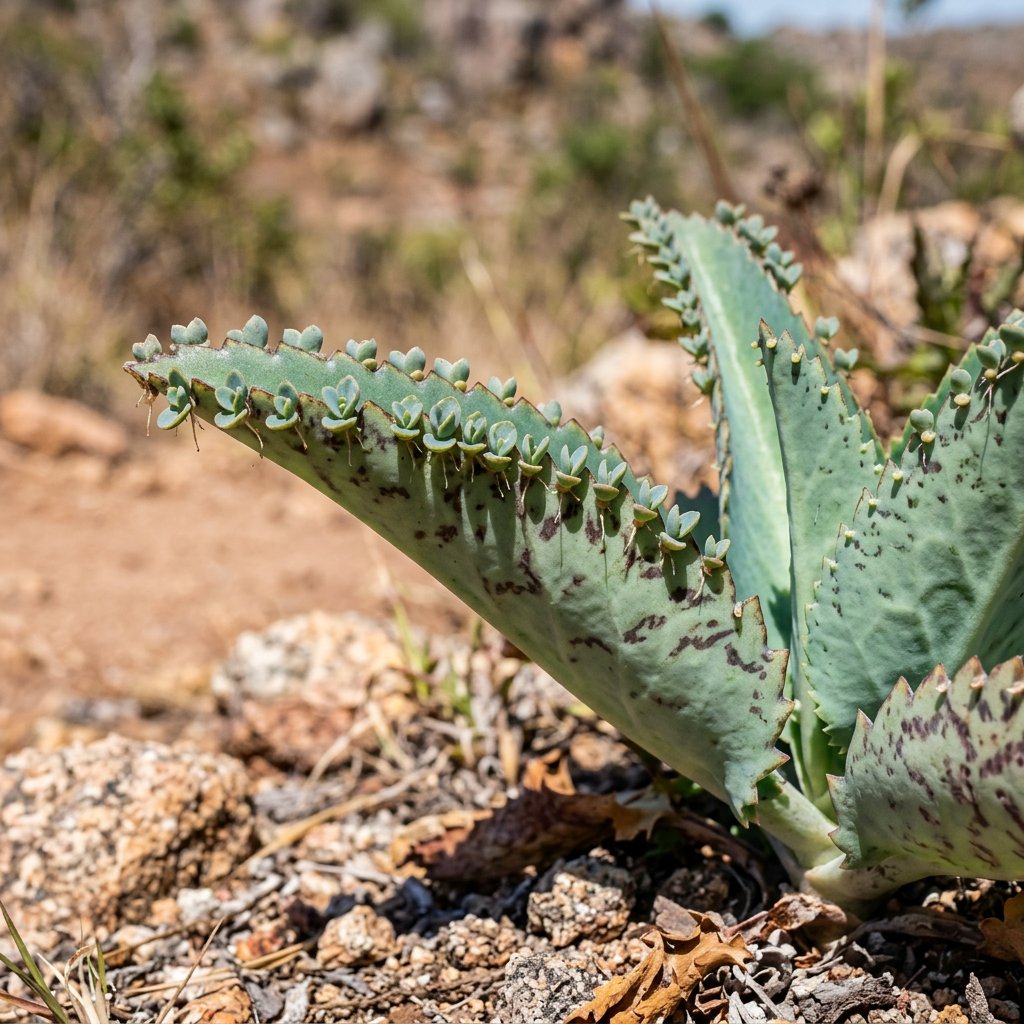
Known widely as the "Mother of Thousands" or the "Alligator Plant," this Madagascar native is a biological marvel that looks like something straight out of a science fiction film. It is famous—and sometimes feared—for its uncanny ability to clone itself hundreds of times over. While it is a striking architectural piece for a sunny windowsill, its prolific nature means it is often considered a "beautiful weed" in warmer climates.
🔍 How to Identify
- 🍃 Serrated Leaves: The plant features thick, fleshy, triangular leaves that grow in an opposite pattern. They are typically a blue-green color with distinct purple blotches on the underside.
- 🌱 The "Babies": The most iconic feature is the row of tiny, miniature plantlets (bulbils) that grow along the jagged margins of every leaf, resembling a fringe or a row of small teeth.
- 📏 Upright Stature: It grows on a single, sturdy stalk that can reach up to 3 feet in height. As it matures, it may develop a slightly woody base to support the weight of its water-filled leaves.
🏡 In Your Garden
- 🪴 Containment is Key: Because the tiny plantlets drop at the slightest touch, this plant is best kept in its own dedicated pot. If planted in a garden bed in frost-free zones, it will quickly "hop" into neighboring pots and overtake the landscape.
- ☀️ Light & Stability: It thrives in bright, indirect light but can handle full sun. If it doesn't get enough light, the stem becomes "leggy" and weak; since the leaves are heavy with water, a light-starved plant is prone to snapping or falling over.
⚠️ Safety & Toxicity
- 🚫 High Toxicity: This plant contains daigremontianin, a cardiac glycoside that can be extremely dangerous if consumed.
- 🐾 Pets & Children: All parts of the plant, including the tiny dropped plantlets, are toxic to cats, dogs, and humans. Ingestion can lead to heart palpitations, tremors, and severe gastrointestinal upset. It is best placed on a high shelf away from curious mouths.
✨ Fun Fact
The "babies" on the leaf edges are actually asexual clones of the parent plant. Kalanchoe daigremontiana has largely lost the ability to produce seeds through pollination, so it has evolved this "viviparous" method to ensure its survival—literally dropping a pre-rooted army into the soil below.

Detailed Care Instructions
| Color | Purplish-Gray And Dark Pink |
| Soil Ph | Any, But Many Opt For Neutral Ph |
| Humidity | Normal |
| Lighting | Full Sun |
| Toxicity | Poisonous |
| Soil Type | Cactus Or Succulent Potting Mix |
| Bloom Time | Late Winter |
| Difficulty | Easy |
| Plant Type | Perennial |
| Hibernation | Cold Period |
| Mature Size | 3 Feet Tall, With Leaves 4-10 Inches In Length |
| Native Area | Madagascar |
| Temperature | 16°C - 30°C |
| Sun Exposure | Bright And Indirect Sunlight |
| Hardiness Zones | 9-11 |
To grow a Kalanchoe Daigremontiana plant, also known as Mother of Thousands or Alligator Plant, you can follow these steps:
- Obtain a healthy plant: Purchase or obtain a Kalanchoe Daigremontiana plant from a reputable nursery or plant store. Alternatively, you can propagate it from a mature plant by collecting plantlets.
- Choose the right pot and soil: Select a well-draining pot with drainage holes to prevent waterlogged soil. Use a succulent or cactus potting mix, or create your own blend using equal parts of peat moss, perlite, and coarse sand.
- Planting the Kalanchoe Daigremontiana: Fill the pot about halfway with the prepared soil mix. Gently remove the plantlet or offsets from the mother plant, making sure they have developed roots. Place each plantlet in the pot, pressing the soil gently around it.
- Watering: Water the plant thoroughly after planting, allowing the excess water to drain away completely. Kalanchoe Daigremontiana prefers dry conditions, so wait until the soil dries out completely between watering. Overwatering may lead to root rot.
- Sunlight and temperature: Place the plant in a bright location that receives indirect sunlight for at least 4-6 hours a day. Kalanchoe Daigremontiana prefers temperatures between 60-85°F (15-29°C) but can tolerate slightly cooler or warmer conditions.
- Fertilization: Feed the plant once or twice a month during its active growth period (spring and summer) with a balanced fertilizer diluted to half strength.
- Propagation: Kalanchoe Daigremontiana produces small plantlets along its leaf margins. When these plantlets reach a decent size, you can carefully detach them from the mother plant and plant them in their pots.
- Pruning: Regularly trim off the spent flower stalks and any leggy or unhealthy growth to maintain the plant's appearance and overall health.
Remember to be cautious with this plant, as it is considered invasive in some regions due to its ability to self-propagate rapidly. Manage your plant's growth and check local regulations to prevent it from becoming an invasive species in your area.

Place in a bright room that is sun drenched almost all day. Or directly in a south-facing window.

To water this plant, wait until the top layer of soil is dry to the touch. When watering, pour water slowly and evenly onto the soil, allowing it to absorb the water. Be careful not to water too frequently or to let the plant sit in standing water, as this can lead to root rot. It is also important to avoid getting water on the leaves or stem, as this can cause damage or encourage disease.
To fertilize this plant, you should use a balanced fertilizer once a month during the growing season. Be sure to dilute the fertilizer to half strength before applying it to the soil. Additionally, you may choose to top-dress the soil with compost or other organic matter to provide additional nutrients. Avoid fertilizing during dormant periods or when the plant is stressed.
When planting Kalanchoe Daigremontiana, it is recommended to use a well-draining soil mixture. This can be achieved by mixing equal parts of peat moss, perlite, and coarse sand. The soil should also be slightly acidic with a pH range of 6.0 to 7.0. It is important not to overwater the plant as it can lead to root rot, so allow the soil to dry out between waterings. Additionally, adding organic matter such as compost or aged manure can provide essential nutrients for the plant's growth.
To propagate this plant, select a healthy leaf from the parent plant. Gently twist the leaf until it breaks off cleanly from the stem. Allow the leaf to callus over for a few days to prevent rotting.
Prepare a small pot with well-draining soil, such as a cactus mix. Place the callused end of the leaf into the soil, burying about half of it.
Water the soil lightly, being careful not to overwater. Place the pot in a warm, bright location, but not direct sunlight.
Over time, the leaf will develop roots and a new plantlet will grow from the base of the leaf. Once the plantlet has grown to a sufficient size, it can be transplanted into a larger pot or container.
Common pests of the mother-of-millions include Scale insect, mealybugs, aphids, thrips. Make a habit of checking your mother-of-millions frequently for pests so that any infestations can be caught and managed early.








