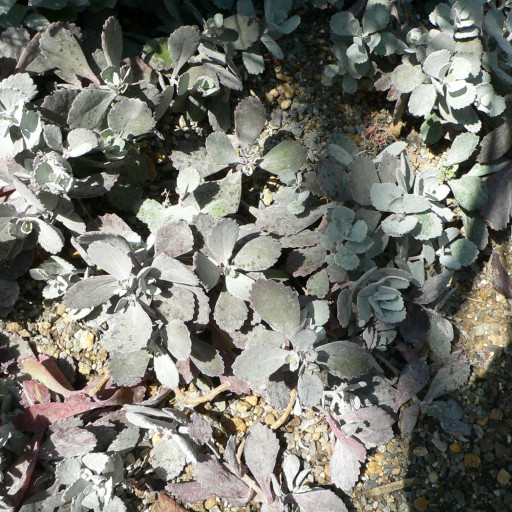
Plant Overview
Known affectionately as the "Flower Dust Plant," Kalanchoe pumila is a shimmering treasure originally found clinging to the rocky cliffs of Madagascar. It looks as if it has been perpetually dusted with powdered sugar or caught in a permanent light frost. This dwarf succulent is a favorite for indoor gardeners because of its unique "frosted" foliage and its habit of erupting into a cloud of pink blossoms just when the winter gloom begins to fade.
🔍 How to Identify
- ❄️ The "Dust": The most striking feature is a thick, waxy white powder (called farina) that covers the leaves, giving the plant a ghostly silver-blue or lavender hue.
- 🥄 Scalloped Leaves: The small, fleshy leaves are shaped like tiny spoons with distinct, notched "teeth" at the rounded tips.
- 🌸 Winter Blooms: In late winter and early spring, it produces clusters of upright, four-petaled flowers in shades of rose-pink to soft violet.
🏡 In Your Garden
- 🧺 The Perfect Spiller: Because this plant has a spreading, trailing habit, it is most at home in hanging baskets or "creeping" over the edges of a stone container. It stays low to the ground, rarely exceeding 8–12 inches in height.
- ☀️ Sunscreen Secrets: That white powder isn't just for show—it acts as a natural sunscreen. If you notice your plant turning a dull green, it is likely asking for more bright, indirect light to help it rebuild its silvery protective shield.
- 💧 Thirsty Roots Warning: It is highly susceptible to root rot. It prefers "soak and dry" watering; if the leaves feel slightly soft to the touch, it’s time for a drink, but never let it sit in standing water.
⚠️ Safety & Toxicity
- 🐾 Toxic to Pets: Like almost all members of the Kalanchoe genus, this plant is considered toxic to domestic animals.
- 🤢 Details: It contains cardiac glycosides which, if ingested by cats or dogs, can cause drooling, vomiting, or more serious heart rhythm issues. It is best kept on high shelves or in hanging pots away from curious nibblers.
✨ Fun Fact
The "dust" on the leaves is so delicate that touching them can leave permanent fingerprints! The plant cannot easily grow this wax back once it’s rubbed off, so gardeners often treat it like a "look but don't touch" masterpiece to keep its silver coat pristine.

Detailed Care Instructions
| Color | Pink |
| Soil Ph | Acidic |
| Lighting | Full Sun |
| Toxicity | Toxic |
| Soil Type | Well-Drained |
| Bloom Time | Spring, Summer, Fall, Winter |
| Plant Type | Succulent |
| Mature Size | 8 To 12 Inches Tall |
| Native Area | Africa |
| Sun Exposure | Full Sun, Partial Shade |
| Hardiness Zones | 11-12 |
To grow Kalanchoe Pumila, also known as the Flaming Katy or Christmas Kalanchoe, follow these steps:
- Start with a healthy plant: Purchase a young Kalanchoe Pumila from a reputable nursery or garden center.
- Choose the right pot: Use a well-draining pot that is slightly larger than the current size of the plant. The container should have drainage holes at the bottom to prevent waterlogged soil.
- Soil: Use a well-draining potting mix formulated for succulents or cacti. Alternatively, you can create your own mix by combining 50% regular potting soil, 25% perlite, and 25% coarse sand.
- Lighting: Place the plant in a location that receives bright, indirect light. Kalanchoe Pumila does well in a south or west-facing window. Avoid direct sunlight, especially during the hottest parts of the day.
- Temperature: Keep the plant in an environment with temperatures between 60-75°F (15-24°C). Protect it from extreme heat or cold drafts.
- Watering: Allow the soil to dry out between waterings. Overwatering can cause root rot, so it's better to underwater than to overwater. Water deeply but infrequently, letting excess water drain out through the drainage holes. Avoid getting water on the leaves, as it may cause rot.
- Fertilizer: Feed the plant with a balanced, water-soluble fertilizer designed for succulents or cacti. Follow the package instructions for application frequency and amounts.
- Pruning: Trim any dead or wilted flowers or leaves to maintain the plant's appearance and encourage new growth.
- Repotting: As the plant grows, you may need to repot it into a larger container to provide more space for the roots. This is usually done every 1-2 years, preferably in the spring.
- Propagation: Kalanchoe Pumila can be propagated through stem or leaf cuttings. Allow the cuttings to dry for a few days before planting them in well-draining soil.
By following these steps, you can successfully grow Kalanchoe Pumila and enjoy its vibrant blooms for years to come.

Place in a bright room that is sun drenched almost all day. Or directly in a south-facing window.

To water this plant, check the top inch of soil to see if it is dry to the touch. If it is, water the plant thoroughly, allowing the soil to absorb the water until it starts to drain out of the bottom of the pot. Avoid letting the plant sit in standing water, as this can lead to root rot. Water this plant regularly during the growing season, but reduce watering during the winter months when the plant goes dormant. Be sure to use room temperature water and avoid getting water on the leaves, as this can cause damage or promote disease.
For the plant, use a balanced fertilizer with equal amounts of nitrogen, phosphorus, and potassium. Fertilize every two weeks during the growing season, and reduce fertilization to once a month during the winter months. Be sure to dilute the fertilizer to half-strength to avoid over-fertilization. Avoid fertilizing when the soil is dry, as this can damage the plant's roots.
Kalanchoe Pumila plant prefers well-draining soil that is nutrient-rich and slightly acidic. The soil should be able to hold moisture but not become waterlogged as the plant is susceptible to rot. A good soil mix for this plant could consist of peat moss, perlite, and coarse sand. It is also important to ensure that the soil mix has proper aeration and drainage. Over-fertilization should be avoided as it can result in excessive growth and reduced flowering.
To propagate this plant, first select a healthy and mature stem from the existing plant. Using a clean and sharp pair of scissors or gardening shears, carefully cut the stem at a 45-degree angle. Trim away any leaves or flowers from the bottom few inches of the stem, leaving only one or two leaves at the top.
Prepare a small pot with well-draining soil and make a small hole in the center. Dip the cut end of the stem into rooting hormone powder to promote root growth, if desired. Place the stem cutting into the hole in the soil and lightly pack the soil around it.
Water the cutting lightly, being careful not to overwater it. To encourage root growth, cover the pot with a clear plastic bag or wrap to create a humid environment. Place the pot in indirect sunlight or a shaded area.
Check the soil moisture regularly and water as needed to keep it lightly moist, but not soggy. After a few weeks, the cutting should begin to show signs of new growth, indicating it has successfully rooted. At this point, you can remove the plastic covering and move the plant into a brighter location with more direct sunlight.
Once the new plant has grown strong roots and several sets of leaves, it can be transplanted into a larger pot or planted in the ground outdoors. With proper care, your propagated Kalanchoe Pumila plant should continue to grow and thrive for years to come.
Common pests of the flour-dust plant include Scale insect, mealybugs, aphids, thrips. Make a habit of checking your flour-dust plant frequently for pests so that any infestations can be caught and managed early.








