Plant Overview
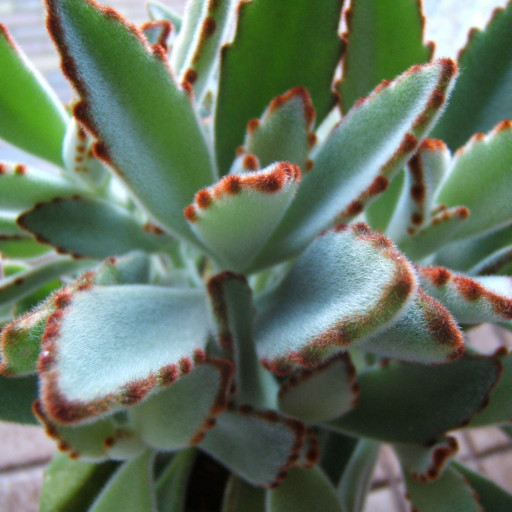
Known affectionately as the "Panda Plant" or "Pussy Ears," this Madagascar native is a tactile wonder in the succulent world. Its velvety, silver-furred leaves make it one of the most "strokable" plants you can own, often appearing more like a plush toy than a living organism. It is a rugged survivor from the arid brushlands, perfectly evolved to bring a touch of soft, silvery gray to sunny windowsills.
🔍 How to Identify
- 🐾 The "Fur": The entire plant is covered in a dense coat of tiny, felt-like silver hairs (called tomentum) that give it a shimmering, matte appearance.
- 🍫 Chocolate Stitches: The leaf margins are tipped with distinct, broken lines of dark chocolate or rusty-red spots, looking almost like decorative embroidery.
- 🍃 Leaf Shape: The leaves are thick, fleshy, and oval-shaped, usually growing in a loose rosette pattern that becomes more shrub-like as the plant matures.
🏡 In Your Garden
- ☀️ Built-in Sunscreen: Those famous silver hairs aren't just for looks; they act as a biological parasol, reflecting harsh sunlight and trapping a layer of cool air against the leaf surface to prevent dehydration.
- 💧 Thrives on Neglect: Because it stores a massive amount of water in its "felted" leaves, it prefers to stay dry. It is far more likely to die from a heavy hand with the watering can than from a missed drink, as its roots are highly susceptible to rot in damp soil.
⚠️ Safety & Toxicity
- 🐾 Toxic to Pets: Like most members of the Kalanchoe family, the Panda Plant is considered toxic to cats and dogs.
- 🤢 The Risk: It contains cardiac glycosides. If nibbled, it can cause oral irritation, drooling, vomiting, or, in rare cases of high consumption, heart rate abnormalities. It is best kept on high shelves out of reach of curious paws.
✨ Fun Fact
The name tomentosa is Latin for "covered in matted hairs." In its native Madagascar, these hairs are so effective at collecting dew and preventing water loss that the plant can survive for months without a single drop of rain!

Detailed Care Instructions
| Color | Red |
| Soil Ph | 6.1 - 7.8 |
| Humidity | Normal |
| Lighting | Part Sun |
| Toxicity | Poisonous |
| Soil Type | Well-Draining |
| Bloom Time | Summer |
| Difficulty | Easy |
| Plant Type | Succulent |
| Hibernation | Cold Period |
| Mature Size | 80 Cm Tall |
| Native Area | Madagascar |
| Temperature | 15°C - 23°C |
| Sun Exposure | Bright, Filtered Light |
| Hardiness Zones | 11 - 12 |
To grow a Kalanchoe Tomentosa plant, also known as "Panda Plant" or "Chocolate Soldier," you can follow these steps:
- Choose a suitable pot: Select a well-draining pot with a diameter of at least 6 inches. Ensure it has drainage holes at the bottom to prevent waterlogging.
- Potting mix: Use a well-draining potting mix consisting of cactus soil or a mixture of regular potting soil, perlite, and sand.
- Propagation methods:
- Leaf cutting propagation: Carefully take a healthy leaf cutting from the plant by gently separating it from the stem. Allow it to callous for a day or two before planting it ½ inch deep into the potting mix.
- Stem cutting propagation: Cut a 3-4 inch stem below a node and remove the leaves from the lower two-thirds. Allow the cutting to dry for a day before inserting it into the potting mix.
- Leaf cutting propagation: Carefully take a healthy leaf cutting from the plant by gently separating it from the stem. Allow it to callous for a day or two before planting it ½ inch deep into the potting mix.
- Light requirements: Kalanchoe Tomentosa prefers bright, indirect light. Place the pot near a sunny windowsill or provide artificial fluorescent light for at least 6-8 hours a day.
- Temperature: Maintain a temperature range between 60-75°F (15-24°C). Protect the plant from extreme cold or hot temperatures.
- Watering: Allow the potting mix to dry out between waterings. Overwatering can lead to root rot. Water the plant thoroughly when the top inch of soil feels dry, but ensure excess water drains from the pot.
- Humidity: Panda Plants tolerate average humidity levels, but they benefit from higher humidity. To increase humidity, you can place a tray of water near the plant or use a humidifier.
- Fertilizing: Feed the plant with a balanced houseplant fertilizer diluted to half the recommended strength every 2-4 weeks during the growing season (spring and summer). Stop fertilizing in fall and winter when the plant enters a rest period.
- Pruning: Trim any dead or damaged leaves using clean scissors or pruning shears. This will help maintain the plant's appearance and overall health.
- Repotting: As the Kalanchoe Tomentosa grows, you may need to repot it every 1-2 years into a slightly larger pot. Choose a pot with sufficient drainage holes and fresh potting mix.
By following these steps and providing the necessary care, you can successfully grow a Kalanchoe Tomentosa plant.

Place in a bright room that is sun drenched almost all day. Or directly in a south-facing window.

To water this type of plant, it is best to wait until the top inch of soil has dried out before giving it a thorough watering. Make sure the water reaches the roots of the plant, but do not let the soil become waterlogged. It is also important to water the plant at the base and avoid getting the leaves wet to prevent any potential fungal growth. Additionally, it is advisable to use room temperature water when watering this plant.
To fertilize this plant, use a general-purpose fertilizer with balanced N-P-K ratio (nitrogen, phosphorus, and potassium). Dilute the fertilizer according to the instructions on the label and apply it to the soil around the base of the plant. Make sure not to get any of it on the leaves as this can damage them. Fertilize once a month during the growing season (spring and summer) and reduce to every two months during the dormant season (fall and winter).
When growing Kalanchoe Tomentosa, it is important to use a well-draining soil mix that will allow excess water to drain away from the roots. A good soil mix can be created by combining perlite or sand with peat or potting soil. The soil should be slightly acidic, with a pH level between 6.0 and 6.5. It is important to avoid soil mixes that contain heavy clay or organic matter, as these can lead to poor drainage and root rot. Additionally, it is important to ensure that the soil is moist but not waterlogged, as Kalanchoe Tomentosa is sensitive to overwatering.
Kalanchoe tomentosa plant can be propagated through stem or leaf cuttings. For stem cutting propagation, select a healthy stem from the parent plant and cut it into 3-4 inches long sections, making sure there are at least 2-3 leaves on each section. Remove the bottom set of leaves and let the stem cutting dry in a shaded area for a day or two. Then, dip the cut end of the stem cutting in rooting hormone and plant it in a well-draining soil mix. Water it lightly and keep it in a shaded area until it establishes roots, which typically takes 3-4 weeks.
For leaf cutting propagation, select a healthy leaf from the parent plant and gently remove it with a clean, sharp knife. Allow the leaf to dry out for a day or two, and then dip the cut end in rooting hormone. Place the leaf cutting on top of moist soil and mist it with water daily to keep the soil moist. After a few weeks, tiny plantlets will emerge from the edges of the leaf, which can then be separated from the leaf and planted in their own pots.
Propagation can also be done through division by separating the plant's offsets or "pups" from the parent plant and planting them in their own pots. Make sure each offset has some roots and at least a couple of leaves, and plant them in a well-draining soil mix.
Common pests of the panda plant include Scale insect, mealybugs, aphids, thrips. Make a habit of checking your panda plant frequently for pests so that any infestations can be caught and managed early.








