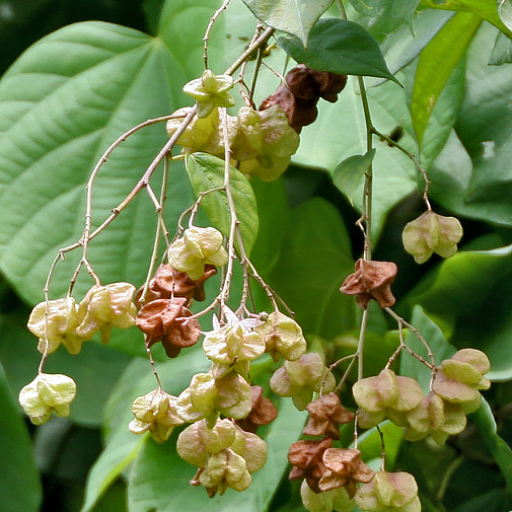
Plant Overview
The "Guest Tree" is a tropical beauty that earns its name from its welcoming, spreading canopy and delicate pink blossoms. Often mistaken for a Hibiscus relative at first glance, this fast-growing tree is a favorite in Southeast Asia for both its shade and its unique, lantern-like fruit pods. It carries an air of tropical elegance, often found lining riverbanks or gracing spacious gardens where its broad leaves provide a perfect natural umbrella.
🔍 How to Identify
- 🍃 Leaf Shape: Large, broad, and perfectly heart-shaped (cordate) with long stalks, giving the tree a lush and dense appearance.
- 🌸 Blossoms: Tiny, five-petaled flowers that range from pale pink to deep rose, growing in upright clusters (panicles) at the very tips of the branches.
- 🎈 Fruit Pods: Very distinct, papery, and inflated seed capsules that look like tiny green lanterns, eventually turning a decorative papery brown.
🏡 In Your Garden
- 🌞 Space Enthusiast: This tree is a sun-seeker that grows remarkably fast; it needs a wide-open spot because it "hates" being crowded and will reach for the light aggressively.
- 💧 Humidity Lover: While it is surprisingly resilient once established, it thrives best in humid environments and deep, loamy soil that mimics its native tropical riverbank habitat.
⚠️ Safety & Toxicity
- 🟢 General Status: Kleinhovia hospita is generally considered non-toxic and safe for home gardens.
- 🐾 Pet & Child Safety: There are no records of severe toxicity for cats, dogs, or humans, though ingesting large amounts of the seeds or bark may cause mild digestive discomfort due to natural tannins.
✨ Fun Fact
In many cultures, this tree is a "pharmacy in a trunk." Its bark and leaves are used traditionally to treat everything from skin itches to hair loss, and the sturdy fibers from its bark are often twisted into high-quality, handmade ropes!

Detailed Care Instructions
To grow a Kleinhovia Hospita plant, follow these steps:
- Obtain seeds or a sapling: Kleinhovia Hospita seeds can be collected from mature fruits or obtained from a reputable nursery. Alternatively, you can purchase a young sapling from a plant vendor.
- Choose an appropriate location: Kleinhovia Hospita thrives in warm, tropical regions and prefers full sun or partial shade. Select a spot in your garden or yard that receives abundant sunlight and has well-draining soil.
- Prepare the soil: Before planting, prepare the soil by loosening it with a garden fork or tiller. Add compost or organic matter to improve drainage and fertility.
- Plant the seeds/sapling: If starting from seeds, soak them in water for 24 hours before planting. Plant them about 1 cm deep in the prepared soil, spacing them around 30 cm apart. If using a sapling, dig a hole large enough to accommodate the root ball and place the plant in it.
- Watering: Water the newly planted seeds/sapling immediately after planting to settle the soil. Kleinhovia Hospita requires regular and consistent watering, especially during dry spells. Allow the soil to dry out slightly between waterings to prevent overwatering.
- Mulching: Apply a layer of organic mulch around the base of the plant to conserve moisture, suppress weed growth, and protect the roots. Mulching also helps to regulate soil temperature.
- Fertilization: Kleinhovia Hospita plants benefit from regular fertilization. Apply a balanced, slow-release fertilizer once every three months during the growing season. Follow the instructions on the fertilizer package for proper dosage.
- Pruning: Regular pruning will help maintain the shape and size of the plant. Remove any dead, damaged, or diseased branches. You can also trim back excessive growth to promote a bushier appearance.
- Protection from pests and diseases: Inspect the plant regularly for pests like aphids or scale insects. Use organic pest control methods or insecticidal soap to manage infestations. Additionally, promptly remove any diseased foliage or fruit to prevent the spread of diseases.
- Patience and care: Growing Kleinhovia Hospita requires patience as it may take a few years for the plant to reach its full potential. Regular care, adequate sunlight, proper watering, and occasional fertilization will help ensure its healthy growth.
Remember to consult local gardening experts or refer to specific regional guidelines for any specific variations or additional care instructions that may be necessary for growing Kleinhovia Hospita plants in your area.

Place in a bright room that is sun drenched almost all day. Or directly in a south-facing window.

To water this plant, give it a good soak once a week, being sure not to overwater and to allow the soil to dry slightly in between waterings. Check the top inch of soil and water thoroughly if it feels dry to the touch. Avoid getting water on the leaves as this can cause damage. It is important to choose a well-draining soil and a pot with drainage holes to prevent water from sitting in the soil and causing root rot. In the winter months when the plant is in a resting phase, reduce watering frequency but ensure that the soil remains slightly moist.
- Choose a balanced fertilizer with equal amounts of nitrogen, phosphorus, and potassium.
- Start fertilizing in the spring when new growth appears.
- Dilute the fertilizer according to package instructions.
- Apply the fertilizer every two weeks during the growing season.
- Do not fertilize during the dormant period in the winter.
- Water the plant well before and after fertilizing to prevent root burn.
- Monitor plant response to avoid over-fertilization, which can cause leaf burn.
The ideal soil to use for the Kleinhovia Hospita plant is a well-draining, nutrient-rich soil that is moist but not waterlogged. It should have a slightly acidic pH level, around 6.0 to 6.5, and contain organic matter to help retain moisture and promote healthy root growth. The soil should also be free from any contaminants or pollutants that could harm the plant. Additionally, it is recommended to use a potting mix specifically designed for tropical plants to ensure the plant gets the necessary nutrients and moisture.
To propagate this plant, you will need to take stem cuttings from a healthy parent plant. Use a sharp, sterile tool to make a clean cut just below a node. Remove any leaves from the bottom half of the cutting. Dip the cut end into rooting hormone powder to encourage new root growth.
Prepare a soil mix that is moist but not waterlogged, and make a hole in the center for the cutting. Gently press the cutting into the soil and firm the soil around it. Water thoroughly and cover the cutting with a plastic bag or a clear plastic container to maintain high humidity.
Place the cutting in a bright, but indirect light location, and maintain a warm, moist environment. Check the soil frequently to ensure it stays moist but not waterlogged. After about 4-6 weeks, you should see new root growth and possible new leaves on the cutting. Once the plant has established roots and new growth, you can gradually acclimate it to lower humidity and normal light conditions.








