Plant Overview
Often called the "loneliest tree in the world," the Cooke’s Kokiʻo is a legendary survivor from the Hawaiian islands. Once thought to be extinct, this stunning member of the hibiscus family was rescued from the brink in the late 19th century and now exists only through the dedicated efforts of botanists. It is a biological miracle that serves as a symbol of hope for plant conservation worldwide.
🔍 How to Identify
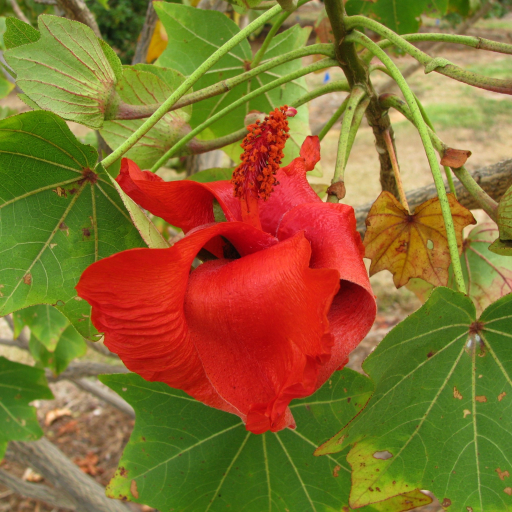
- 🍃 The Leaves: Broad, circular leaves with 3 to 7 shallow, pointed lobes. They look somewhat like a soft-edged maple leaf and turn a beautiful coppery color before they drop.
- 🌺 The Blooms: Spectacular, large, orange-red flowers with five petals that curve backward, exposing a long, prominent central column.
- 🌳 The Growth Habit: A small, delicate tree reaching about 10–15 feet in height. Because it is so rare, most living specimens are seen as grafted branches on the trunks of its hardier relatives.
🏡 In Your Garden
- 🏝️ A Rare Treasure: You won't find this plant at a typical garden center. It is strictly managed by botanical gardens and conservation programs. It requires the specific, warm, dry lowland conditions of its native Hawaiian habitat to survive.
- 🧬 The Grafting Secret: Every living Cooke’s Kokiʻo is a clone of the last remaining individual found in the 1900s. It is notoriously difficult to grow from seed, so it is almost always grafted onto the rootstock of the Kokia drynarioides (Hawaiian Tree Cotton) to give it a fighting chance.
⚠️ Safety & Toxicity
- ✅ Non-Toxic: There are no reports of Kokia cookei being toxic to humans, cats, or dogs. Its relatives in the Malvaceae family are generally safe.
- 🛡️ Strictly Protected: The primary "danger" associated with this plant is its legal status. As one of the rarest plants on Earth, it is federally protected. Touching or interfering with a specimen in a conservation area is highly regulated.
✨ Fun Fact
The unique, backward-curving shape of the Kokiʻo flower wasn't just for show—it evolved specifically to fit the curved beaks of native Hawaiian honeycreeper birds. Since many of those birds are now extinct, the tree lost its natural pollinators, making its survival even more dependent on human intervention!

Detailed Care Instructions
To grow Kokia Cookei plants, you can follow these steps:
- Choose a suitable location: Kokia Cookei plants prefer full sun or partial shade. Ensure the location has well-draining soil.
- Propagation: The most common method of propagation is through stem cuttings. Take a 6-8 inch cutting from a healthy plant, remove the lower leaves, and plant the cutting in a pot filled with well-draining soil. Keep the soil moist and place the pot in a warm, humid area.
- Watering: Water your Kokia Cookei plant regularly, especially during the growing season. Keep the soil moist but not soggy. Avoid overwatering, as it can lead to root rot.
- Fertilizing: Feed your plant with a balanced, slow-release fertilizer during the growing season. Follow the instructions on the fertilizer packaging for the correct dosage.
- Pruning: Prune your Kokia Cookei plant in early spring to promote bushier growth and maintain its shape. Remove any dead or damaged branches as well.
- Protection from frost: Kokia Cookei plants are not frost-tolerant, so if you live in a region with cold winters, it's important to protect your plant from freezing temperatures. Consider covering it with frost cloth or moving it indoors during winter.
- Pest and disease control: While Kokia Cookei plants are generally resilient, they can be susceptible to pests such as aphids or scale insects. Monitor your plant regularly and, if needed, treat any infestations with appropriate organic insecticides. Keep an eye out for any signs of disease, such as leaf discoloration or wilting, and address the issue promptly.
Remember, each plant has specific needs, so it's crucial to research and understand the specific requirements of Kokia Cookei plants. By providing proper care and attention, your Kokia Cookei plant should thrive and grow successfully.
To properly water the Kokia Cookei plant, it is important to consider a few key factors.
- Watering frequency: The Kokia Cookei plant requires a consistent watering schedule. It is best to water the plant regularly, allowing the soil to dry out slightly between each watering. Typically, watering every 7-10 days during warmer months and reducing the frequency during colder months is recommended.
- Soil moisture level: Before watering the Kokia Cookei plant, it is crucial to check the moisture level of the soil. Insert your finger about an inch into the soil to assess its dryness. If the soil feels dry at this depth, it is an indication that the plant needs watering. However, if the soil feels damp, it is better to withhold watering to avoid over-saturating the plant.
- Watering method: To water the Kokia Cookei plant, use a watering can or a similar device that allows for a gentle flow of water. Avoid using a high-pressure hose, as it may damage the delicate foliage or disturb the roots. Apply water evenly across the entire soil surface, ensuring that it reaches the root zone. Aim to moisten the soil until water begins to seep out from the drainage holes at the bottom of the pot or container.
- Water quality: The Kokia Cookei plant prefers neutral to slightly acidic soil conditions. Therefore, it is important to use water that is free from harsh chemicals and excessive mineral content. If tap water is used, allow it to sit overnight before watering the plant. This enables any chlorine or fluoride present in the water to dissipate, making it more suitable for the plant. Alternatively, using rainwater or distilled water can help maintain optimal soil conditions.
- Environmental considerations: Consider the plant's surrounding environment when determining the watering needs of the Kokia Cookei plant. Factors such as temperature, humidity, and amount of sunlight exposure can influence the rate at which moisture is lost from the soil. During hotter and drier periods, the plant may require more frequent watering, while during cooler and more humid conditions, watering can be reduced.
By following these guidelines and paying attention to the specific needs of the Kokia Cookei plant, you can establish an effective watering routine to promote its healthy growth and overall well-being.
To properly fertilize the Kokia Cookei plant, it is recommended to follow the instructions below:
- Choose a well-draining potting mix suitable for tropical plants. Avoid heavy soils that retain too much moisture.
- Use a balanced, slow-release fertilizer with an N-P-K ratio of 10-10-10 or a similar ratio.
- Apply the fertilizer during the growing season, which is typically from spring to early fall.
- Dilute the fertilizer by following the manufacturer's instructions. Mix it with water to avoid burning the plant's roots. Do not apply it directly to dry soil.
- Water the plant thoroughly before applying the fertilizer, ensuring the soil is moist but not waterlogged.
- Apply the diluted fertilizer evenly around the base of the plant, avoiding direct contact with the stem or leaves.
- Use caution not to exceed the recommended dosage as excessive fertilizer can damage the plant.
- After applying the fertilizer, water the plant again to help the nutrients penetrate the soil.
- Monitor the plant for any signs of over-fertilization or nutrient deficiencies, such as yellowing or browning leaves.
- Adjust the fertilization regimen if necessary, based on the specific needs and response of the plant.
Remember to consider the Kokia Cookei plant's specific requirements and observe its response to ensure the right amount of nutrients are provided for healthy growth.
Kokia cookei, a species of plant known for its stunning aesthetic appeal, requires a specific type of soil to thrive and grow optimally. The ideal soil composition for Kokia cookei typically consists of a well-draining, loamy mixture. This type of soil provides a balance between water retention and proper drainage.
Loamy soil contains a healthy combination of sand, silt, and clay particles. The sandy component aids in promoting good drainage, preventing waterlogged soil that can lead to root rot. Meanwhile, the silt and clay particles help retain moisture, allowing the plant's roots to access water during dry periods.
It is essential to ensure adequate organic matter in the soil for Kokia cookei. Organic matter, such as compost or well-rotted manure, enhances the soil's structure and nutrient content. This amendment provides necessary nutrients for the plant's growth and development.
The pH level of the soil plays a crucial role in the health of Kokia cookei. Aim to maintain a slightly acidic to neutral pH range of around 6.0 to 7.0. This pH level allows the plant to absorb nutrients effectively from the soil.
Additionally, it is beneficial to incorporate some perlite or grit into the soil mixture. These amendments improve soil aeration and prevent compaction, allowing the Kokia cookei plant's roots to breathe and grow without any hindrance.
Overall, providing a well-draining, loamy soil enriched with organic matter and maintaining a slightly acidic to neutral pH level will create an ideal growing environment for the Kokia cookei plant.
Propagation of Kokia cookei plant can be achieved through several methods such as seed propagation, cuttings, and layering. Here are the details of each propagation method:
- Seed Propagation:
- Collect ripe seeds from mature fruits of Kokia cookei plant.
- Remove the outer cover of the seed using a sharp knife or sandpaper, as it has a hard and impermeable seed coat.
- Soak the seeds in warm water for 24 hours to soften the coat.
- Fill a seed tray or pots with a well-draining potting mix.
- Sow the seeds on the surface of the soil and cover them lightly with a thin layer of vermiculite or sand.
- Place the tray or pots in a warm location with indirect sunlight.
- Keep the soil consistently moist but not waterlogged.
- Germination usually occurs within 3-4 weeks. Once the seedlings develop a few true leaves, they can be transplanted into separate pots.
- Collect ripe seeds from mature fruits of Kokia cookei plant.
- Cuttings Propagation:
- Select a healthy, non-flowering stem from the Kokia cookei plant.
- Cut a 4-6 inch section of the stem just below a node using clean, sharp pruning shears.
- Strip off the lower leaves, leaving only a few at the top.
- Dip the cut end of the stem into a rooting hormone powder to promote root development.
- Prepare a container with well-draining potting mix or a mixture of peat and perlite.
- Insert the cutting about an inch deep into the prepared potting mix.
- Mist the cutting and the soil lightly with water to increase humidity around the cutting.
- Place the container in a warm, brightly lit area away from direct sunlight.
- Keep the soil evenly moist until the cutting develops roots, which usually takes 4-6 weeks.
- Once the roots are established, the rooted cutting can be transplanted into a larger pot or garden bed.
- Select a healthy, non-flowering stem from the Kokia cookei plant.
- Layering Propagation:
- Identify a low-hanging branch of the Kokia cookei plant that can be bent towards the ground easily.
- Select a spot on the branch, about 12-18 inches away from the tip.
- Use a clean, sharp knife to make a small cut on the underside of the branch, just above a node.
- Make another shallow cut to remove a small section of bark and expose the green tissue underneath.
- Apply a rooting hormone to the wounded area to stimulate root growth.
- Dig a small trench beneath the wounded area and bury it in the soil, ensuring good contact.
- Secure the branch to the soil using U-shaped pins, stones, or weights.
- Water the area regularly to keep the soil moist.
- After several months, new roots will develop from the wounded area.
- Cut the branch from the main plant once the rooted section has established enough roots to sustain itself.
- Carefully separate the new plant from the parent plant and transplant it into its desired location.
- Identify a low-hanging branch of the Kokia cookei plant that can be bent towards the ground easily.








