Plant Overview
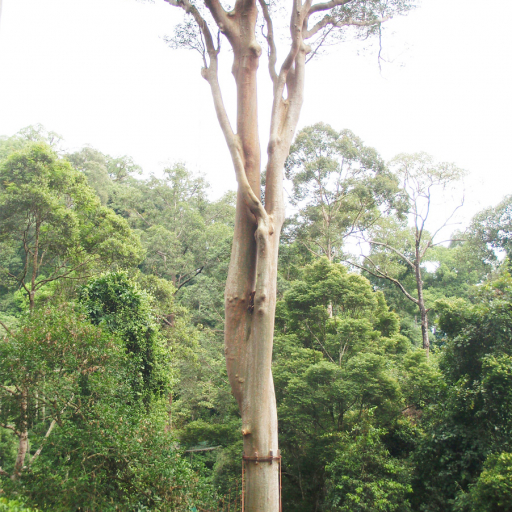
Known as the "Tualang" or the "King of the Forest," Koompassia excelsa is a true titan of the Southeast Asian rainforests. Reaching heights equivalent to a 30-story building, it is one of the tallest tropical trees in the world, often standing head and shoulders above the surrounding canopy. In local folklore, these trees are often considered sacred or inhabited by spirits, a status that has historically protected them from being felled by loggers.
🔍 How to Identify
- 🌳 Massive Buttresses: The base of the tree features enormous, plank-like roots that can grow several meters high, providing stability for its immense height.
- 🥈 Smooth Silvery Bark: Unlike many rainforest giants with rough bark, the Tualang has strikingly smooth, greyish-white bark that can appear almost metallic in the sunlight.
- 🍃 Delicate Foliage: Despite the tree's size, its leaves are surprisingly small and pinnate (feather-like), casting a light, dappled shade rather than a heavy darkness.
🌲 Habitat & Ecology
- 🐝 The Bee Tree: The name "Tualang" literally translates to "Bee Swarm Tree." Its smooth bark makes it nearly impossible for sun bears to climb, making the high branches a safe sanctuary for the Giant Honey Bee (Apis dorsata) to build massive honeycombs.
- 🏗️ Emergent Giant: As an "emergent" species, it requires vast amounts of space and light. It does not thrive in crowded urban environments; it needs the deep, nutrient-rich soil of primary rainforests to support its massive weight and height.
- 🌥️ Ecosystem Anchor: Because it towers above other trees, it acts as a crucial nesting site for many birds of prey, including the Crested Serpent Eagle, who use the height for a tactical advantage.
⚠️ Safety & Toxicity
- 🟢 Non-Toxic Status: The tree itself is not known to be toxic to humans, dogs, or cats if the leaves or bark are touched or accidentally ingested.
- 🐝 Environmental Hazards: The primary safety concern isn't the plant's chemistry, but its residents. Disturbing a Tualang tree can trigger defensive behavior from the thousands of giant honey bees nesting in its crown.
- 📏 Falling Risk: Due to its immense size, "widow-makers" (large dead branches) can be a significant hazard during tropical storms.
✨ Fun Fact
The Tualang’s bark is so smooth and slippery that traditional honey hunters must use specialized gear, including handmade bamboo spikes driven into the trunk like a ladder, to reach the honeycombs high above the ground during the dark of the new moon.

Detailed Care Instructions
Koompassia excelsa, also known as the Tualang tree, is a giant emergent tree species found in the tropical rainforests of Southeast Asia. It can grow up to 88 meters tall and have a trunk diameter of up to 3 meters.
Here are some tips on how to grow Koompassia excelsa:
- Climate: Koompassia excelsa thrives in warm, humid climates with abundant rainfall. It prefers full sun exposure and well-drained soil.
- Propagation: The most common method of propagation for Koompassia excelsa is by seed. Collect mature seeds from the tree and plant them in pots or nursery beds filled with a well-draining, organic-rich soil mix.
- Watering: Keep the soil consistently moist but not waterlogged. Water the plant regularly, especially during dry periods.
- Fertilization: Fertilize the plant with a balanced, slow-release fertilizer during the growing season to promote healthy growth.
- Pruning: Prune the plant to remove dead or damaged branches and to shape the tree as desired. Avoid over-pruning, as this can stress the tree.
- Pest and disease control: Keep an eye out for pests such as aphids, scale insects, and leaf-eating caterpillars. Treat any infestations promptly with insecticidal soap or horticultural oil. Also, monitor the plant for signs of fungal diseases and treat them accordingly.
- Support: As the tree grows, provide support in the form of stakes or braces to help it establish a strong root system and prevent it from toppling over in strong winds.
- Patience: Growing Koompassia excelsa can be a slow process, as it is a long-lived species that takes several years to reach maturity. Be patient and consistent in your care efforts, and you will be rewarded with a majestic and impressive tree in your garden.
To water the Koompassia excelsa plant, you should first check the soil moisture before watering. Use your finger to dig into the soil and feel if it is dry to the touch. When watering, aim to moisten the soil evenly around the root ball. Avoid overwatering, as this can lead to root rot. Water the plant at the base, rather than spraying water on the leaves. It is important to let the soil dry out slightly between waterings to prevent waterlogged conditions. Additionally, consider using room temperature water to avoid shocking the plant's roots. Adjust your watering frequency based on the plant's specific needs, taking into account factors such as humidity levels and temperature.
To fertilize the plant, mix a balanced fertilizer with equal parts nitrogen, phosphorus, and potassium. Apply the fertilizer around the base of the plant, making sure to not get any on the leaves. Water the plant thoroughly after fertilizing to help the nutrients penetrate the soil. Fertilize the plant once every month during the growing season, but reduce frequency to once every 2-3 months in the winter. Avoid over-fertilizing, as it can harm the plant.
Koompassia excelsa usually thrives in well-draining soil with a pH level between 5.5 and 6.5. It prefers slightly acidic soil that is rich in organic matter. A mixture of peat moss, perlite, and pine bark is recommended for optimal growth. Avoid using heavy clay soils that can retain too much water and lead to root rot. Amend the soil with fertilizer or compost to provide essential nutrients for healthy growth. Ensure the soil is sufficiently moist but not waterlogged to prevent root diseases. Regularly check the soil moisture levels and adjust watering accordingly to keep the soil consistently damp.
Koompassia Excelsa plants can be propagated through seed germination and stem cutting methods.
- Seed germination:
- Collect mature seeds from the parent plant.
- Clean the seeds and soak them in water for 24 hours to soften the seed coat.
- Plant the seeds in a well-draining potting mix, burying them about 1 inch deep.
- Keep the soil consistently moist and place the pot in a warm, humid environment with indirect sunlight.
- Seeds should sprout in 1-2 months. Transplant seedlings into individual pots once they have 2-3 true leaves.
- Stem cuttings:
- Take a 6-8 inch long cutting from a healthy, mature Koompassia Excelsa plant, making sure to include at least 2-3 leaf nodes.
- Remove the lower leaves on the cutting and dip the cut end in rooting hormone powder to promote root growth.
- Plant the cutting in a well-draining potting mix and place it in a warm, humid environment with indirect sunlight.
- Keep the soil consistently moist and mist the cutting regularly to maintain humidity.
- Roots should form in 4-6 weeks. Once roots are established, transplant the cutting into a larger container.
Propagation of Koompassia Excelsa plants can be a rewarding process, allowing you to grow new plants and expand your collection.








