Plant Overview
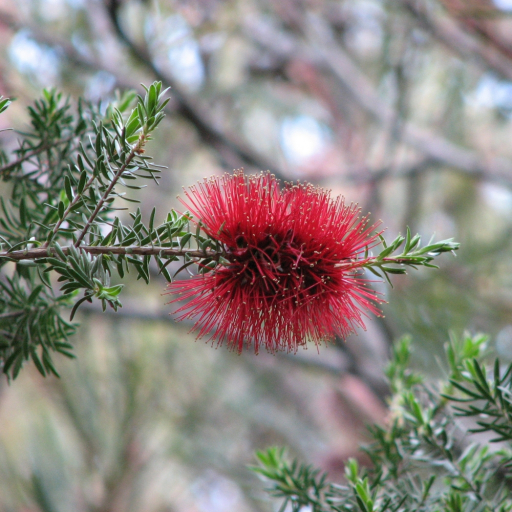
The Scarlet Kunzea is a showstopper from the rugged coastlines of Western Australia. Often nicknamed the "Crimson Kunzea," it looks like a botanical firework frozen in mid-explosion. While it is frequently mistaken for its cousin, the Bottlebrush, this shrub carries a unique architectural elegance that makes it a favorite for those looking to add a wild, "down-under" flair to their landscape.
🔍 How to Identify
- 🌺 Vibrant Blooms: The flowers are dense, rounded clusters of brilliant scarlet stamens tipped with tiny specks of gold pollen, resembling soft, glowing pom-poms.
- 🌿 Needle-like Foliage: Its leaves are small, narrow, and slightly crowded along the stems, giving the plant a textured, feathery appearance similar to a pine or rosemary bush.
- 🪵 Sprawling Habit: It grows as a woody, evergreen shrub that typically reaches 2 to 3 meters in height, often spreading out wide in a relaxed, informal shape.
🏡 In Your Garden
- ☀️ Sun Seeker: This plant is a sun-worshiper. To get the most prolific flowering, place it in the brightest spot available; in shade, it tends to become "leggy" and sparse.
- 💧 Drainage is Vital: Originating from granite outcrops and sandy coastal soils, it cannot tolerate "wet feet." If your soil is heavy clay, consider planting it in a raised bed or a large pot to prevent root rot.
- 🐦 Wildlife Magnet: It serves as a high-energy buffet for nature. The nectar-rich flowers are specifically designed to attract honeyeaters and other long-beaked birds.
⚠️ Safety & Toxicity
- ✅ Safe Status: Kunzea baxteri is generally considered non-toxic to humans, cats, and dogs.
- 🧤 Physical Caution: While not poisonous, the woody interior of the shrub can become quite brittle and sharp. It’s a good idea to wear gardening gloves when pruning to avoid scratches from dry, hidden twigs.
✨ Fun Fact
Unlike many other Australian plants that hold onto their seeds for years in hard woody cones (waiting for a bushfire), the Scarlet Kunzea is "deciduous" with its seeds—it releases them as soon as they are ripe, trusting the wind and ground to find them a new home!

Detailed Care Instructions
To grow Kunzea Baxteri plants, follow these steps:
- Choose a location: Kunzea Baxteri plants grow best in full sun or partial shade. Select a spot in your garden that receives at least 6-8 hours of direct sunlight per day.
- Prepare the soil: Kunzea Baxteri plants prefer well-draining soil. Amend the soil with compost or organic matter to improve drainage if needed. Avoid heavy clay soils, as they can lead to root rot.
- Planting: Dig a hole that is slightly wider than the root ball of your Kunzea Baxteri plant. Place the plant into the hole and backfill with soil, gently pressing it down to eliminate any air pockets. Water the plant thoroughly after planting.
- Watering: Water the Kunzea Baxteri plant deeply, but allow the soil to dry slightly between waterings. These plants are drought tolerant once established, but regular watering is crucial during the first year to promote root development.
- Mulching: Apply a layer of organic mulch around the base of the plant, such as wood chips or bark, to help retain moisture and suppress weeds. Leave a gap between the mulch and the trunk to prevent rot.
- Fertilizing: Kunzea Baxteri plants generally do not require regular fertilization. However, you can feed them with a slow-release balanced fertilizer in the spring to promote healthy growth. Follow the instructions on the fertilizer package for application rates.
- Pruning: Prune Kunzea Baxteri plants after flowering to maintain their shape and promote bushiness. Remove any dead or damaged branches. Pruning is not required for the plant's survival but can improve its appearance.
- Pests and diseases: Kunzea Baxteri plants are generally resistant to pests and diseases. However, keep an eye out for aphids or spider mites. If detected, treat the affected plant parts with insecticidal soap or neem oil.
- Propagation: Kunzea Baxteri plants can be propagated from seeds or by taking softwood cuttings from new growth in spring or early summer. Seeds can be sown in well-draining seed-starting mix, and cuttings can be rooted in a moist and well-draining potting mix.
Remember to consult the specific care guidelines for the Kunzea Baxteri plant you have, as some variations may have slight differences in their requirements.

Place in a bright room that is sun drenched almost all day. Or directly in a south-facing window.

To provide proper watering for this particular plant, you will need to take the following steps:
1. Check the soil regularly: To ensure that the soil stays moist, you should check the soil frequently. Poke your finger into the soil up to the second knuckle and feel if it is damp or dry.
2. Water when soil is dry: When the top inch or two of soil feels dry, give the plant a good soak. This can be done either by hand-watering with a watering can or using a drip irrigation system.
3. Water deeply: When you water your plant, make sure to do so deeply. Drench the soil through to the roots, allowing the water to penetrate the entire root zone.
4. Don't overwater: While you want to make sure the soil stays moist, you don't want to overwater the plant. Overwatering can lead to root rot and other problems.
5. Allow soil to dry slightly: After each watering, allow the soil to dry slightly before watering again. This ensures that the soil doesn't become too wet and promotes healthy root growth.
6. Adjust watering based on season: Depending on the season, you may need to adjust your watering schedule. During the warmer months, when the plant is actively growing, you may need to water more frequently than during the cooler months.
By following these simple watering guidelines, you can ensure that your Kunzea Baxteri plant stays healthy and vibrant.
To fertilize this plant, use a balanced fertilizer designed for flowering plants. Apply the fertilizer according to the manufacturer's instructions, being careful not to apply too much. It's best to fertilize this plant during its active growing season, which is typically in the spring and summer. Keep the soil moist but not waterlogged, and take care not to let the plant dry out completely. Overall, be gentle with the plant and avoid over-fertilizing or over-watering.
The ideal soil for the plant should be well-draining and slightly acidic with a pH of around 5.5 to 6.5. It should also be rich in organic matter and nutrient-rich, such as loamy soil or a mix of potting mix and perlite. The plant prefers soils that are moist but not waterlogged, and it can benefit from a layer of mulch to retain soil moisture. Avoid heavy clay soils or those that are compacted, as they can restrict root growth and cause drainage issues. Additionally, avoid using soil that is high in salinity or alkaline, as this can harm the plant's growth and health.
To propagate this plant, start by taking stem cuttings in the spring or summer. Choose a healthy, young stem and make a clean cut just below a node. Remove any lower leaves or buds and dip the end of the stem in rooting hormone. Plant the cutting in a well-draining soil mix and water thoroughly. Keep the cutting in a warm and humid environment, such as under a plastic dome or covered with a plastic bag, until it establishes roots. Once it develops new growth, it can be transplanted to a larger container or outdoors in a suitable location. It is important to keep the soil moist but not too wet during the propagation process.








