Plant Overview
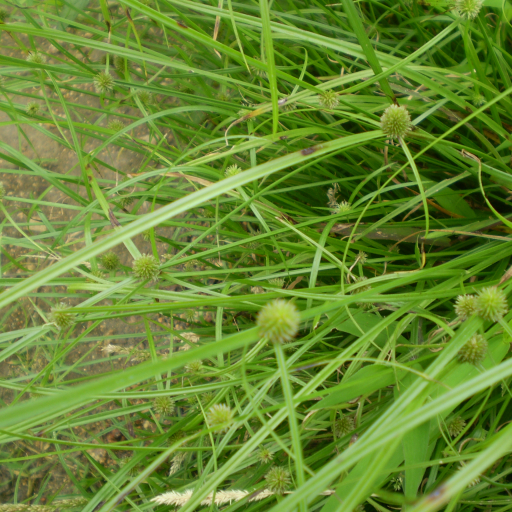
Often called the Shortleaf Spikesedge or Green Kyllinga, this vibrant perennial is the ultimate "uninvited guest" in many pristine lawns. While it might look like a simple blade of grass at first glance, its incredible resilience and unique round flower heads tell a story of survival. It thrives where other plants quit, turning damp, compacted soil into its own personal kingdom.
🔍 How to Identify
- 📐 Triangular Stems: Following the old botanist's rhyme, "sedges have edges." If you roll the stem between your fingers, you will feel three distinct flat sides rather than a round grass-like shape.
- 🟢 The "Green Pom-Pom": The most striking feature is its single, spherical green flower head (spike) that sits right at the tip of the stem, looking like a tiny, prehistoric club.
- 🍃 Leafy Bracts: Directly beneath the round flower head, three or four long, leaf-like structures point outward, framing the "pom-pom" like a green star.
🏡 In Your Garden
- 💧 The Moisture Marker: This plant acts as a natural indicator for your landscape. If Kyllinga is flourishing, it’s a sign that the soil is consistently wet, poorly drained, or perhaps being over-watered.
- 🏃 The Underground Runner: It spreads through a network of creeping rhizomes (underground stems). This is why it’s so hard to remove; if even a small piece of the root is left behind, the plant will regenerate.
- 👟 Compaction King: Unlike many garden plants that need "fluffy" soil, this sedge thrives in heavy, compacted earth. It is a frequent sight on golf courses and high-traffic footpaths because it can handle being stepped on repeatedly.
⚠️ Safety & Toxicity
- ✅ Low Risk: Kyllinga brevifolia is generally considered non-toxic to humans, dogs, and cats. It does not possess any known deadly alkaloids or irritants.
- 👅 Texture Notice: While not poisonous, the leaves and stems are quite fibrous and can be slightly sharp. If a pet consumes a large amount, it might cause minor stomach upset simply due to the "scratchy" nature of the plant material.
✨ Fun Fact
- 🌿 Ancient Roots: In various cultures across Southeast Asia and South America, members of the Kyllinga genus have been used in traditional medicine for centuries, often brewed into teas to help soothe fevers or digestive complaints.

Detailed Care Instructions
To properly water this plant, you should first assess the soil moisture by sticking your finger about an inch deep into the soil. If the soil feels dry at that depth, it's time to water. Use a watering can or hose with a nozzle to gently water the soil around the base of the plant until the water starts to puddle on the surface. Allow the water to soak in fully and then repeat the process if necessary. Be careful not to overwater, as this plant prefers slightly moist soil but can be susceptible to root rot if it sits in standing water. Watering once a week is usually sufficient, but adjust based on the specific conditions of your plant's environment.
The ideal soil for this plant should be well-draining and moist. It should have a pH level between 5.5 and 7.5, which is slightly acidic to neutral. The recommended soil type is sandy loam or loamy soil, which is rich in organic matter and has good drainage. It should be kept consistently moist but not waterlogged, as the plant cannot tolerate waterlogged conditions. It is recommended to avoid heavy clay soils, which can retain too much moisture and lead to root rot. Additionally, adding some fertilizer or compost to the planting area can help to provide the plant with the necessary nutrients for healthy growth.








