Plant Overview
Often called the Fragrant Spikesedge or Fragrant Kyllinga, this petite perennial is the aromatic cousin of common yard grasses. While many gardeners encounter it as a persistent visitor in their lawns, it is cherished by others for the surprising, zesty fragrance it releases when stepped on or crushed. Originating from the warmer regions of the Americas, it thrives in those "problem spots" where the ground stays a little too soggy for typical turf.
🔍 How to Identify
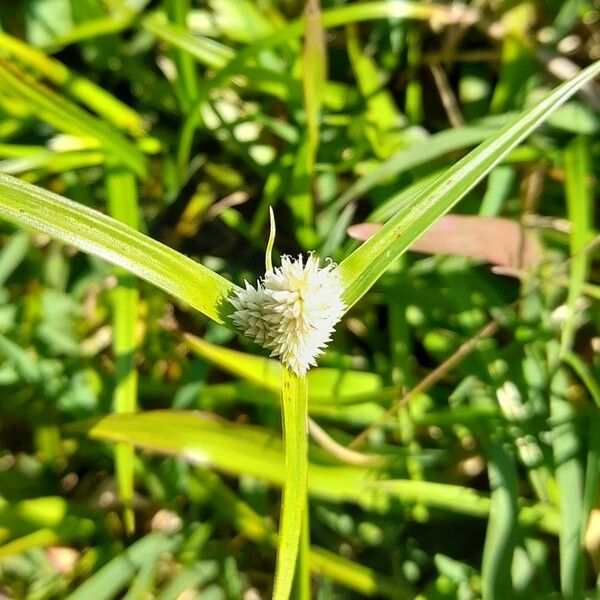
- ⚪ The Flower Head: Look for distinctive, globe-shaped clusters of tiny white or creamy-white flowers. These "pom-poms" sit right at the tip of the stalk, usually flanked by three long, leaf-like bracts.
- 📐 Triangular Stems: In keeping with the classic botanical rhyme "Sedges have edges," if you roll the stem between your fingers, you will feel three distinct sides forming a sharp triangle.
- 🍃 Lush Tufts: It grows in dense, bright green clumps. The leaves are narrow and grass-like, radiating outward from the base of the plant to create a soft, mounded appearance.
🏡 In Your Garden
- 💧 The Moisture Indicator: This plant is nature’s way of telling you where your garden holds water. It loves "wet feet" and will naturally gravitate toward drainage ditches, leaky sprinkler heads, or low-lying areas of the lawn that never quite dry out.
- 🌱 Rhizome Resilience: Because it spreads via underground runners (rhizomes), it is incredibly difficult to remove by simply pulling the leaves. To manage its spread, you must address the moisture levels of the soil or ensure you dig deep enough to remove the entire root network.
⚠️ Safety & Toxicity
- ✅ Non-Toxic: Kyllinga odorata is generally considered safe and non-toxic for humans, dogs, and cats.
- 🌾 Mechanical Irritation: While not poisonous, the blades of sedges are tougher and more fibrous than standard grass. If a pet grazes heavily on them, the coarse texture may occasionally lead to mild stomach upset or gagging.
✨ Fun Fact
- 🍋 A Hidden Perfume: Its specific epithet, odorata, refers to its delightful scent. If you crush the roots or the base of the stem, it releases a potent aroma that many compare to fresh pineapple, crushed lemons, or sweet ginger.

Detailed Care Instructions








