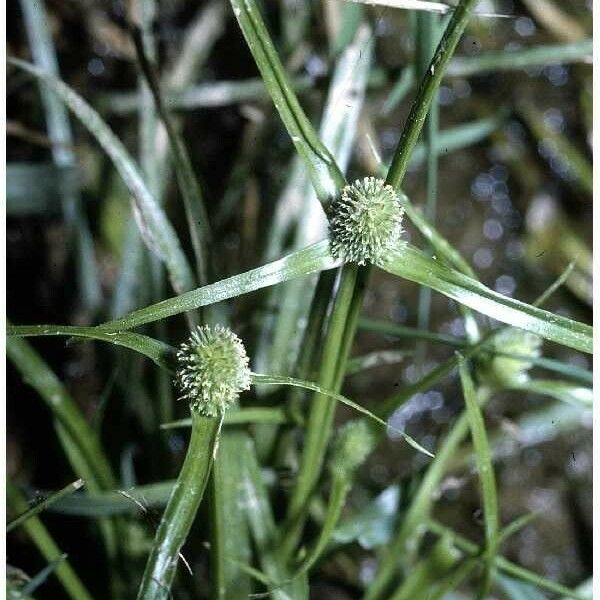
Plant Overview
Often called the Low Spikesedge, this diminutive member of the sedge family is a master of camouflage in moist environments. While it might look like a simple blade of grass at first glance, its unique "spiked ball" flowers reveal its true identity. Native to the Americas and parts of Africa, it thrives where other plants might drown, acting as a green carpet for soggy soil.
🔍 How to Identify
- 🌿 The Stem Shape: Like most sedges, it follows the rule "sedges have edges." If you roll the stem between your fingers, you’ll feel a distinct triangular shape rather than a round one.
- ⚽ The Flower Head: At the very top of the stem sits a small, pale green, globe-shaped cluster of flowers. These look like tiny, soft spiked balls surrounded by three long, leaf-like bracts that flare outwards.
- 🍃 Growth Habit: It stays relatively low to the ground, usually topping out at 10–12 inches. It grows in dense tufts, often creating a thick, lush-looking patch in wet areas.
🏡 In Your Garden
- 💧 The Moisture Indicator: If you find Low Spikesedge popping up in your lawn, it’s a natural messenger telling you that your soil is compacted or holds too much water. It loves "wet feet" and is frequently found near ponds, leaky outdoor faucets, or drainage ditches.
- 🌱 A Tough Competitor: While it isn't considered a "noxious" weed, it can be quite aggressive in moist garden beds. Because it spreads via both seeds and small underground rhizomes, it can quickly colonize a damp patch of earth if left unchecked.
⚠️ Safety & Toxicity
- ✅ Status: Non-Toxic.
- 🐾 Family Friendly: Kyllinga pumila is generally considered safe and non-toxic to humans, dogs, and cats. It lacks the sharp serrated edges found on some larger marsh sedges, making it soft to the touch and safe for curious pets and children.
✨ Fun Fact
Botanists use a famous rhyme to help identify plants like this one: "Sedges have edges, rushes are round, grasses are hollow right up from the ground." The "edges" of the Low Spikesedge are its most reliable scientific giveaway!

Detailed Care Instructions








