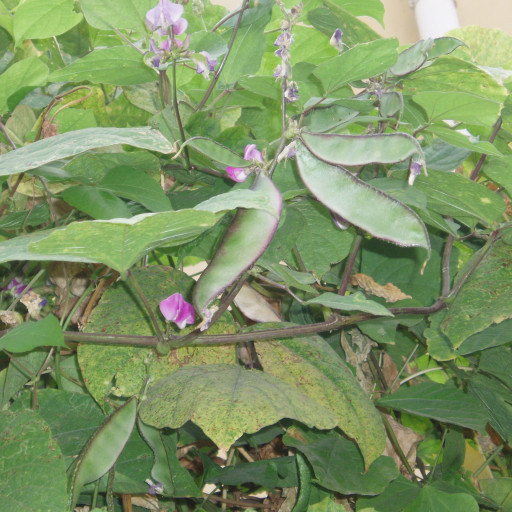
Plant Overview
Often called the "Hyacinth Bean" or "Ruby Moon," Lablab purpureus is a show-stopping climber that blurs the line between a practical vegetable and a royal ornamental. Originating in Africa, this vigorous vine has traveled the world, enchanting gardeners from Thomas Jefferson to modern urban growers with its electric purple pods and fragrant, butterfly-attracting blossoms.
🔍 How to Identify
- 🌿 The Foliage: Large, heart-shaped leaflets grow in groups of three (trifoliate), often featuring striking deep-purple veins that contrast beautifully against the dark green surface.
- 🌸 The Blooms: Elegant, upright spikes carry clusters of pea-like flowers that range from delicate lilac to a punchy magenta, emitting a faint, sweet fragrance.
- 🫛 The Pods: Its most famous feature is the flat, curved seed pods that develop a brilliant, glossy royal purple hue as they mature, standing out vividly against the green leaves.
🏡 In Your Garden
- 🧗 The Need for Support: Because this vine grows incredibly fast—sometimes reaching over 15 feet in a single season—it requires a very sturdy trellis, arbor, or fence. It is a "twiner," meaning it will wrap itself tightly around anything it can reach.
- ☀️ Summer Warrior: While many garden beans wither in high heat, the Hyacinth Bean thrives in sweltering humidity and full sun. It is the perfect choice for creating a "living privacy screen" during the hottest months of the year.
- 🌱 Root Sensitivity: This plant develops a deep taproot and generally dislikes being moved. For the best results, sow the seeds directly into the warm ground rather than starting them in pots.
⚠️ Safety & Toxicity
- 🚫 Status: Toxic when raw. While the beans are a food source in many cultures, they are dangerous if not prepared correctly.
- 🐾 Details: The raw seeds and pods contain cyanogenic glycosides (which can convert to cyanide). They must be boiled in multiple changes of water to be safe for human consumption. Keep the raw pods far out of reach of children and pets, as ingestion can lead to severe vomiting and respiratory distress.
✨ Fun Fact
🏛️ Presidential History: Lablab purpureus is a celebrated heirloom plant in the United States; it was famously grown by Thomas Jefferson at his Monticello estate as early as 1812, purely for its ornamental beauty.

Detailed Care Instructions
| Color | Red, Purple |
| Soil Ph | 6.0 To 6.8 |
| Humidity | High |
| Invasive | Weed |
| Lighting | Full Sun |
| Toxicity | Poisonous |
| Soil Type | Loamy |
| Bloom Time | Summer, Fall |
| Difficulty | Medium |
| Plant Type | Annual Flower |
| Hibernation | Cold Period |
| Mature Size | 10 To 15 Feet |
| Native Area | Tropical Africa |
| Sun Exposure | Full Sun |
| Hardiness Zones | 10, 11 |
To grow Lablab purpureus, also known as hyacinth bean or dolichos bean, you can follow these steps:
- Climate and timing: Lablab purpureus is native to tropical and subtropical regions, so it grows best in warm climates. It requires a long growing season of 120 to 180 days. Start the seeds indoors about 6 weeks before the last frost date in your area.
- Seed selection: Choose healthy and viable seeds. You can purchase Lablab purpureus seeds from a local nursery or online store.
- Soil preparation: Select a well-draining soil with a pH range of 6.0 to 7.5. Enrich the soil with organic matter such as compost or well-rotted manure before planting.
- Planting: Sow the seeds about 1 inch deep, spaced 12 to 18 inches apart. If you're planting multiple rows, keep the rows about 3 feet apart.
- Watering: Water regularly to keep the soil evenly moist, especially during dry periods. Avoid overwatering, as excessive moisture can lead to root rot.
- Sunlight: Lablab purpureus requires full sun exposure for optimal growth. Ensure the plants receive at least 6 hours of direct sunlight each day.
- Trellising: Lablab purpureus is a vine-like plant that can grow up to 10 feet tall. Support the plants by providing trellises or fences for them to climb on. Trellising also helps to maximize space and airflow.
- Fertilizing: Apply a balanced fertilizer once every 4-6 weeks during the growing season to provide necessary nutrients. Follow the package instructions for application rates.
- Weed control: Regularly remove weeds from the planting area to prevent them from competing with Lablab purpureus for nutrients and water.
- Pest and disease management: Monitor the plants for any signs of pests or diseases such as aphids, beetles, or powdery mildew. Treat affected plants with organic insecticides or fungicides if necessary.
- Harvesting: Harvest the pods or beans when they are fully mature and dry. The pods can be used in cooking when harvested young and tender.
By following these steps, you should be able to successfully grow Lablab purpureus plants. Remember to adapt these guidelines to suit your specific climate and local conditions.

Place in a window with dappled sun or a spot in the middle of a room. Or directly in a window facing west or east.

To water this plant, you should first check the soil moisture level by sticking your finger into the soil about an inch deep. If the soil feels dry, it is time to water. When watering, pour water onto the soil around the base of the plant, making sure not to get water on the leaves as this can cause disease. Water until the soil is evenly moist but not soaking wet. In colder months, you may need to water less frequently, and in hotter months, you may need to water more frequently. It is important to monitor the soil moisture level regularly to ensure the plant is not underwatered or overwatered.
To fertilize this plant, apply a balanced fertilizer with a N-P-K ratio of 8-8-8 or 10-10-10 during the plant's growth period. Follow the instructions on the fertilizer package and apply the recommended amount evenly around the base of the plant. Water the plant thoroughly after fertilizing, but avoid over-watering. Avoid fertilizing the plant during the dormant period.
The ideal soil for this plant should be well-drained and moderately fertile. It should be rich in organic matter, with a pH level of 6.0-7.5. The soil should be able to retain moisture without becoming waterlogged. It should not be too compacted, as this can hinder root growth and cause drainage issues. Additionally, the soil should be free of weed seeds and pathogens that may harm the plant. A soil that meets these requirements will provide the best growing conditions for this plant.
Propagation of this plant can be done by taking stem cuttings or by sowing seeds. To take stem cuttings, choose a healthy stem that is about 2-3 inches long and has at least one node. Remove the lower leaves from the stem and dip the cut end in rooting hormone powder. Then, place the cutting in a pot filled with moist soil and cover it with a plastic bag to create a humid environment. Keep the soil moist and in a bright, indirect light until the cutting roots.
To propagate by sowing seeds, first scarify the seeds by scratching the hard outer coat with sandpaper or a knife. Then, soak the seeds in water for 24 hours. Plant the seeds in a pot filled with well-draining soil and keep the soil moist. Place the pot in a warm and bright location until the seeds germinate.
Common pests of the hyacinth bean include Thrips, larvae. Make a habit of checking your hyacinth bean frequently for pests so that any infestations can be caught and managed early.








