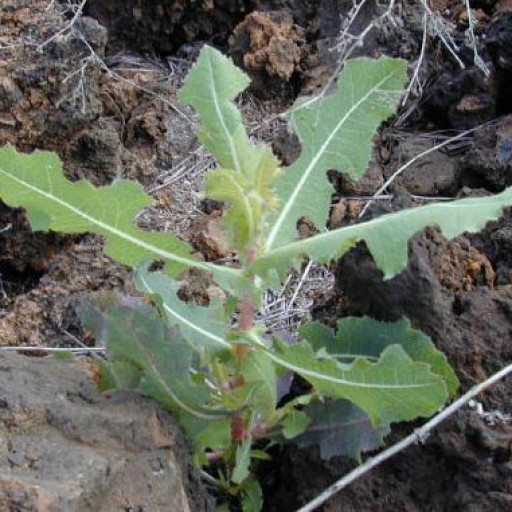
Plant Overview
Often called the "Compass Plant" or "Wild Lettuce," Lactuca serriola is the wild, rebellious ancestor of the common garden lettuce found in your salad bowl. While it might look like a common weed popping up in sidewalk cracks or garden borders, it has a clever survival strategy that involves tracking the sun. Its tall, architectural silhouette and pale yellow flowers make it a frequent sight in both urban and rural landscapes across the globe.
🔍 How to Identify
- 🧭 Compass Leaves: The most striking feature is how the leaves twist at the base to stand vertically, pointing their edges north and south to minimize the intensity of the midday sun.
- 🌵 Prickly Midrib: If you flip a leaf over, you’ll find a distinct row of stiff, white prickles running along the central vein (midrib) on the underside.
- 🌼 Pale Yellow Blooms: It produces small, dandelion-like flower heads that are pale yellow and typically only open in the morning hours during late summer.
🏡 In Your Garden
- 🌱 The Taproot Challenge: This plant develops a deep, sturdy taproot very quickly. If you find it in your garden beds, it’s best to remove it while it’s young; once established, it becomes a physical struggle to pull it out without leaving pieces behind.
- 🌬️ Seed Dispersal: Like its cousin the dandelion, it produces fluffy "pappus" seeds that travel easily on the wind. A single plant can produce thousands of seeds, meaning one "compass" this year could lead to a whole map of them next year.
⚠️ Safety & Toxicity
- 🥛 Milky Sap: When the stem is broken, it secretes a thick, white milky latex. While this was historically used in folk medicine, it contains "lactucarium," which can be very bitter and may cause mild digestive upset if consumed in large quantities.
- 🐾 Pet & Livestock Caution: While generally not considered deadly, it can accumulate high levels of nitrates if grown in certain soils, which can be harmful to cattle or horses if grazed in large volumes. It is best to keep curious pets from munching on it.
✨ Fun Fact
Lactuca serriola is the primary wild relative from which our modern, crunchy Romaine and Butterhead lettuces were bred. While our supermarket lettuce is bred for sweetness and soft leaves, this wild version retained its "armor" and bitter chemicals to protect itself from being eaten by hungry animals!

Detailed Care Instructions
| Humidity | High |
| Lighting | Full Sun |
| Toxicity | Poisonous |
| Difficulty | Easy |
| Hibernation | Cold Period |
| Hardiness Zones | 6 - 9 |
To grow Lactuca Serriola plants, also known as wild lettuce or prickly lettuce, follow these steps:
- Choose the right location: Lactuca Serriola prefers full sun to partial shade. Find a spot in your garden that receives at least 6 hours of direct sunlight per day.
- Prepare the soil: Lactuca Serriola grows well in various soil types, but it prefers fertile, well-draining soil. Add compost or organic matter to improve soil fertility and drainage.
- Sow the seeds: Directly sow the seeds in the ground in late spring or early summer after the last frost date. Scatter the seeds over the prepared soil and lightly press them in, ensuring they make good contact with the soil.
- Water regularly: Keep the soil moist but not waterlogged. Water the plants regularly, especially during dry spells. It's important to keep the soil consistently moist for the seeds to germinate.
- Thin the seedlings: Once the seedlings emerge and develop their first true leaves, thin them out to maintain spacing of at least 6-12 inches between plants. This will allow each plant to receive adequate nutrients and airflow.
- Mulch and weed control: Apply a layer of organic mulch around the plants to suppress weed growth and retain moisture in the soil. Regularly check for weeds and remove them to prevent competition for nutrients and space.
- Harvesting: Lactuca Serriola can be harvested when the leaves are young and tender. As the plant matures, the leaves become more bitter and tougher. Harvest leaves by cutting them at the base near the stem.
- Optional: Lactuca Serriola can easily self-seed, so if you allow the plants to go to seed, they may come back in subsequent years without resowing. If you want to prevent self-seeding, remove the flowers before they mature and produce seeds.
Remember that Lactuca Serriola is considered a weed in many areas, so be mindful of its invasive potential. It's always a good idea to check if it is legal to grow in your region before planting.

Place in a bright room that is sun drenched almost all day. Or directly in a south-facing window.

To water this plant, you should first ensure that the soil is completely dry before watering again. When you do water, make sure to water the soil directly and not the leaves. Use a watering can or hose with a gentle stream to avoid disturbing the roots or causing soil erosion. Water deeply and slowly to allow the water to penetrate the soil and reach the roots, but avoid overwatering as this can lead to root rot. It's also important to avoid getting water on any flowers or developing seed heads to prevent damage or premature seed dispersal.
To fertilize Lactuca Serriola properly, you should apply a balanced fertilizer with equal amounts of nitrogen, phosphorus, and potassium. Apply the fertilizer to the soil around the base of the plant, and water it in well. Repeat this every 4-6 weeks during the growing season. Be sure not to over-fertilize, as this can lead to weak growth and disease susceptibility.
Lactuca Serriola prefers well-drained soil that is rich in organic matter. It requires a soil pH of 6.0 to 7.5. The soil should be loose, crumbly, and friable to about 10 to 12 inches deep. The plant prefers loamy soil that is composed of a mixture of sand, silt, and clay with good water-holding capacity. It should have good drainage to avoid waterlogging, which can lead to root rot.
A soil mixture that can help support Lactuca Serriola's growth includes a blend of composted organic matter, such as well-rotted manure, peat moss, and topsoil. A perlite or vermiculite amendment may also be added to enhance soil aeration. Adding a balanced fertilizer before planting and a slow-release fertilizer during the growing season can provide necessary nutrients to support the plant's growth.
It is important to avoid using heavy, clay soil or soils that are too acidic as they can negatively impact plant growth and development. Additionally, the soil should not be compacted or too tightly packed, as this can impede the plant's root growth and uptake of nutrients and water.
To propagate this plant, you will first need to collect mature seeds after the flowering period. Once you have collected the seeds, they should be sowed in a soil-less mix or lightly covered in soil in a pot or tray after soaking them in water for one day. Keep the seeds moist and in a warm environment with a temperature range between 21-24°C until they germinate in 7-14 days. After germination, the new seedlings should be thinned to 5-7 cm apart to give them space to grow.
If you wish to propagate using stem cuttings, take a healthy cutting from the plant in the spring or early summer, making sure that it is around 10-15 cm long, and remove the lower leaves. Dip the cuttings in rooting hormone talc before planting them in a well-draining soil mix, and place them in a warm, moist environment. Keep the soil moist but not saturated, and in a few weeks, root development should be visible. Once the roots have formed, transfer the cuttings to a larger pot and treat them as mature plants.
Common pests of the prickly lettuce include Larvae, snails. Make a habit of checking your prickly lettuce frequently for pests so that any infestations can be caught and managed early.








