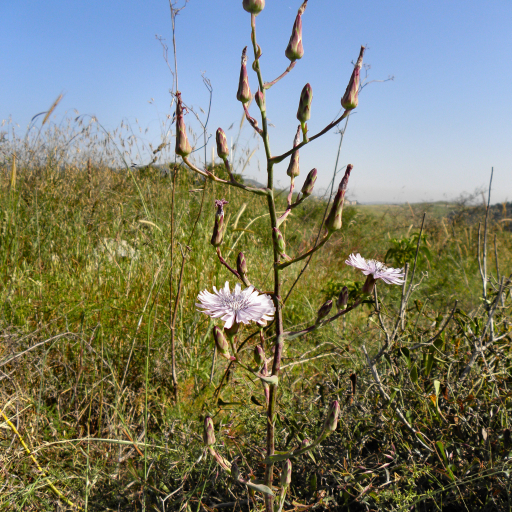
Plant Overview
Lactuca tuberosa, often known as the Tuberous Lettuce, is a hardy wild relative of your familiar garden salad greens. Unlike the soft, leafy heads found in a supermarket, this resilient Mediterranean native anchors itself into rocky cliffs and dry meadows using a specialized, swollen root system. It is a favorite among wildflower enthusiasts for its delicate, sky-blue blooms that provide a splash of cool color in harsh, sun-drenched landscapes.
🔍 How to Identify
- 🌸 Heavenly Blooms: Unlike the yellow flowers of many wild weeds, this plant produces clusters of pale blue to lilac-colored flower heads, each featuring "petals" with finely notched tips.
- 🍃 Deep-Lobed Leaves: The foliage typically forms a rosette at the base. The leaves are deeply lobed or "pinnatisect," giving them a jagged, architectural appearance similar to a rugged dandelion.
- 🥛 The "Milk" Test: If a stem or leaf is snapped, the plant will exude a thick, white milky sap (latex), which is a signature characteristic of the entire Lactuca genus.
🏡 In Your Garden
- ⛰️ Rocky Roots: This plant is a specialist in poor, limestone-rich soils. It thrives in rock gardens or "neglected" corners of the yard where other plants might struggle with drainage or low nutrients.
- ⚓ The Taproot Trap: Because of its thick, tuberous root, the Tuberous Lettuce hates being moved. It establishes itself deeply to survive droughts, so if you wish to grow it, it is best to sow seeds directly into its forever home.
⚠️ Safety & Toxicity
- 🌿 Low Risk: This species is generally considered non-toxic to humans and common household pets. It is a distant relative of edible lettuce, though far less tasty.
- 🧴 Sap Sensitivity: The milky white latex contains "lactucarium." While not poisonous, it is very bitter and can cause mild skin irritation or contact dermatitis in people with sensitive skin. It’s always best to wear gloves if pruning or clearing large patches.
✨ Fun Fact
- 📜 Genetic Treasure: While we don't usually toss Lactuca tuberosa into our Caesar salads, botanists value it immensely. Its ability to survive in arid, rocky conditions provides a "genetic library" that scientists study to help domestic lettuce crops become more drought-resistant!

Detailed Care Instructions
To grow Lactuca Tuberosa, also known as the tuberous or Indian lettuce, you can follow these steps:
- Obtaining seeds: Purchase Lactuca Tuberosa seeds from a reputable seed supplier. Make sure the seeds are fresh and of good quality.
- Timing: Lactuca Tuberosa is typically grown as an annual plant. Start the seeds indoors 4-6 weeks before the last frost date in your area or directly sow them in the garden after the last frost.
- Soil preparation: Choose a location with well-draining soil that receives full sun to partial shade. Amend the soil with organic matter, such as compost, to improve its fertility and drainage.
- Planting: Sow the seeds about 1/4 inch deep in the prepared soil, spacing them approximately 12-18 inches apart. Keep the soil consistently moist until the seeds germinate, which usually takes 7-14 days.
- Watering: Lactuca Tuberosa prefers evenly moist soil. Water regularly, especially during dry periods, to keep the soil moist but not waterlogged. Avoid overwatering, as it can lead to root rot.
- Fertilizing: Apply a balanced organic fertilizer, following the package instructions, when the plants start to grow. Repeat the application every 4-6 weeks throughout the growing season.
- Maintenance: Keep the area around the plants free from weeds, as they can compete for resources. Mulching around the plants can help suppress weeds and retain moisture in the soil.
- Harvesting: Lactuca Tuberosa is typically harvested for both its leaves and tubers. Harvest the young leaves as needed, picking the outer ones first. To harvest the tubers, wait until the plants have reached maturity (usually around 60-70 days). Carefully dig around the base of the plant to unearth the tubers.
- Storage: After harvesting the tubers, brush off excess soil and store them in a cool, dry place. They can last for several months if stored properly.
By following these steps, you should be able to successfully grow Lactuca Tuberosa in your garden.

Place in a bright room that is sun drenched almost all day. Or directly in a south-facing window.

The plant should be watered regularly, ensuring that the soil around the roots stays moist but not waterlogged. It is important not to let the soil dry out completely between waterings. Watering should be done at the base of the plant rather than from the top, to avoid damaging the foliage. The best time to water is early morning or late afternoon, when the sun is not as strong and the plant has a chance to absorb the water before it evaporates. Overwatering should be avoided as it can lead to root rot and other problems.
For best results, fertilize your Lactuca Tuberosa plant every two weeks during the growing season using a balanced fertilizer with equal amounts of nitrogen, phosphorus, and potassium. Dilute the fertilizer according to package instructions and apply it to the soil around the base of the plant, taking care not to get it on the leaves. Water the plant thoroughly after fertilizing to help the nutrients penetrate the soil. Avoid fertilizing during periods of drought or extreme heat, as this can damage the plant. Finally, be sure to follow safe handling and storage procedures for your fertilizer, as directed by the manufacturer.
Lactuca Tuberosa thrives in soil that is well-draining and rich in nutrients. It is important to use a soil that has good aeration and is able to retain moisture without becoming waterlogged. The ideal soil for this plant will have a pH balance of 6.0 to 6.5, which is slightly acidic.
In terms of soil texture, Lactuca Tuberosa grows best in loamy soil that contains a mixture of sand, silt, and clay particles. The soil should be loose, crumbly, and not compacted, as this will impede the growth of the plant's roots.
To optimize the growth of this plant, it is advisable to add organic matter to the soil. This can be in the form of compost, well-rotted manure, or leaf mold. This will provide additional nutrients and improve soil structure, which will enhance the growth and health of the Lactuca Tuberosa.
In addition to the above, drainage of the soil is also important. The soil must have the ability to drain freely, so that water does not accumulate around the plant’s roots to cause rot or decay. It is recommended to amend soil by mixing in perlite, vermiculite or other materials which help improve drainage.
Overall, Lactuca Tuberosa thrives in a soil that is fertile, loose, well-drained, and slightly acidic. By using the correct type of soil, this plant will grow quickly and healthily, leading to a bountiful harvest.
Lactuca Tuberosa can be propagated through seeds or root division. If propagating through seeds, sow the seeds in a well-prepared seedbed in early spring or fall. The soil should be well-drained and have a neutral pH of 6.5 to 7.5. Water the seedbed regularly to keep the soil moist and avoid drying out.
Alternatively, Lactuca Tuberosa can be propagated through root division. This method involves separating the roots of an established plant and planting the divided sections into new locations. Carefully dig up the plant and separate the roots into small sections, making sure each section has a few growth buds. Replant the sections into a well-prepared soil, spacing them about 12 inches apart.
In both propagation methods, it is important to keep the soil moisture levels consistent and provide adequate sunlight and nutrients to promote growth. Once established, Lactuca Tuberosa requires minimal care and will self-seed to produce additional plants.








