Plant Overview
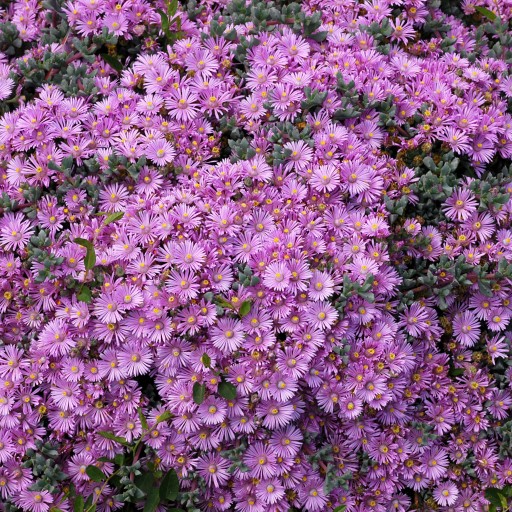
Known affectionately as the "Pink Ice Plant" or "Sandstone Ice Plant," Lampranthus deltoides (often classified as Oscularia deltoides) is a low-growing succulent gem from the rocky slopes of South Africa. It looks like it was designed by a geometric artist, featuring stiff, triangular leaves that form dense, silvery-blue mats. In late spring, this architectural beauty transforms into a vibrant carpet of shimmering magenta flowers that can even smell faintly of sweet almonds.
🔍 How to Identify
- 📐 Geometric Foliage: The leaves are three-sided, thick, and fleshy, resembling tiny blue-grey prisms or "delta" shapes.
- 🦷 Toothed Edges: Along the leaf margins, you’ll spot small, often reddish "teeth" that give the plant a slightly jagged, crystalline appearance.
- 🌸 Neon Blooms: The flowers are many-petaled, bright pinkish-purple, and have a prominent yellow center; they appear so prolifically that they can completely hide the foliage.
🏡 In Your Garden
- ☀️ The Sun Worshiper: These flowers are "photonastic," meaning they stay closed on cloudy days and at night. They require a sunny spot to "wake up" and show off their colors.
- 🏜️ Rock Star: Because it naturally grows in sandstone crevices, it thrives in gritty, fast-draining soil. It hates "wet feet," so avoid heavy clay or overwatering, which can lead to root rot.
- ✂️ Creeping Habit: It acts as a fantastic groundcover or "spiller" in containers, slowly trailing over the edges of pots or stone walls.
⚠️ Safety & Toxicity
- ✅ Safe Status: Lampranthus deltoides is generally considered non-toxic to humans and common household pets like cats and dogs.
- 👐 Soft Serration: Despite the "toothed" look of the leaves, they are typically soft to the touch and do not possess the sharp, skin-piercing spines found on cacti.
✨ Fun Fact
Its former genus name, Oscularia, is derived from the Latin word "osculum," which means "little mouth" or "kiss." This is a nod to the way the paired, toothy leaves look like they are puckering up for a tiny garden kiss!

Detailed Care Instructions
To grow Lampranthus deltoides (also known as red vygie or red ice plant), follow these steps:
- Climate and sunlight: Lampranthus deltoides thrives in full sunlight and prefers a Mediterranean or desert-like climate. Make sure the plant gets at least six hours of direct sunlight each day.
- Soil: The plant prefers well-draining soil. Use a potting mix suitable for succulents or sandy soil with good drainage. If planting in a pot, make sure it has drainage holes.
- Watering: Lampranthus deltoides is a drought-tolerant plant and does not require frequent watering. Water deeply but infrequently, allowing the soil to dry before watering again. Overwatering can cause root rot, so be careful not to let the soil stay excessively wet.
- Fertilizer: Fertilize sparingly, using a balanced fertilizer formulated for succulents. Apply a diluted fertilizer once a month during the growing season (spring and summer), following the manufacturer's instructions.
- Planting: If planting in a pot, fill it with well-draining soil and make a hole deep enough to accommodate the plant's roots. Gently place the plant in the hole and cover the roots. If planting in the ground, dig a hole deep and wide enough for the root ball. Backfill with soil, gently firming it around the plant.
- Propagation: Lampranthus deltoides can be propagated through stem cuttings. Take a cutting from a healthy stem, remove lower leaves, and let it dry for a few days. Plant the cutting in well-draining soil and keep it slightly moist until roots develop.
- Pruning: Trim back any dead or overgrown stems to maintain the plant's shape. Spring is the best time to prune.
- Protection: Protect Lampranthus deltoides from frost as it is not cold-tolerant. If you live in an area with freezing temperatures, bring the plant indoors or cover it with a frost cloth during winter.
Remember to monitor the plant closely and adjust care according to its specific needs.

Place in a bright room that is sun drenched almost all day. Or directly in a south-facing window.

To water this plant, it is important to allow the soil to completely dry out between watering sessions. The plant prefers well-draining soil and should never be left in standing water. When watering, thoroughly soak the soil and avoid getting water on the leaves or stems. It is best to water early in the morning or in the evening to prevent evaporation. Overwatering or providing too much moisture can lead to root rot, so it is important to monitor the soil moisture levels carefully.
To fertilize this plant, mix a balanced fertilizer that is high in phosphorus and potassium. Apply the fertilizer to the soil around the plant, being careful not to get any on the leaves or stems. Water the plant thoroughly after fertilizing. Repeat every 3-4 weeks during the growing season.
Lampranthus Deltoides thrives in soil that is well-draining, slightly acidic, and rich in nutrients. The ideal soil for this plant should be able to retain moisture while still allowing excess water to drain away. Additionally, the soil should be loose enough to allow for good root development and have a pH level of around 5.5 to 6.5. It is also important to avoid using heavy soils that may become waterlogged and lead to root rot. A mix of loam, sand, and well-decomposed organic matter such as compost is recommended for this plant. Adequate soil preparation and nutrient management will encourage healthy growth and abundant flowering.
To propagate this plant, select a healthy stem that is at least 4 inches long and has several leaves. Cut the stem just below a leaf node using a sterilized pair of scissors. Remove any leaves that are close to the cut end of the stem.
Allow the cut end of the stem to callus over for a day or two to prevent rotting. Then, dip the cut end of the stem in rooting hormone powder and plant it in a pot filled with moist, well-draining potting soil.
Cover the pot with a plastic bag to create a humid environment and place it in a bright, indirect light location. Keep the soil moist but not soaked and avoid direct sunlight which can cause the cutting to dry out.
In about four to six weeks, the cutting should develop roots and new growth. At this point, you can remove the plastic bag and begin to acclimate the plant to direct sunlight and less humidity.








