Plant Overview
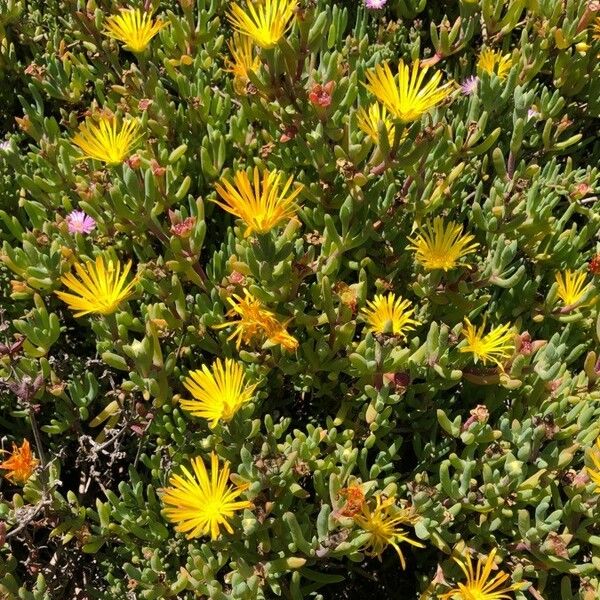
Commonly known as the Goldflash Ice Plant or Copper Ice Plant, Lampranthus glaucoides is a dazzling succulent that transforms rocky terrains and coastal gardens into a shimmering carpet of metallic hues. Native to the Western Cape of South Africa, this plant is a master of survival, designed to thrive where others might wither under the heat. It is a favorite for those who want maximum visual impact with minimum effort.
🔍 How to Identify
- 🌿 Waxy Foliage: The leaves are fleshy, smooth, and have a distinct blue-green or "glaucous" tint. They are typically three-sided or cylindrical, growing in dense, upward-reaching clusters.
- 🌼 Radiant Blooms: The flowers are daisy-like and exceptionally bright, usually featuring brilliant shades of orange, copper, or gold that seem to glow in the sunlight.
- 📏 Growth Habit: It grows as a low-spreading subshrub or groundcover, rarely exceeding 12 inches in height but spreading wide to form a thick, protective mat over the soil.
🏡 In Your Garden
- ☀️ Sun Seekers: This plant is "nyctinastic," meaning its flowers only open in response to bright sunlight. If you plant it in a shady corner, you’ll miss the spectacular floral show entirely.
- 🏜️ Drainage is Non-Negotiable: Because it evolved in sandy, rocky soils, its roots are prone to rot if they sit in damp earth. It thrives in rock gardens or sloping landscapes where water drains away quickly.
- 💧 Drought Strategy: Once established, it requires very little supplemental watering. Its fleshy leaves store moisture efficiently, making it a "set it and forget it" choice for xeriscaping or coastal containers.
⚠️ Safety & Toxicity
- 🟢 General Status: Lampranthus glaucoides is generally considered non-toxic to humans and is not listed on major ASPCA lists as a high-risk plant for pets.
- 🐾 Pet Precaution: While not deadly, ingesting any succulent can cause mild stomach upset in cats or dogs. It’s always best to discourage your furry friends from snacking on the garden "jewelry."
✨ Fun Fact
The term glaucoides comes from the Greek word glaukos, referring to the pale, silvery-blue coating on the leaves. This isn't just for looks; that "bloom" is actually a layer of epicuticular wax that acts as a natural sunscreen, reflecting harsh UV rays and preventing moisture loss!

Detailed Care Instructions
To grow Lampranthus Glaucoides, also known as trailing ice plant, you can follow these steps:
- Climate and Sunlight: Lampranthus Glaucoides plants thrive in sunny locations, so choose a spot that gets full sun exposure for at least 6-8 hours a day. Additionally, they prefer a moderate to warm climate.
- Soil Requirements: These plants prefer well-draining soil with a slightly acidic to neutral pH level. Sandy or loamy soil works best for them.
- Planting: Dig a hole large enough to accommodate the roots of the plant. Remove any weeds or debris from the area. Place the plant in the hole and backfill it with soil, lightly patting it down to eliminate air pockets.
- Watering: Initially, water the Lampranthus Glaucoides thoroughly after planting to help establish its root system. Once established, they are quite drought-tolerant and only require occasional watering. Water deeply when the soil is dry to a depth of 2-3 inches.
- Fertilizing: These plants typically do not require much fertilization. However, if you want to encourage more vigorous growth, you can apply a well-balanced, slow-release fertilizer in early spring.
- Pruning: Pruning is not necessary for Lampranthus Glaucoides, but you may trim or pinch back the stems to create a more compact appearance. This can be done after the bloom to promote bushy growth.
- Pest and Disease Control: Lampranthus Glaucoides is generally resistant to most pests and diseases. However, keep an eye out for aphids, spider mites, or slugs. If you notice any pests, use an appropriate pesticide or organic insecticidal soap to control them.
- Propagation: You can propagate Lampranthus Glaucoides through stem cuttings or by division. Take a stem cutting of around 4-6 inches in length, remove the lower leaves, and plant it in well-draining soil. Ensure the cutting remains moist until roots form. Division can be done by separating established clumps.
By following these steps, you should be able to successfully grow Lampranthus Glaucoides and enjoy its cascading, colorful blooms.
Lampranthus glaucoides is a drought-tolerant plant native to the coastal regions of South Africa. It is a succulent plant that belongs to the Aizoaceae family. When it comes to watering this plant, it is important to consider its specific water requirements to ensure optimal growth and health.
- Soil Moisture: Lampranthus glaucoides thrives in well-draining soil that allows excess water to flow away easily. Before watering, check the soil moisture by inserting your finger into the top inch of soil. If it feels dry, it is time to water.
- Watering Frequency: This plant prefers infrequent but deep watering. Water the plant thoroughly when the soil gets dry, generally once every 1-2 weeks during the growing season. In hotter months, when the plant is actively growing, it may require more frequent watering.
- Avoid Overwatering: Overwatering can lead to root rot and other diseases. It is essential to let the soil dry out between watering sessions to prevent waterlogged conditions. Ensure that the soil is completely dry before watering again.
- Watering Method: When watering, aim to moisten the soil evenly. Avoid splashing water on the leaves and stems to prevent the risk of fungal diseases. It is preferable to water around the base of the plant, allowing the water to penetrate deep into the soil.
- Water Quality: Lampranthus glaucoides prefers slightly acidic to slightly alkaline soil. If your tap water is hard or contains excessive minerals, using filtered water or collecting rainwater can be beneficial for the plant's overall health.
- Seasonal Adjustments: During the plant's dormant period, usually in winter or when the growth slows down, reduce watering. The plant requires less moisture during this time, so water sparingly to prevent root rot.
- Environmental Factors: Consider the environmental conditions when watering. High temperatures, direct sunlight, and low humidity may increase the plant's water requirements. Adjust your watering schedule accordingly during summers or in a dry climate.
- Container-Grown Plants: If you have Lampranthus glaucoides in a container, make sure it has drainage holes to prevent waterlogging. Ensure that excess water can flow freely out of the container.
By following these guidelines, you can provide the appropriate amount of water to your Lampranthus glaucoides plant, promoting its growth and overall well-being.
To fertilize Lampranthus Glaucoides plant, follow these instructions:
- Choose a balanced fertilizer with an N-P-K ratio of around 10-10-10 or a similar composition.
- Dilute the fertilizer as instructed on the package. Typically, a ratio of 1 tablespoon of fertilizer per gallon of water is suitable.
- Water the plant thoroughly before applying fertilizer. This helps prevent any potential root burn.
- Apply the diluted fertilizer solution to the soil around the base of the plant. Avoid getting the fertilizer on the leaves as it may cause damage.
- Use enough solution to moisten the soil without causing excessive runoff. Over-fertilization can harm the plant, so avoid applying too much fertilizer.
- Repeat the fertilization process every 4-6 weeks during the growing season, which is usually spring through early fall.
- Monitor the plant for any signs of nutrient deficiency or excess. Adjust the fertilizer application accordingly. For instance, if the leaves turn yellow, it may be a sign of nitrogen deficiency, so increase the nitrogen content in the fertilizer.
Remember to read and follow the instructions on the fertilizer packaging for specific guidance and dosage recommendations.
Lampranthus glaucoides is a type of plant that belongs to the family Aizoaceae. When selecting soil for this plant, it is important to consider its natural habitat and growth requirements.
Lampranthus glaucoides is native to specific regions, such as coastal areas in South Africa. It is adapted to grow in well-draining soil types, as it prefers a sandy or loamy texture. The plant thrives in soil that has good water drainage, preventing excess moisture from pooling around the roots and potentially causing root rot.
To create an optimal soil mix for this plant, it is recommended to use a combination of sandy soil, garden loam, and organic matter. Sandy soil provides adequate drainage and aeration for the roots, preventing waterlogged conditions. Loam, on the other hand, provides essential nutrients and better water retention properties. Incorporating organic matter, such as compost or well-rotted manure, enhances the soil's overall fertility and moisture-holding capacity.
It is advisable to avoid heavy clay soils or soils with poor drainage, as they may lead to root suffocation and the plant's decline. Additionally, the soil pH should ideally be neutral to slightly acidic, around 6.0 to 7.0, as Lampranthus glaucoides prefers slightly acidic conditions.
In summary, Lampranthus glaucoides thrives in well-draining soil, consisting of a sandy and loamy mixture with added organic matter. This particular soil composition provides the necessary drainage, aeration, and nutrients for the healthy growth of the plant.
Lampranthus Glaucoides is a succulent plant that can be propagated through various methods. Here are the details on how to propagate Lampranthus Glaucoides:
- Stem Cuttings:
- Select a healthy stem from the main plant that is about 4-6 inches long.
- Using a clean, sharp knife, make a clean cut just below a node (the point where the leaf grows from the stem).
- Remove the lower leaves from the stem, leaving only a few leaves at the top.
- Allow the cutting to dry and callous for a couple of days to prevent rotting.
- Once calloused, dip the cut end into a rooting hormone powder to promote root development (optional).
- Plant the cutting about an inch deep into a well-draining soil mix, such as a cactus or succulent soil.
- Place the potted cutting in a warm, bright location with indirect sunlight.
- Water the cutting sparingly, keeping the soil barely moist until roots develop.
- The cutting should root within a few weeks to a couple of months, at which point you can gradually increase watering.
- Division:
- Carefully remove the main plant from its pot or garden bed.
- Gently separate the offsets or clumps from the main plant, ensuring each division has a good amount of roots.
- Trim any damaged or dead roots using clean gardening shears.
- Plant each division in its own container or in a prepared garden bed with well-draining soil.
- Keep the newly divided plants in a warm, bright location with indirect sunlight.
- Water the divisions sparingly, allowing the soil to dry slightly between waterings.
- Once established, these divisions will grow into independent plants with their own root systems.
- Seeds:
- Collect mature seeds from a ripe Lampranthus Glaucoides flower.
- Sow the seeds in a well-draining soil mix, such as a cactus or succulent soil, in a small pot or seed tray.
- Press the seeds gently into the soil surface, ensuring they are evenly distributed.
- Lightly cover the seeds with a thin layer of soil or vermiculite.
- Mist the soil surface with water to maintain moisture.
- Place the pot or tray in a warm location with indirect sunlight.
- Water the seeds lightly whenever the soil surface feels dry.
- Germination may take anywhere from a few days to several weeks, so be patient.
- Once the seedlings have grown a couple of sets of true leaves, carefully transplant them into individual pots or the garden bed.
Remember to provide regular care, including appropriate watering and sunlight for the propagated Lampranthus Glaucoides plants to thrive.








