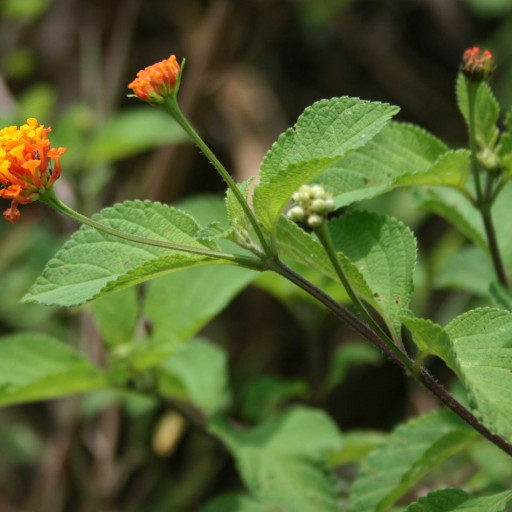
Plant Overview
Known as the "Spanish Flag" or "West Indian Lantana," this vibrant shrub is a kaleidoscope of the botanical world. It is famous for its clusters of tiny, jewel-toned flowers that famously shift colors as they age, creating a multi-colored bouquet on a single branch. While it is a celebrated ornamental in many regions, its rugged nature and ability to thrive in poor soil have earned it a reputation as a hardy survivor.
🔍 How to Identify
- 🌸 Multicolor Clusters: The flowers grow in dense, rounded heads (umbels), often featuring a mix of yellow, orange, pink, and red blooms all at once.
- 🍃 Sandpaper Leaves: The oval, pointed leaves have a distinctively rough, "sandpapery" texture on top and a strong, spicy, citrus-like aroma when crushed.
- 🪵 Square Stems: Young branches are noticeably four-sided (square) and may be covered in small, hooked prickles that help the plant scramble over other vegetation.
🏡 In Your Garden
- ☀️ The Sunnier, The Better: Lantana is a true sun-worshipper; it needs high-intensity light to produce its iconic color-changing blooms and will become "leggy" or sparse if kept in the shade.
- 🦋 Pollinator Party: This is one of the single best plants for attracting butterflies and hummingbirds, acting as a high-octane nectar station throughout the summer.
- 🌱 Invasive Awareness: In tropical climates, this plant is an aggressive grower and can crowd out native species. Always check your local regulations before planting it in the ground.
⚠️ Safety & Toxicity
- 🚫 High Toxicity: All parts of the Lantana camara are toxic to humans, dogs, cats, and livestock if ingested.
- 🫐 Berry Warning: The small, unripened green berries are particularly dangerous and contain triterpene acids that can cause liver failure or severe stomach upset.
- 🧤 Contact Irritation: The rough hairs on the leaves and stems can cause a mild, itchy rash (dermatitis) for people with sensitive skin, so it’s best to wear gloves when pruning.
✨ Fun Fact
🎨 Smart Signaling: Lantana flowers change color after they have been pollinated. This tells butterflies which flowers are still full of nectar (usually the younger, yellow ones) and which are "empty" (the older, red ones), helping the insects forage more efficiently!

Detailed Care Instructions
| Color | A Mix Of Red, Orange, Yellow, Or Blue And White |
| Soil Ph | 6.5 To 7.5 |
| Humidity | Normal |
| Invasive | Weed |
| Lighting | Full Sun |
| Toxicity | Poisonous |
| Soil Type | Well-Drained Soil, But Will Tolerate Poor Soils |
| Bloom Time | All Year Long In Frost-Free Areas |
| Difficulty | Medium |
| Plant Type | Perennials In Warmer Zones, Annuals In Colder Zones |
| Mature Size | 6 Feet High And 8 Feet Wide |
| Native Area | Tropical Regions Of The Americas And Africa |
| Temperature | 5°C - 25°C |
| Sun Exposure | Full Sun |
| Hardiness Zones | Lantana Plants Can Be Grown As Evergreen Perennials In Usda Planting Zone 8 And Higher |
To grow Lantana Camara plants, follow these steps:
- Choose a suitable location: Lantana Camara plants prefer full sun and well-draining soil. Select a location with at least 6-8 hours of direct sunlight per day.
- Prepare the soil: Lantana Camara plants can tolerate various soil types, but they grow best in fertile, loamy soil. Amend the soil with organic matter, such as compost, to improve drainage and nutrient content.
- Planting: Dig a hole twice as wide and deep as the root ball of the Lantana Camara plant. Place the plant in the hole, ensuring that the top of the root ball is level with the soil surface. Backfill the hole with soil, gently firming it around the plant.
- Watering: After planting, water the Lantana Camara thoroughly to settle the soil and provide moisture for the roots. Water regularly, keeping the soil evenly moist but not waterlogged. Reduce watering during periods of heavy rainfall.
- Fertilization: Apply a balanced, slow-release fertilizer once every 2-3 months during the growing season. Follow the product instructions for appropriate application rates. Avoid over-fertilization, as it can lead to excessive foliage growth with fewer flowers.
- Pruning: Lantana Camara plants benefit from regular pruning to maintain shape and promote flowering. Trim back any dead or diseased branches, as well as spent flowers, to encourage new growth and prolong blooming.
- Mulching: Apply a layer of organic mulch around the base of the plant to help retain soil moisture, suppress weed growth, and regulate soil temperature.
- Pest and disease control: Monitor the plant for common pests like aphids or whiteflies. Regularly inspect the leaves for any signs of disease or damage. Treat any infestations or diseases promptly with appropriate organic or chemical controls.
- Winter care: In areas with frost or freezing temperatures, Lantana Camara plants might not survive the winter outdoors. Consider growing them in containers that can be moved indoors during cold spells or cover the plants with frost blankets to protect them from extreme temperatures.
- Propagation: Lantana Camara plants can be propagated through stem cuttings. Take 4-6 inch cuttings from healthy, non-flowering stems and plant them in a well-draining potting mix. Keep the cuttings warm and moist until they develop roots and can be transplanted into larger pots or the garden.
By following these steps and providing the appropriate care, you can successfully grow Lantana Camara plants and enjoy their colorful blooms.

Place in a bright room that is sun drenched almost all day. Or directly in a south-facing window.

To properly water this plant, you should check the soil moisture level by inserting your finger about 2 inches deep into the soil. If the soil feels dry, water the plant thoroughly until the water runs out of the drainage holes in the bottom of the pot or in the soil around the plant. Be careful not to overwater the plant as it can lead to root rot. Wait until the top layer of soil feels dry before watering again, which may be every 2-3 days depending on the climate and humidity. During the winter months, reduce watering frequency to once a week due to reduced plant growth and water requirements.
To fertilize this plant, you should first ensure that you are using a well-balanced fertilizer with equal amounts of nitrogen, phosphorus, and potassium. Once you have your fertilizer, apply it to the soil around the base of the plant, being careful not to get any on the leaves or stems. Water the plant thoroughly after fertilizing to help the nutrients penetrate the soil. You may want to fertilize every 4-6 weeks during the growing season to help promote healthy growth and blooming.
A suitable soil for growing this plant should be well-draining and have a good balance of nutrients. A mixture of sand, coarse perlite, and peat moss can provide the necessary drainage while retaining enough moisture for the plant to thrive. It is also important to ensure that the soil has a pH level between 6.0 and 7.5, as Lantana Camara prefers slightly acidic to neutral soil. Additionally, the soil should not be too dense or compacted, as this can impede root growth and inhibit the plant's ability to take up water and nutrients.
Lantana Camara is a popular plant known for its colorful flowers and easy maintenance. This plant can be propagated in various ways, including taking stem cuttings, layering, or seed propagation. Here are the details on how to propagate Lantana Camara plant:
- Stem cuttings: Select healthy stem cuttings from the parent plant, preferably 4-6 inches long with a few leaves. Cut the stem below the leaf node and remove the lower leaves. Dip the cut end of the stem in rooting hormone and plant it in a well-draining potting mix. Water the cutting and keep it in a warm, bright location. The cutting will root in a few weeks, and it can be transplanted to a bigger pot or into the garden once it establishes.
- Layering: Choose a low-growing branch of the parent plant, bend it to the ground, and make a small wound on the stem where it touches the soil. Cover the wounded area with soil and hold it in place with a U-shaped wire or a rock. Keep the soil moist and wait for roots to emerge from the wounded area. Once rooted, separate the new plant from the parent and transplant it into a well-draining soil.
- Seed propagation: Collect mature seeds from the plant and sow them in a small container filled with potting soil. Cover the seeds with a thin layer of soil, water them, and keep them in a warm, bright location. The seeds will germinate in 2-3 weeks, and the seedlings can be transplanted to a bigger container or into the garden once they grow bigger.
Propagation of Lantana Camara using any of these methods is easy and straightforward, and it allows you to have more plants to enjoy in your garden or share with friends and family.
Common pests of the common lantana include Spider mites, aphids, whiteflies. Make a habit of checking your common lantana frequently for pests so that any infestations can be caught and managed early.








