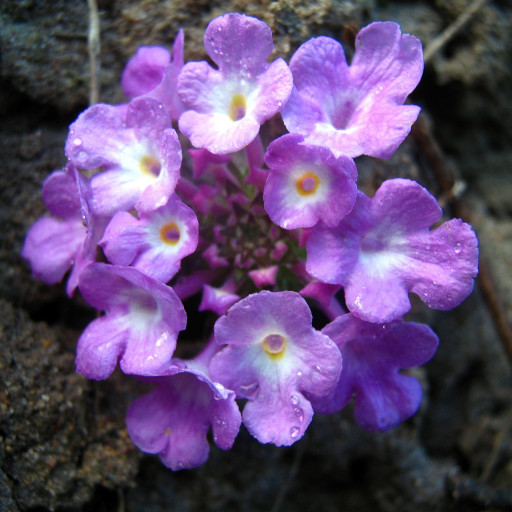
Plant Overview
Often called the Purple Weeping Lantana, this South American native is a champion of the sunny garden. Unlike its upright shrubby cousins, this plant cascades like a floral waterfall over retaining walls and hanging baskets. It is widely known as a "butterfly canteen" because it provides a near-constant supply of nectar from spring until the first frost.
🔍 How to Identify
- 🌸 The Flowers: Tiny, tubular blooms gathered in circular clusters (umbels). They are primarily a vibrant lavender or purple with a distinct yellow "eye" at the center.
- 🍃 The Foliage: Small, dark green, oval-shaped leaves with serrated edges. The surface feels rough, almost like fine-grit sandpaper, and emits a spicy, musky aroma when bruised.
- 🌿 Growth Habit: A low-growing, trailing form with long, flexible stems that can reach up to several feet in length, making it ideal for groundcover or spilling over edges.
🏡 In Your Garden
- ☀️ Sun Worshiper: This plant thrives in the most intense heat. It uses its deep root system to survive "neglect," making it a perfect choice for xeriscaping or rocky slopes where other plants might wither.
- 🦋 Ecosystem Hero: It is one of the best plants for attracting pollinators. You will frequently see Swallowtail butterflies and hummingbirds darting between the clusters. However, be mindful that in frost-free climates, it can be a bit too successful and may spread aggressively if not pruned.
⚠️ Safety & Toxicity
- 🚫 Status: Toxic to mammals if ingested.
- 🐾 Details: The unripe green berries are the most dangerous part of the plant. If eaten by pets or curious children, they can cause significant stomach upset and, in severe cases, liver damage. Additionally, the rough texture of the leaves and stems can cause a mild, itchy skin rash (dermatitis) for gardeners with sensitive skin.
✨ Fun Fact
In some parts of the world, Lantana is nicknamed the "Wildfire Plant." Not only is it one of the first plants to regrow after a fire, but its leaves contain volatile oils that are so flammable they can actually help a fire spread through the undergrowth!

Detailed Care Instructions
| Color | Lilac-Purple Flowers |
| Soil Ph | 6.5 To 7.5 |
| Humidity | Normal |
| Invasive | Weed |
| Lighting | Full Sun |
| Toxicity | Poisonous |
| Soil Type | Well-Drained Soil, But Will Tolerate Poor Soils |
| Bloom Time | All Year Long In Frost-Free Areas |
| Difficulty | Medium |
| Plant Type | Perennials In Warmer Zones, Annuals In Colder Zones |
| Hibernation | Cold Period |
| Mature Size | 2 Feet Tall |
| Native Area | Tropical Regions Of The Americas And Africa |
| Temperature | 12°C - 26°C |
| Sun Exposure | Full Sun |
| Hardiness Zones | 8-13 |
To grow Lantana Montevidensis plant, here are some steps you can follow:
- Choose the right location: Lantana Montevidensis prefers full sun exposure, so select a spot in your garden that receives at least 6-8 hours of direct sunlight per day.
- Soil preparation: Ensure the soil is well-draining and loamy. Lantana Montevidensis can tolerate a variety of soil types but prefers slightly acidic to neutral soil pH. You can improve the soil by adding organic matter like compost or well-rotted manure.
- Planting: Dig a hole that is slightly larger than the root ball of the plant. Place the plant in the hole, making sure that it is at the same level as it was in the pot. Fill the hole with soil and gently pat it down to remove any air pockets. Water the plant thoroughly after planting.
- Watering: While Lantana Montevidensis is drought-tolerant and can withstand dry spells, regular watering is necessary during the establishment period. After that, water the plant deeply but infrequently to encourage deep root growth.
- Fertilizing: Apply a balanced, slow-release fertilizer once a month during the growing season (spring and summer). Follow the instructions on the fertilizer packaging for dosage and application.
- Pruning: Lantana Montevidensis benefits from regular pruning to maintain its shape and promote bushier growth. Prune back leggy or overgrown branches, and remove any dead or damaged parts.
- Mulching: Apply a layer of organic mulch around the plant to retain moisture, suppress weeds, and regulate soil temperature. Keep the mulch away from the base of the plant to prevent stem rot.
- Pests and diseases: Lantana Montevidensis is generally resistant to pests and diseases. However, keep an eye out for common garden pests like aphids, spider mites, or whiteflies. If necessary, treat the plant with a suitable organic pesticide.
- Winter care: If you live in a region with frost or freezing temperatures, Lantana Montevidensis may not survive outdoors. In such cases, you can grow it as an annual or consider protecting it by bringing it indoors or covering it with frost cloth during winter.
Remember to consult local gardening guidelines or experts for specific recommendations based on your region's climate and conditions.

Place in a window with dappled sun or a spot in the middle of a room. Or directly in a window facing west or east.

When watering this particular plant, it is important to avoid overwatering as it can lead to root rot. Allow the top layer of soil to dry out slightly before watering, then thoroughly saturate the soil until water starts to drain from the bottom of the pot or container. It is important to also ensure that the soil is well-draining to prevent waterlogging. Watering frequency will depend on factors such as the size of the pot, the environment it's in, and the season. During hotter months, the plant may require more frequent watering. It's also important to note that this plant can tolerate some drought, so it's better to err on the side of underwatering rather than overwatering.
Use a balanced fertilizer with equal amounts of nitrogen, phosphorus, and potassium. Apply the fertilizer every four to six weeks during the growing season. Avoid using too much fertilizer as it may lead to excessive growth or even burn the plant. Water the plant thoroughly after applying fertilizer to prevent salt buildup in the soil.
Lantana Montevidensis plant requires a well-draining soil that is rich in nutrients. A soil pH range between 6.0 to 7.5 is optimal for the plant's growth. You can use a mixture of sandy loam soil and organic compost to create a suitable soil. The sandy loam soil will provide good drainage, while the organic compost will add nutrients to the soil. The plant prefers moist soil but can tolerate dry conditions once established. Avoid using heavy clay soils as they can lead to poor drainage and root rot. It's crucial to ensure that the soil is adequately aerated to promote healthy root growth. Thus, incorporating humus or organic matter helps in enhancing the soil structure and allowing enough oxygen to the roots. Overall, a well-draining, nutrient-rich, and aerated soil is essential for the optimal growth of Lantana Montevidensis plant.
- Choose a healthy parent plant with strong and disease-free stems.
- Identify a healthy and mature stem that is about 4-6 inches long and has at least one pair of leaves.
- Use a clean and sharp knife or pruning scissors to cut the chosen stem just below a node. A node is a small bump on the stem where leaves and roots emerge.
- Remove the leaves from the lower half of the stem, leaving only 1-2 pairs of leaves near the top.
- Dip the cut end of the stem into a rooting hormone powder to encourage root growth.
- Plant the stem into a pot filled with a well-draining soil mix. Make a hole in the soil using a pencil or your finger and gently insert the stem into the hole. Firmly press the soil around the stem to ensure good contact.
- Water the newly planted stem, making sure the soil is moist but not waterlogged.
- Cover the pot with a plastic bag or dome to create a humid environment that will help the stem develop roots.
- Place the pot in a bright and warm location, but away from direct sunlight.
- Check the soil moisture regularly and water when needed. After a few weeks, gently tug the stem to see if it has developed roots. If it resists, the stem has rooted and can be gradually acclimated to more sunlight and less humidity.
- Once the stem has grown into a healthy plant with several leaves, it can be transplanted into a larger pot or planted outside in well-draining soil and partial to full sunlight.
Common pests of the trailing lantana include Spider mites, aphids, whiteflies. Make a habit of checking your trailing lantana frequently for pests so that any infestations can be caught and managed early.








