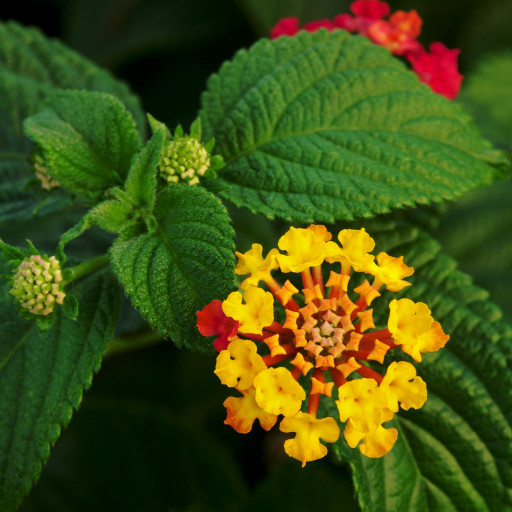
Plant Overview
Known as the "Spanish Flag" or "Shrub Verbena," Lantana is a vibrant, sun-loving firecracker of a plant. Originally hailing from the tropical regions of the Americas, it has become a global favorite for its ability to produce a kaleidoscope of colors on a single flower head. It is a resilient survivor that thrives in the heat where other plants might wilt, making it a staple for high-summer color.
🔍 How to Identify
- 🌸 Flower Clusters: Look for tiny, tubular flowers packed into dense, rounded clusters called umbels. They often transition through shades of yellow, orange, red, or pink simultaneously.
- 🍃 Rough Foliage: The dark green, oval leaves have a distinctively rough, sandpapery texture and serrated (toothed) edges.
- 👃 Aromatic Scent: When crushed, the leaves release a pungent, citrusy, or herbal aroma that is quite polarizing—some love the zest, while others find it a bit "skunky."
🏡 In Your Garden
- 🦋 Pollinator Magnet: These plants are essentially landing pads for butterflies, bees, and hummingbirds. If you want a garden buzzing with life, Lantana is one of the most effective "lure" plants you can grow.
- ☀️ The "Tough Spot" Specialist: Lantana loves the spots in the yard that other plants find punishing. It handles intense heat, poor soil, and even salt spray with ease, making it ideal for coastal or "hellstrip" gardening.
- ✂️ Vigorous Growth: Because it grows so quickly, it can become "leggy" or woody. Hard pruning in the early spring encourages a flush of new, flower-bearing growth and keeps the plant from overtaking its neighbors.
⚠️ Safety & Toxicity
- 🐾 Toxic to Pets: Lantana contains triterpenoids, which are toxic to dogs, cats, and livestock if ingested. It can cause liver failure in severe cases.
- 🚫 Dangerous Berries: The plant produces small, metallic-looking berries. When green and unripe, these are highly toxic to humans, especially children, if eaten.
- 🧤 Skin Irritation: The tiny "hairs" on the leaves can cause mild skin irritation or a rash (contact dermatitis) for sensitive individuals. It is always best to wear gloves when pruning.
✨ Fun Fact
- 🎨 The Color Signal: Lantana flowers change color as they age! This isn't just for show; it’s a signal to pollinators. Usually, the youngest flowers in the center are yellow (full of nectar), while the older, pollinated flowers turn red or purple, telling butterflies to save their energy and go for the yellow ones instead.

Detailed Care Instructions
To grow Lantana plants, follow these steps:
- Choose a suitable location: Lantanas prefer full sun, so select a spot with at least 6-8 hours of direct sunlight per day. They also prefer well-draining soil.
- Prepare the soil: Lantanas grow well in average to slightly acidic soil. Amend the soil by adding compost or organic matter to improve its fertility and drainage.
- Planting: Dig a hole twice as wide and deep as the root ball of your Lantana plant. Place the plant in the hole, ensuring the top of the root ball is level with or slightly above the soil surface. Backfill the hole with soil and gently firm it around the plant.
- Watering: After planting, water the Lantana thoroughly. Water consistently, but avoid overwatering, as Lantanas are drought-tolerant once established.
- Mulching: Apply a layer of organic mulch around the base of the plant to conserve moisture, suppress weed growth, and regulate soil temperatures.
- Fertilizing: Lantanas are typically low-maintenance and do not require excessive fertilization. However, you can apply a slow-release, balanced fertilizer in early spring to promote healthy growth. Follow the package instructions for dosage and application.
- Pruning: Regular pruning is beneficial for Lantanas to maintain their shape, promote bushiness, and encourage more blooming. Prune back the plant by removing spent flowers, leggy or damaged stems, and any dead or diseased parts.
- Pests and diseases: Lantanas are generally resistant to pests and diseases. However, keep an eye out for common garden pests like aphids, spider mites, or whiteflies. If an infestation occurs, you can treat it with insecticidal soap or neem oil.
- Winter care: In colder regions, Lantanas may not survive freezing temperatures. You can either protect them by bringing them indoors or covering them with a frost cloth during the winter season.
- Propagation: Lantanas can be propagated by seeds, cuttings, or division. Seeds can be sown in early spring, while cuttings can be taken from healthy plants in late spring or early summer. Division is typically done in early spring when new growth emerges.
By following these steps, you should be able to successfully grow Lantana plants in your garden or landscape.

Place in a bright room that is sun drenched almost all day. Or directly in a south-facing window.

One way to water this plant is to ensure that the soil is completely dry to the touch before watering. Then, slowly pour water onto the soil until it reaches the root zone. It's important not to overwater or let the plant sit in standing water, as this can lead to root rot and other problems. Another method is to water from the bottom up by placing the pot in a shallow tray of water and allowing the soil to soak up the water from the bottom. When watering in this way, be sure to discard any excess water after an hour or so to prevent root rot. Ultimately, the key is to provide consistent, even moisture without overwatering.
To fertilize this plant, use a balanced fertilizer with equal amounts of nitrogen, phosphorous, and potassium. Apply the fertilizer once a month during the growing season, which is typically in the spring and summer. Be sure to follow the manufacturer's instructions for the proper amount of fertilizer for the size of the plant. Water the plant thoroughly before and after fertilizing to avoid burning the roots. Avoid fertilizing during the plant's dormant season.
The recommended soil for Lantana plant should have good drainage and aerated structure to prevent waterlogging and promote sufficient air circulation to the roots. It should also be rich in organic matter to provide essential nutrients to the plant. The ideal pH range for the soil should be slightly acidic to neutral, ranging from 6.0 to 7.5. The soil should also be able to hold moisture but not be overly damp, as Lantana plants prefer moderate watering and can be sensitive to excessive moisture. Additionally, the soil should be weed-free to prevent competition for nutrients and resources.
Lantana plants can be propagated by taking stem cuttings from the parent plant. Choose a healthy stem and cut a 4-6 inch long section. Strip away the leaves from the bottom of the stem to leave about 2-3 inches of naked stem.
Apply rooting hormone to the cut end of the stem and plant it in a pot filled with well-draining soil. Water the cutting well and cover it with a plastic bag to create a humid environment. Keep the cutting in a bright, warm place, but out of direct sunlight.
Check the soil frequently to make sure it stays moist, but not waterlogged. After a few weeks, you should see roots growing from the stem. Once the roots are well established, the plant can be transplanted to its permanent location.
Another way to propagate Lantana is by layering. Bend a low-growing branch down to the ground and bury it in the soil. Use a small stake or rock to hold it in place. Over time, roots will grow from the buried stem. Once the roots are established, cut the new plant away from the parent plant and transplant it to its permanent location.







