Plant Overview
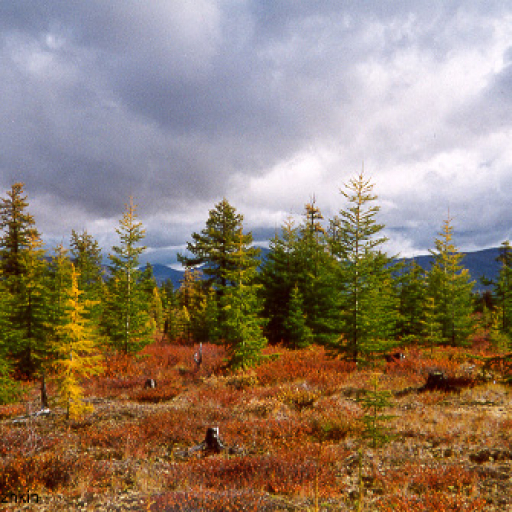
Known as the Dahurian Larch, this resilient conifer is the ultimate survivor of the botanical world. While most trees retreat from the extreme cold, this species marches straight into the Siberian permafrost, forming the northernmost forests on Earth. It is a "deciduous evergreen," a striking contradiction that provides a brilliant display of golden needles every autumn before shedding them for the winter.
🔍 How to Identify
- 🌿 Needle Clusters: The soft, bright-green needles grow in brush-like bundles of 20–40, spiraling along the branches in a delicate, feathery pattern.
- 🍂 Seasonal Color: In late autumn, the entire tree transforms into a pillar of glowing gold before the needles fall, leaving the silhouette skeletal and stark against the snow.
- 🌲 Upright Cones: It produces tiny, egg-shaped cones that sit upright on the branches; they start out purple or red and mature into a woody brown, looking like miniature roses.
🏡 In Your Garden
- 🏔️ Extreme Hardiness: This is not a plant for the tropics. It requires a distinct cold season to thrive and is one of the few trees that can handle "wet feet" in boggy, cold soils.
- ☀️ Light Demand: It is a "pioneer species," meaning it is the first to colonize open ground. It demands full, unobstructed sunlight and will struggle if crowded by taller, leafier trees.
- 🪵 Slow and Steady: Because it allocates so much energy to surviving harsh conditions, it is a relatively slow grower, making it a popular choice for high-latitude landscaping or large-scale bonsai projects.
⚠️ Safety & Toxicity
- ✅ Safe Status: Larix gmelinii is generally considered non-toxic to humans, dogs, and cats.
- 🧤 Physical Caution: While not chemically poisonous, the bark can be rough and the dried cones are quite hard; gardeners should wear gloves when pruning to avoid scratches or splinters.
✨ Fun Fact
The Dahurian Larch holds the world record for the northernmost tree on the planet! In the Lukunsky grove of Russia, it survives at a latitude of 72°30' N, where it endures winter temperatures as low as -70°C (-94°F)—conditions that would freeze the internal cells of almost any other tree species.

Detailed Care Instructions
To grow Larix gmelinii (Siberian larch) plants, follow these steps:
- Choose a suitable location: Siberian larch prefers full sun but can tolerate some partial shade. Ensure the soil is well-draining, as these plants don't perform well in waterlogged conditions.
- Propagation: Larix gmelinii can be propagated from seeds or cuttings. If starting from seeds, collect them in the fall and soak them in water for a day before planting. For cuttings, take 6- to 8-inch (15-20 cm) sections from young growth in late spring or early summer. Dip the cut ends in rooting hormone and plant them in a mixture of sand and peat moss.
- Planting: In early spring or fall, dig a hole twice the size of the root ball. Place the plant in the hole, making sure it sits at the same level as it did in the previous container or nursery bed. Backfill the hole, lightly compacting the soil around the plant, and water thoroughly.
- Watering: Keep the soil evenly moist, especially during the first year after planting. However, avoid overwatering, as it can cause root rot. Once established, Siberian larch is relatively drought-tolerant.
- Mulching: Apply a layer of organic mulch around the base of the plant to retain moisture, suppress weeds, and regulate soil temperature. Keep the mulch a few inches away from the stem to prevent rot.
- Fertilization: Siberian larch generally doesn't require much fertilization, as it can glean nutrients from the soil. However, you can apply a slow-release, balanced fertilizer in early spring to promote healthy growth.
- Pruning: Minimal pruning is usually required for Siberian larch. Remove any dead, damaged, or diseased branches as needed. Additionally, you can lightly trim the tips of new growth to maintain a desired shape.
- Protection: Protect young plants from strong winds and extreme winter temperatures, especially during the first few winters. Consider using a windbreak or providing some temporary shielding.
By following these steps, you can successfully grow Larix gmelinii plants. Remember to monitor their progress, provide appropriate care, and enjoy their beauty.

Place in a bright room that is sun drenched almost all day. Or directly in a south-facing window.

To water this particular plant, it is important to follow a specific watering process to ensure its health and growth. Firstly, it is important to avoid overwatering by checking the soil moisture level regularly. If the soil is dry, water the plant deeply and slowly, making sure that the water reaches the roots. It is essential to avoid watering too frequently as this can suffocate the roots and lead to root rot. Additionally, try to water the plant in the early morning or late evening as this will prevent the water from evaporating quickly due to the hot daytime temperatures. Finally, be sure to check for drainage holes in the pot or container as standing water can also lead to root rot.
To fertilize this plant, use a balanced slow-release fertilizer in the spring. Apply the fertilizer evenly around the base of the plant, taking care not to get it on the foliage or stems. Water the plant thoroughly after fertilizing to help the nutrients penetrate into the soil. Avoid fertilizing in the fall or winter, as the plant enters a period of dormancy during this time.
The appropriate soil for this particular plant is a well-draining soil that is enriched with organic matter. It should be slightly acidic with a pH level of 5.5 to 6.5. Avoid using heavy clay soils or soils that have a tendency to remain waterlogged. It is recommended to mix the soil with perlite or vermiculite to improve drainage and aeration. The plant also prefers soil that is moist but not overly wet. Additionally, it is important to ensure that the soil is not compacted around the plant's root system, as this can restrict growth and cause root rot.
To propagate this plant, you can use several methods. One way is by collecting seeds from mature cones in the fall and storing them in a cool, dry place until spring. In the spring, you can sow the seeds in a seed tray filled with a well-draining potting mix and keep them moist. Once they start to germinate, you can transplant them into individual containers or directly into the ground.
Another method is by taking softwood cuttings in the early summer. Select a healthy, straight stem that is approximately 4-6 inches long and has several leaves. Remove the lower leaves and dip the cut end into a rooting hormone. Plant the cutting in a container filled with potting mix and cover with a plastic bag to maintain humidity. Keep the container in a bright, indirect light and mist the cutting regularly. Once roots have formed, you can transplant the cutting into a larger container or directly into the ground.
Lastly, you can propagate this plant through layering. In the spring, select a long, flexible stem and bend it down towards the ground. Make a small cut on the underside of the stem and lightly scrape the area to expose the cambium layer. Dip the scraped area in rooting hormone and bury it in the soil, leaving the tip of the stem exposed. Keep the soil moist, and once roots have formed, you can sever the stem from the parent plant and transplant it into a new container or directly into the ground.








