Plant Overview
Known as "Jarilla" in its native South American homelands, Larrea nitida is a rugged, resinous survivor that thrives where other plants falter. This evergreen shrub is famous for its intense, balsamic scent—especially after a rain—and its deep roots in Andean folk medicine. It creates a shimmering, dark-green presence in arid landscapes, acting as a vital anchor for desert ecosystems.
🔍 How to Identify
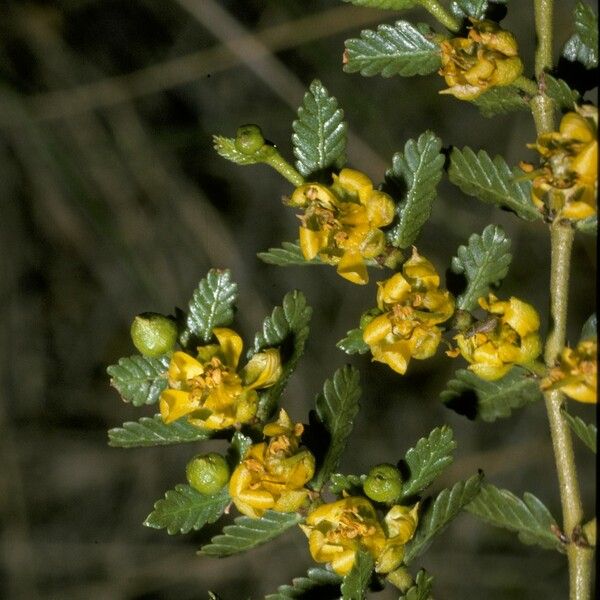
- 🌿 Resinous Foliage: The leaves are small, glossy, and dark green, composed of several pairs of tiny leaflets. They are coated in a sticky resin that protects the plant from intense sun and dehydration.
- 🌼 Bright Yellow Blooms: During its flowering season, the shrub is dotted with small, five-petaled yellow flowers that emerge from the leaf axils.
- ☁️ Woolly Seed Pods: After flowering, the plant produces small, globose fruits covered in soft, white or greyish hairs, giving them a fuzzy, cloud-like appearance.
🏡 In Your Garden
- ☀️ Desert Specialist: This plant is the definition of "set it and forget it" once established. It craves full sun and extremely well-draining, even rocky or sandy soil. It is highly resistant to drought and can handle intense heat and wind.
- 💧 The "Wet Paint" Aroma: Gardeners value it for its unique fragrance. When the humidity rises or it is lightly watered, the resin releases a pungent, earthy scent often compared to creosote or desert rain. It’s best used as a structural shrub or a "water-wise" hedge in xeric landscapes.
⚠️ Safety & Toxicity
- 🟢 General Status: Larrea nitida is generally considered non-toxic to humans and livestock in terms of accidental ingestion, but it is not a food plant.
- 🖐️ Contact Sensitivity: The thick, sticky resin on the leaves contains nordihydroguaiaretic acid (NDGA). While this has medicinal properties, it can cause mild skin irritation or contact dermatitis in sensitive individuals. It’s best to wear gloves when pruning.
✨ Fun Fact
In the high-altitude deserts of Argentina and Chile, Larrea nitida is celebrated as a "natural pharmacy." Local tradition uses the resinous branches to create poultices for treating fractures and inflammation, earning it a legendary status in Andean ethnobotany.

Detailed Care Instructions
To grow Larrea Nitida (common name: Chapparal, Creosote bush), you can follow these steps:
- Choose the right location: Larrea Nitida thrives in hot and arid regions. Select a sunny spot with well-draining soil. It can tolerate poor, rocky, or sandy soils, but good drainage is essential.
- Prepare the soil: If the soil is heavy clay or compacted, amend it with organic matter, such as compost, to improve drainage.
- Planting: Dig a hole slightly larger than the root ball of the plant. Place the plant in the hole, ensuring the top of the root ball is level with or slightly above the soil surface. Backfill the hole with soil and firm it gently around the roots.
- Watering: Water the plant deeply after planting to settle the soil and encourage root establishment. Larrea Nitida is drought-tolerant once established but will require regular watering in the first few weeks until the roots are established.
- Mulching: Apply a layer of organic mulch, such as wood chips or straw, around the base of the plant to help retain moisture and suppress weeds.
- Pruning: Larrea Nitida requires minimal pruning, mainly to shape the plant or remove dead or damaged branches. Prune in late winter or early spring before new growth begins.
- Fertilizing: Larrea Nitida is adapted to nutrient-poor soils and typically does not require fertilizer. If the plant shows signs of nutrient deficiency, you can use a slow-release, low-nitrogen fertilizer in early spring.
- Maintenance: Larrea Nitida is a low-maintenance plant. Watch out for pests, such as aphids or spider mites, especially during periods of drought stress. Regularly inspect the plant for any signs of disease or pest damage and take appropriate action if needed.
Remember, Larrea Nitida is native to specific regions, so ensure that it is suitable for your climate and growing conditions before attempting to grow it.
To properly water this plant, you should first determine the soil moisture level. Insert your finger about an inch into the soil and check if it feels dry. If it does, water the plant thoroughly.
When watering, avoid getting the leaves or stems wet as this can promote disease. Instead, aim for the soil around the base of the plant.
It's important not to overwater this plant as it prefers dry soil. Allow the soil to dry out between waterings. In the winter months, reduce watering as the plant goes into a period of dormancy.
Additionally, make sure the plant is not sitting in standing water as this can lead to root rot. Use a well-draining soil mix and ensure the pot has drainage holes.
Overall, it's best to err on the side of underwatering rather than overwatering this plant.
To fertilize this plant, apply a balanced fertilizer with equal parts nitrogen, phosphorus, and potassium. Apply the fertilizer around the drip line of the plant, avoiding contact with the leaves or stems. Water thoroughly after fertilizer application. Fertilize every 4-6 weeks during the growing season, and reduce frequency in the winter. Avoid excessive fertilization, as this can burn the roots and harm the plant.
Larrea Nitida plant thrives well in well-draining soil that is typically sandy and rocky. The soil should have low organic matter content since the plant grows in dry conditions. It should have a slightly alkaline pH level ranging from 7 to 8. The soil should be loose enough to allow penetration of oxygen and water. It should be able to hold enough moisture to sustain the plant but not too much that it becomes waterlogged as that can cause root rot. In areas where soils are dense and have poor drainage, amending them with sand and gravel will improve the soil structure. Adding compost to the soil can enhance fertility, but it should only be a minimum amount.
To propagate this plant, prepare a well-draining soil mixture consisting of sand and peat moss. Take stem cuttings that have at least one node and remove any leaves at the bottom. Dip the cut end in rooting hormone powder to encourage root growth. Plant the cutting in the soil mixture, ensuring about half of the cutting is buried in the soil. Water thoroughly and cover the cutting with a plastic bag to maintain humidity. Place the cutting in a bright location but avoid direct sunlight. Keep the soil moist but not waterlogged. After a few weeks, check for root development by gently tugging on the cutting. Once it resists, it has established roots and can be transplanted to a larger pot or outside in a suitable location.








